Coral Polyp Behavior: Opening and Closing Patterns & Health Checklist
A thorough explanation of why coral polyps won't open or shrink. Learn to read polyp behavior from water quality, light, flow, and stress perspectives, and discover a checklist for early problem detection.
Key Takeaways
A thorough explanation of why coral polyps won't open or shrink. Learn to read polyp behavior from water quality, light, flow, and stress perspectives, and discover a checklist for early problem detection.
Related Species
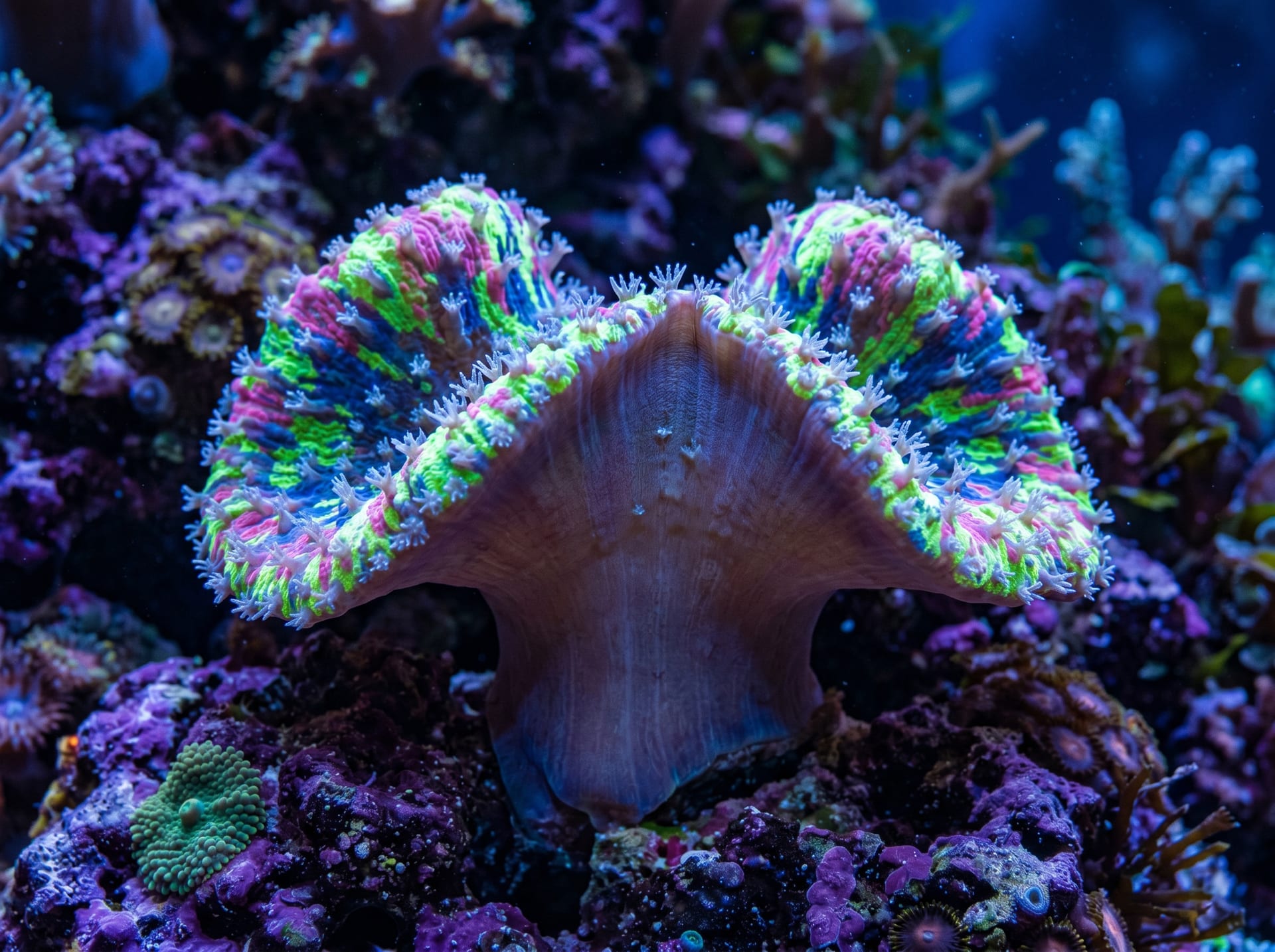
One of the joys of keeping corals is watching the moment when polyps open like flowers. Yet many reef tank owners struggle with questions like "My corals were healthy yesterday, but they're retracted today" or "They never seem to open." Polyp opening and closing is a sign of how corals, as living organisms, respond to their environment. Understanding these behavioral patterns is the first step to maintaining a healthy reef aquarium.
Why Do Polyps Open and Close?
Coral polyps are cnidarians that extend their tentacles to maximize light exposure for photosynthetic zooxanthellae (Symbiodiniaceae) while capturing organic particles in the water flow to supplement nutrition. In healthy conditions, polyps begin opening within 1–2 hours of lights turning on and naturally retract before lights off, repeating this cycle daily.
The causes of disrupted rhythm fall into three main categories: first, changes in water quality parameters; second, improper light and flow conditions; and third, biological and chemical stress. Identifying which factor is primary requires keeping records. Scoring polyp extension at the same time daily will reveal patterns in any changes.
Water Quality Parameters and Polyp Health
Corals respond most sensitively to sudden water quality changes. Measure the following values regularly:
Calcium (Ca) is essential for skeleton formation, with a target range of 350–450 ppm. When it drops, both LPS and SPS polyps tend to retract. Alkalinity (KH) should be maintained at 8–11 dKH. A sudden drop causes stony corals to close, especially noticeably. Using a dosing pump or two-part system to add small amounts daily prevents sudden shifts.
Phosphate (PO4) should be around 0.03–0.09 ppm for most species. Excess causes zooxanthellae overgrowth, browning coral tissue and suppressing polyp extension. Conversely, levels that are too low starve zooxanthellae and signal bleaching risk. Nitrate (NO3) typically ranges from 1–10 ppm, but when it drops too close to zero, nutrient deficiency can cause polyps to retract.
Water change frequency and volume are equally important. Perform 10–15% water changes weekly using high-purity salt mixed with RO/DI water, such as Coral Pro Salt. If additives are causing parameter swings, test and adjust before water changes.