Coral Night Feeding Guide | Observing Polyps at Dusk and Practicing Target Feeding | ブリちょく
Coral| ✍️ BreederDirect Editorial
Coral Night Feeding Guide | Observing Polyps at Dusk and Practicing Target Feeding
A practical guide to night feeding that leverages corals' habit of expanding polyps from evening to night. Detailed explanation of target feeding procedures, types of food to use, timing for stopping water flow, and water quality management after feeding.
Key Takeaways
A practical guide to night feeding that leverages corals' habit of expanding polyps from evening to night. Detailed explanation of target feeding procedures, types of food to use, timing for stopping water flow, and water quality management after feeding.
Corals live by preying on plankton and organic matter in natural coral reefs. Even in an aquarium, proper feeding promotes skeletal formation, improves coloration, and leads to long-term healthy husbandry. In particular, understanding nocturnal feeding habits is essential knowledge for keeping corals healthy.
✍️
BreederDirect Editorial
The BreederDirect editorial team specializes in care information for animals, covering veterinary care and breeding to deliver beginner-friendly guides.
Find Coral on BreederDirect
Buy directly from verified breeders
Browse Related Listings
Find Coral listings related to this article on BreederDirect. Buy directly from verified breeders.
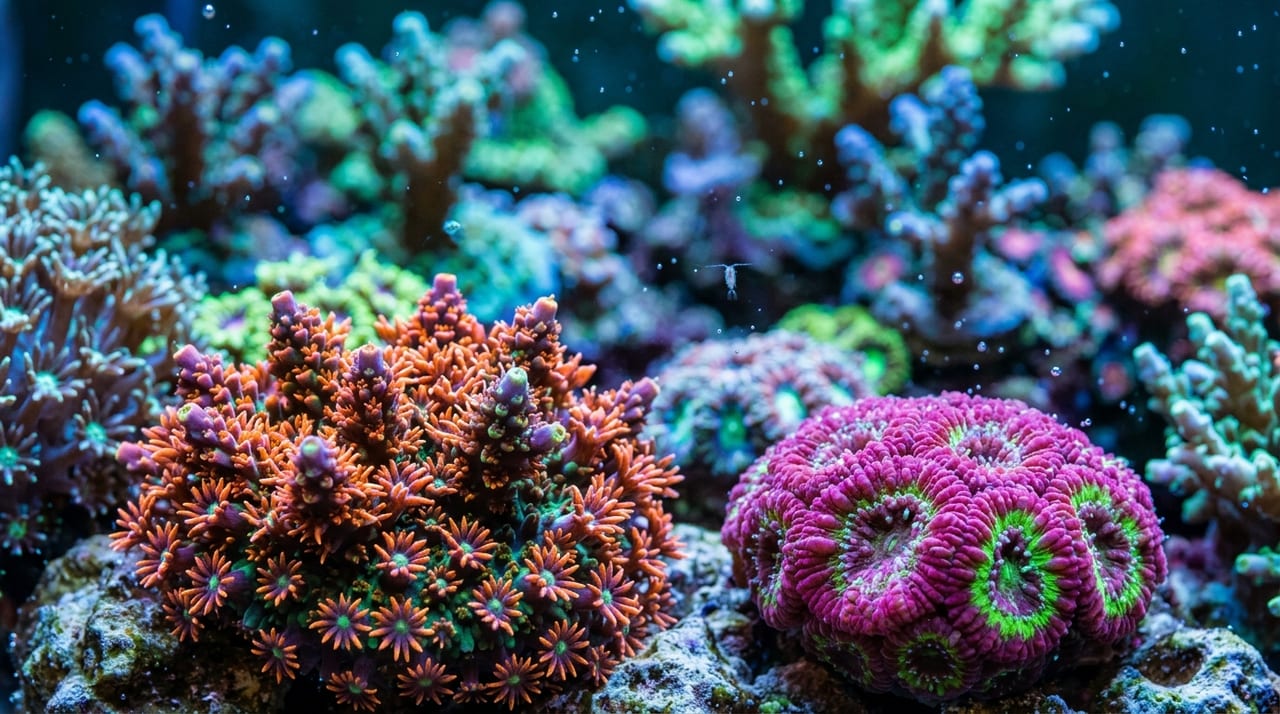
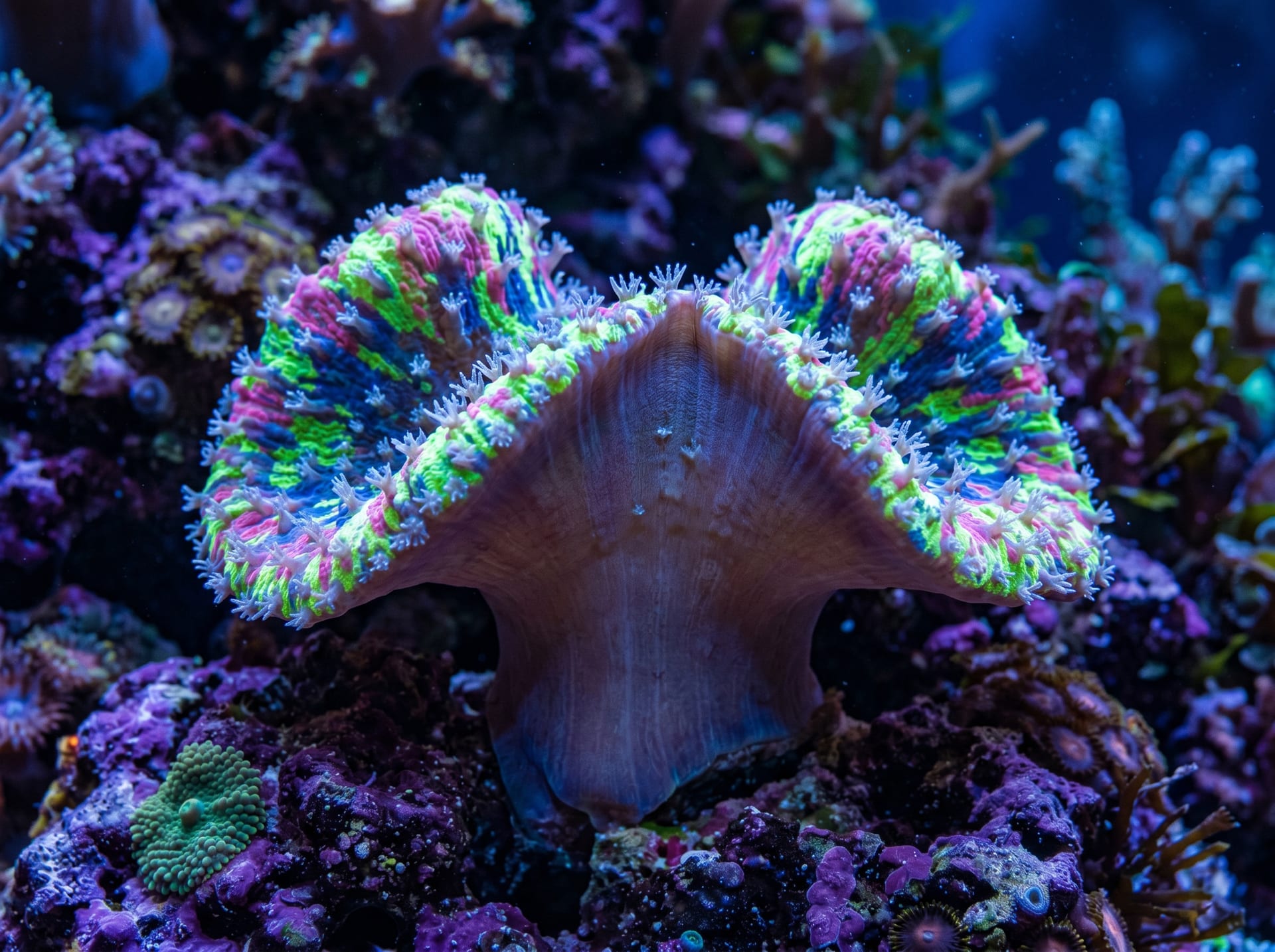
Many coral polyps become more active at night when predators are fewer. Most LPS corals such as Bubble Corals, Goniopora, and Elegant Corals fully expand their polyps after sunset.
Feeding during this time has the following benefits:
Polyps are fully extended and feeding behavior is active
Photosynthesis dependency (symbiotic zooxanthellae) is lower during this period, making additional nutrient absorption more efficient
Feed is less likely to be taken by fish (fish activity also decreases at night)
However, SPS corals (Acropora) have high photosynthesis dependency, and the effectiveness of night feeding may be limited. Determine your approach based on the characteristics of each species.
Ideal Feeding Time and Observation Points
The proper timing for night feeding is 1-2 hours before the aquarium lights turn off or immediately after lights out.
Observation Checklist:
Polyp Condition
Action
Fully expanded
Sign to begin feeding
Partially open/retracted
Check water quality and flow first
Tentacles moving
Feeding response ready
Secreting mucus
Possible stress or disease. Avoid feeding
Types of Food to Use
Plankton-based (Liquid/Powder)
Rotifers: Fine particles suitable for small-polyped soft corals and small LPS
Brine shrimp (Artemia) nauplii: High nutritional value, preferred by most LPS
Copepods: Natural prey items, highly effective
Paste and Solid Forms
Micro-particle pellets (under 1mm): Suitable for Goniopora and Bubble Corals
Spirulina and seaweed flake powder: As supplementary food for soft corals
Specialized coral foods like Frostfood: Compatible with most LPS
Target Feeding Procedure
1. Stop the Water Flow
Turn off the main pump and wave pump for 5-15 minutes. Water flow causes feed to scatter and not reach the target corals. The skimmer need not be turned off, but reducing its rotation speed is effective.
2. Feed Using a Syringe or Dropper
Draw plankton solution into a 30-60mL syringe and slowly dispense it directly above the polyps. You can observe the tentacles contracting and feeding when they contact the food.
Tips:
Dispense the food 2-3cm above the polyps
Don't overfeed at once (leftover food causes water quality deterioration)
Dimming the lights or using red LEDs during feeding suppresses fish movement
3. Restore Water Flow After Feeding
Resume water flow after 10-15 minutes and remove any leftover food. Return the protein skimmer to normal operation.
Feeding Frequency and Quantity Guide
Coral Type
Recommended Frequency
Amount per Feeding
LPS (Bubble Corals, Goniopora, etc.)
2-3 times per week
Enough to cover tentacles
Soft Corals (Mushroom Corals, etc.)
1-2 times per week
Small amount (like liquid fertilizer)
SPS (Acropora, etc.)
Once per week or unnecessary
Minimal amount only
Overfeeding may cause browning. Excessive zooxanthellae proliferation turns polyps brown, so keep feeding to appropriate amounts.
Water Quality Check After Feeding
Continued feeding increases organic load. Check the following parameters at least once per week.
Nitrate (NO₃⁻): Target under 5ppm in SPS tanks, under 10ppm in LPS tanks
If protein skimmer output increases, it signals rising organic content. Adjust operating efficiency accordingly.
Common Mistakes and Solutions
Mistake 1: Water Quality Deterioration from Leftover Food
→ Reduce feeding amount by half and remove leftover food with a dropper
Mistake 2: Fish Eating All the Food
→ Feed after lights out without lighting, or use netting to surround corals
Mistake 3: Polyps Won't Open
→ Review lighting spectrum and water flow intensity; prioritize checking nitrite and ammonia
Mistake 4: Polyps Spitting Out Food
→ Food may be too large. Switch to finer particle sizes
Summary
Night feeding of corals is important care that provides "animal nutrition" beyond reliance on photosynthesis alone. By observing polyp behavior and feeding at appropriate times while maintaining water quality, coral coloration, skeletal formation, and reproductive speed will improve significantly. Start with small amounts 1-2 times per week and adjust frequency and quantity based on coral response.