Complete Guide to Feline Psychogenic Alopecia and Excessive Grooming | Stress-Induced Self-Injurious Fur Licking and Treatment Approaches
Expert explanation of causal stress factors in feline excessive grooming (psychogenic alopecia), the approach to medical differential diagnosis, and combined treatment approaches of behavioral therapy, environmental enrichment, and pharmacotherapy.
Key Takeaways
Expert explanation of causal stress factors in feline excessive grooming (psychogenic alopecia), the approach to medical differential diagnosis, and combined treatment approaches of behavioral therapy, environmental enrichment, and pharmacotherapy.
Cat grooming is normally a behavior for maintaining cleanliness, regulating body temperature, and relaxation. However, when a cat spends several hours or more per day licking its fur, and fur on specific areas becomes thin or falls out, this is called "excessive grooming," a behavioral problem caused by psychogenic (stress-related) or medical factors. This article provides a detailed explanation from the causes of feline psychogenic alopecia and excessive grooming through treatment approaches.
What Is Excessive Grooming?
Normally, cats spend 30–50% of their waking hours each day grooming themselves in some way. This is within the normal range. However, the following conditions are considered problematic and characterized as "excessive grooming."
- Fur on specific areas (abdomen, inner thighs, front paws, tail base, etc.) becomes noticeably thin or falls out
- Grooming appears impulsive and compulsive, and is difficult to stop
- The skin becomes red or injured from grooming
- Other activities (eating, playing, sleeping) are significantly reduced
Psychogenic Alopecia is "hair loss caused by stress-induced excessive grooming," diagnosed after ruling out medical skin diseases, allergies, parasites, and other physical causes. In practice, cases involving mixed medical factors are more common than purely psychogenic cases, making veterinary diagnosis extremely important.
Primary Stress Factors in Psychogenic Excessive Grooming
Understanding what environmental changes and stress factors trigger excessive grooming is the first step in addressing the problem.
Environmental Stress Factors:
- Moving, home renovations, or major changes to the living environment
- New family members (infants, new pets, changes in housemates)
- Unfamiliar sounds and odors (construction noise, presence of stray cats, new perfumes, cleaning products)
- Sudden changes in schedule (such as changes in the owner's time at home)
Social Stress Factors:
- Compatibility issues with other cohabiting cats or dogs, bullying, territorial conflicts
- Changes in the relationship with the owner (prolonged absence, lack of communication)
- Loneliness and boredom (extended solo time alone, lack of stimulation)
Physical Stress Factors:
- Chronic pain and discomfort (such as arthritis, toothaches, urinary tract disease) can become secondary causes of psychological stress
The Importance of Medical Differential Diagnosis
When excessive grooming or hair loss is noticed, many owners assume it is stress-related, but in reality medical causes are often the underlying factor. It is dangerous to assume a psychogenic cause without a veterinary diagnosis.
Medical causes to rule out include allergic dermatitis (food allergies, environmental allergies), flea allergy dermatitis (even a single flea bite can cause intense itching), mange, mite infestation, fungal infections (ringworm), endocrine disorders (such as hyperthyroidism), and skin diseases in general accompanied by itching.
Diagnostic Approach:
- Visual examination of the skin, skin scraping test, fungal culture
- Blood tests and hormone tests
- In cases of food allergy, elimination diet trial (8–12 weeks)
- When the above are negative and behavioral observation suggests a psychogenic cause, psychogenic alopecia is diagnosed
Behavioral Therapy and Environmental Enrichment Approaches
When a psychogenic cause is diagnosed, or in parallel with medical treatment, the following environmental enrichment and behavioral therapy approaches are effective.
Identifying and Removing Stress Sources: Reflect on when excessive grooming began and what behavioral changes preceded it to identify and remove possible stress sources. If there are compatibility issues with a new pet, separate the spaces and conduct gradual reintegration.
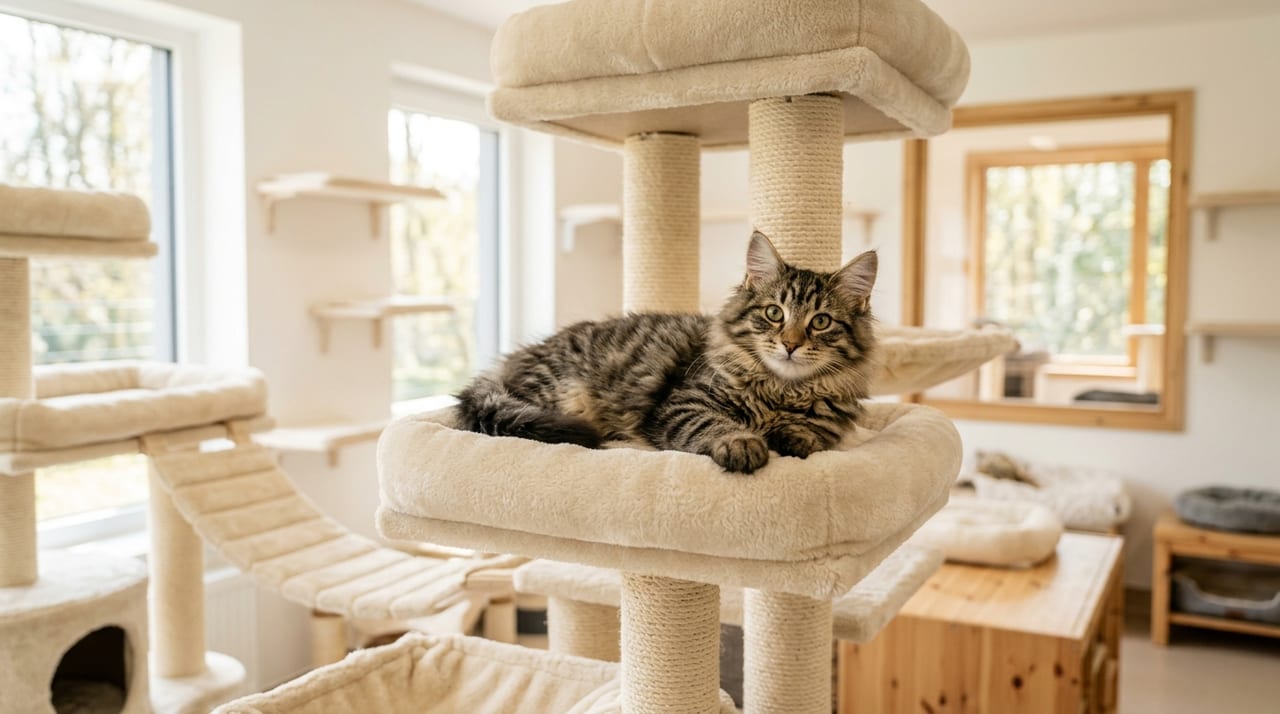
Environmental Enrichment: Cat "boredom" is a major factor in excessive grooming. It is important to install cat trees and hiding places, ensure areas with views to the outside, introduce interactive toys and puzzle feeders, and provide 15–30 minutes of playtime with the owner each day. Vertical spaces where cats can safely retreat (high shelves, catwalks) are also effective.
Pheromone Therapy: Use of Feliway (synthetic cat pheromone) diffusers or sprays has been shown to reduce anxiety and stress in cats. It is especially effective immediately after environmental changes or when introducing new pets.
Intervention in Excessive Grooming: By redirecting the cat to another activity (play with toys, food tricks) the moment it begins grooming, it is possible to break the impulsive grooming cycle through behavioral modification. However, scolding or physically stopping the behavior is contraindicated as it increases stress.
Pharmacotherapy Options
When behavioral therapy and environmental enrichment alone do not provide sufficient improvement, pharmacotherapy may be considered under veterinary guidance.
Anti-anxiety and Antidepressant Medications: Fluoxetine (selective serotonin reuptake inhibitor), clomipramine (tricyclic antidepressant), buspirone, and similar medications are sometimes used for compulsive grooming in cats. These often require long-term administration and regular blood tests are necessary to monitor for side effects.
Pharmacotherapy must always be combined with behavioral therapy and environmental enrichment. Medication alone cannot resolve the underlying stress factors.
The Reality of Complete Recovery and Long-Term Management
Psychogenic alopecia can recur even after improvement due to new stress factors. The key to long-term management is for the owner to remain vigilant to stress factors and consistently maintain environmental enrichment.
In severe or chronic cases, complete recovery may take several months. It is recommended to maintain continuous collaboration with a veterinarian or veterinary behaviorist while keeping treatment records.
Summary
Feline excessive grooming and psychogenic alopecia are managed by first ruling out medical causes, then combining identification of stress factors, environmental enrichment, behavioral therapy, and pharmacotherapy as needed. Early detection and prompt intervention prevent progression of skin damage and improve the cat's quality of life. We recommend paying attention to changes such as thinning fur and consulting with a veterinarian.