Complete Guide to Stopping Your Cat's Gentle Biting and Biting Habits | Cause-Based Solutions and Kitten Training
Understand why cats gently bite or bite hard—analyzing causes by type, including play, excitement, pain, and fear. This practical guide covers kitten training, what not to do, and environmental improvements.
Key Takeaways
Understand why cats gently bite or bite hard—analyzing causes by type, including play, excitement, pain, and fear. This practical guide covers kitten training, what not to do, and environmental improvements.
Living with cats, you may experience gentle biting on your hands or feet while playing, or suddenly being bitten hard while petting. Many cat owners are puzzled by this "Why does it hurt?" However, there's always a reason behind a cat's biting behavior. If you identify the cause correctly, you can respond calmly without scolding. This article categorizes biting causes by type, and following behavioral science principles, explains kitten training, how to handle problem behavior in adult cats, and what NOT to do.
✍️
BreederDirect Editorial
The BreederDirect editorial team specializes in care information for animals, covering veterinary care and breeding to deliver beginner-friendly guides.
Find Cats on BreederDirect
Buy directly from verified breeders
Browse Related Listings
Find Cats listings related to this article on BreederDirect. Buy directly from verified breeders.
Related Tools
Related Articles
Pet life
Three linked services: pet-friendly homes, buying directly from breeders, and pet-friendly places.
Even if "biting habits" seem like one thing, the underlying causes are completely different. The first step is to observe "what situation triggers it" and "what kind of bite occurs," then narrow down the cause.
The representative biting causes fall into these 4 types.
Play-Related Aggression (Play-induced) — Your cat treats moving hands and feet as prey. This is especially common in kittens through one-year-old young cats; the bites aren't particularly strong and occur within the flow of play.
Petting-Induced Aggression — Your cat suddenly bites while you're petting it. Pleasant sensations turn into overstimulation, and biting becomes a signal to say "stop now." The warning body language is easy to miss.
Redirected Aggression / Excitement-Related Aggression — Excitement builds toward another target (a cat outside the window, visitors, etc.) and gets directed at the person nearby. It often feels like a sudden unprovoked bite.
Defensive Aggression / Pain-Related Aggression — Your cat bites when cornered and frightened, or when a painful area is touched, as a self-protective measure.
If your usually calm cat suddenly starts biting, or shows resistance to being touched in specific places, it's important to have a veterinarian check for physical abnormalities before assuming a behavioral problem. Hidden ailments like oral inflammation or arthritis can cause pain-related behavior.
Kitten Training — Don't Make Your Hands into "Acceptable Biting Targets"
Kittens learn to control their biting force from just a few weeks old through play with siblings and their mother. Kittens separated early from their littermates and mother often don't develop this control and tend to bite human hands hard. How you interact during the kitten stage greatly influences the cat's biting habits later.
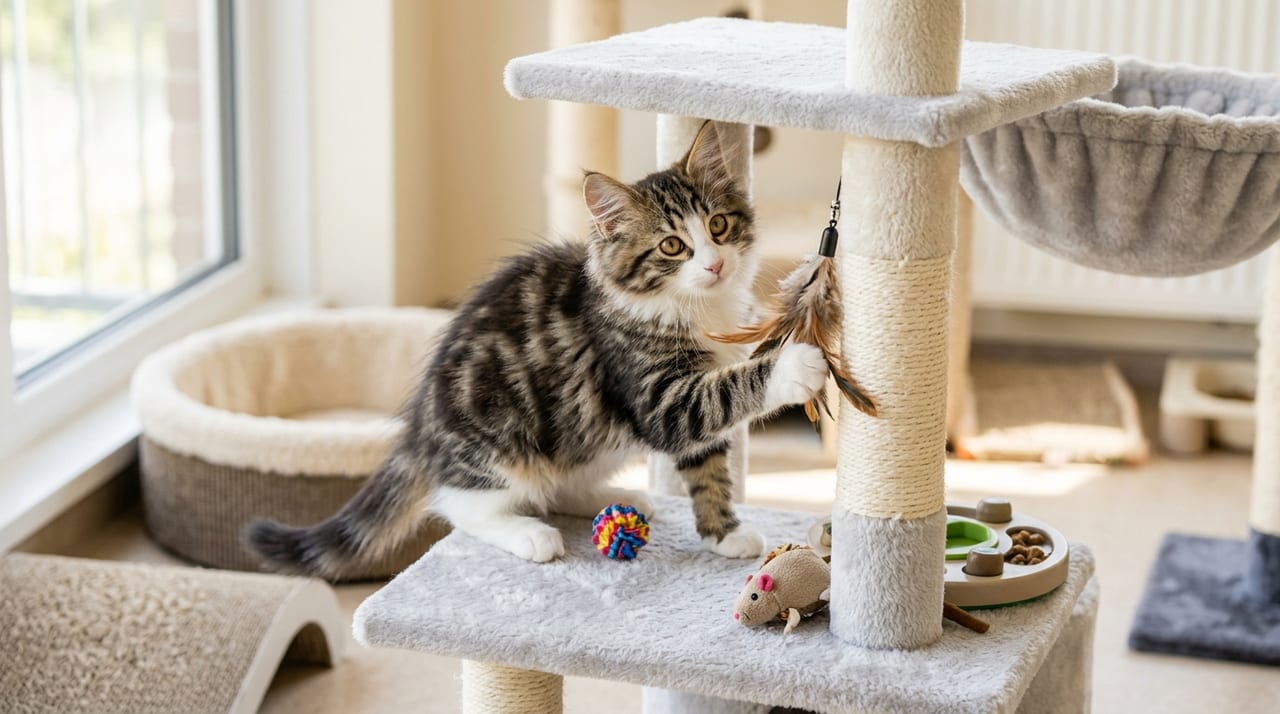
The most important rule is "don't make your hands or feet into toys." If you wiggle your fingers to get the kitten to chase or let it pounce on your hands, the cat learns "human hands are moving prey I can bite." When playing, use toys like cat wands or kick toys that stay away from your body, and redirect the cat's hunting drive to the toy instead.
When bitten, follow these steps:
Don't pull your hand away quickly (movement looks like prey fleeing)
Keep your hand still and pause the play
Stand up quietly and step away slightly
By consistently repeating the result "biting ends the fun game," the kitten gradually learns. During the teething period, kittens may want to bite due to itchiness, so keeping approved chewing toys within easy reach makes it easier to redirect the biting to appropriate targets.
Absolute Don'ts — Mistakes That Make Things Worse
Some approaches meant as discipline actually make the problem worse. Knowing these in advance helps you avoid unnecessary stress.
No-No Behavior
Why It's Bad
Hitting, flicking the nose, or holding down
Causes pain and fear, teaching the cat that "human hands = threat." This makes the cat bite even more defensively.
Yelling loudly
Creates chronic anxiety. Anxious cats tend to become more aggressive.
Spraying water
Only temporarily stops the behavior and doesn't solve the root issue, while building distrust of humans.
Continuing to pet while being bitten
You ignore the cat's "stop" signal, creating a situation where the cat has no choice but to bite harder.
Rather than thinking "I need to punish the cat to stop it," the mindset "reduce situations that make the cat want to bite and replace it with different behavior" is the most reliable shortcut, even though it may seem roundabout.
Type-Specific Solutions
The solution changes when the cause is different. Respond according to the type you've identified through observation.
For play-related aggression, the key is providing enough energy release. Set up 1–2 focused 10–15 minute play sessions per day, and let your cat fully experience the "chase and catch" cycle with a cat wand. End play by letting the cat catch the toy for a sense of accomplishment, then feed it right after—this creates a natural cycle of "hunt → eat → rest" and helps the excitement settle down.
For petting-induced aggression, practice recognizing warning signs before the bite. Ears turning back, tail thumping slightly, skin twitching, body stiffening—when these signs appear, stop touching before the bite happens. Keeping petting sessions short and only touching when the cat comes to you first helps stabilize the relationship.
For redirected or excitement-related aggression, identify the trigger (a stray cat outside the window, visitors, etc.) and keep it at a distance if possible. When the cat is excited, avoid forcing physical contact; instead, give it time to calm down in a separate room.
If pain or illness is suspected, prioritize a health checkup at your vet first. Once the underlying condition is resolved, the biting behavior often settles down.
Creating an Environment That Reduces the Urge to Bite at the Root
Biting behavior is deeply connected to boredom, lack of exercise, and stress. Alongside training, it's important to create an environment where your cat's physical and mental needs are met.
Vertical movement opportunities: Provide cat trees or shelves that create height variations in the space
Safe hiding spots: Set up a narrow, dark space where the cat can retreat
Window observation spots: Ensure a place to view outside and provide appropriate stimulation
Puzzle feeders and enrichment toys: Use slow-feeding toys that let the cat work for food, fulfilling hunting instincts
Resource management for multiple cats: Use the guideline of "number of cats + 1" for food bowls, litter boxes, and resting areas to reduce tension from competition
Building a routine that includes playtime at fixed times each day, allowing energy to be released healthily, is also effective in reducing biting at humans.
If behavior doesn't improve despite environmental enrichment and consistent interaction, or if bites are strong and cause bleeding, consult your veterinarian or a feline behaviorist. Your cat's biting is communication from your pet. Understanding the cause and responding with creativity rather than punishment is the reliable way to improve biting habits while maintaining trust.
BreederDirect features articles on cat care basics to know before bringing a kitten home, and information about cat breed personalities and health management. If you're preparing to welcome a cat to your family, please use these articles alongside information about kittens from breeders on our marketplace.