How to Start a Multi-Cat Household | Steps for Introducing Your Existing Cat to a New Cat
A detailed guide to gradual introduction methods, compatibility assessment, and troubleshooting strategies for successfully managing a multi-cat household.
Key Takeaways
A detailed guide to gradual introduction methods, compatibility assessment, and troubleshooting strategies for successfully managing a multi-cat household.
Prior Preparation: Setting Up Your Environment and Supplies
Before bringing a new cat home, the first step is to secure a dedicated space where the newcomer can safely settle while maintaining a comfortable environment for your existing cat.
Set up a dedicated room for the new cat (a smaller space like a bathroom or bedroom is ideal), and arrange a complete set of essentials: litter box, food dish, water fountain, scratching post, and cat tree. Keep your existing cat's living space as is, creating an environment where both cats can live independently.
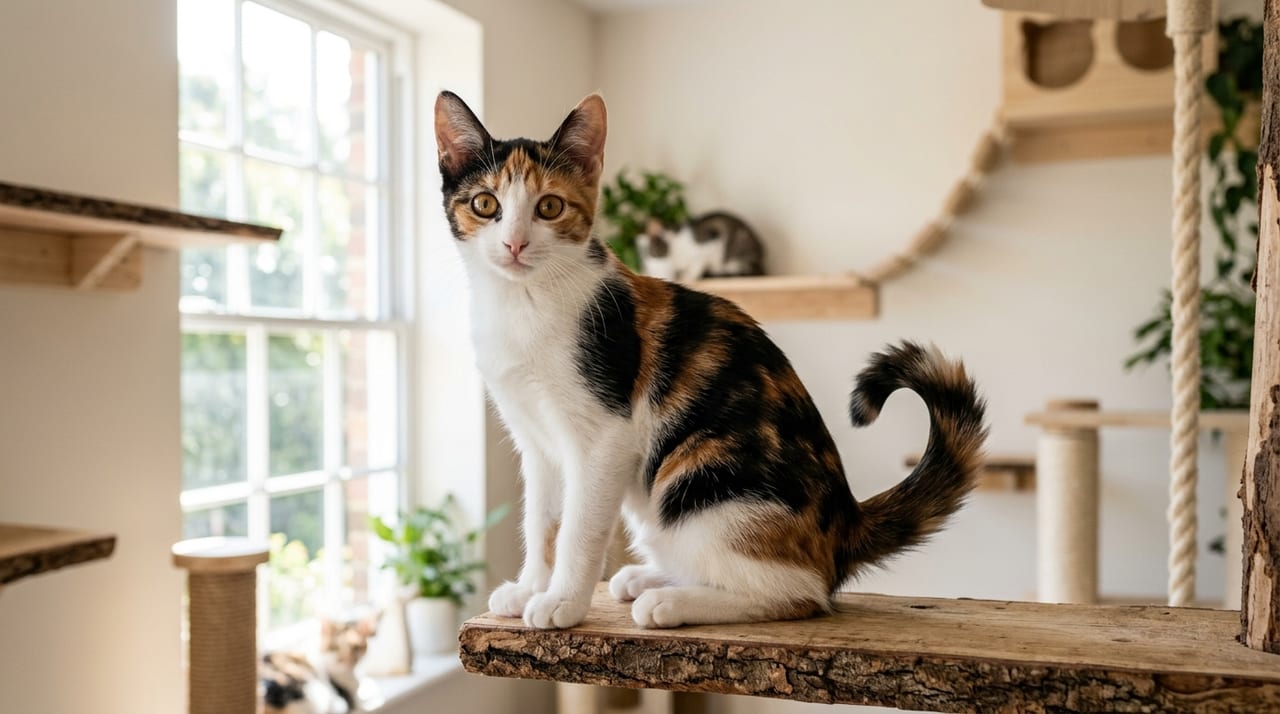
Securing "escape routes" is particularly crucial. Cats manage stress by retreating to high places. By providing multiple elevated spots (cat walks, shelves, upper levels of cat trees) for both your existing and new cat, you can significantly prevent problems later. The basic rule for litter boxes is "number of cats plus one." For example, with two cats, place three boxes in different locations. Territorial cats experience considerable stress from competing over litter boxes. If you want to reconsider your room layout, check out Multi-Cat Household Environmental Setup Guide | How to Prevent Conflicts and Help All Cats Live Comfortably for added peace of mind.
Pheromone products like Feliway are also effective when set up in advance. By using plug-in diffusers in both spaces, you can ease tension before the cats even meet face-to-face.
Step 1: Scent Recognition Only (Days 1-5)
For the first 3–5 days, avoid any physical contact. However, actively exchange scents between them.
- Place towels or blankets used by the new cat near your existing cat's sleeping area
- Bring toys your existing cat has used into the new cat's room
- After meals, swap their food dishes so each can lick the other's residual scent
For cats, scent is the primary tool for identifying each other. By introducing the new cat's scent before any face-to-face meeting, your existing cat's perception shifts from "unknown creature" to "familiar presence." If your existing cat growls or raises its fur during this phase, it's largely a normal reaction. Don't force adjustment; continue until your existing cat calmly sniffs the scent.
Conduct scent exchanges 1–2 times daily, aiming for 5–10 minutes per session. Once reactions become calm, move to the next step.
Step 2: Voice and Presence Through the Door (Days 5-10)
Once your cats are accustomed to scents, share their presence through a closed door. They can peek with their noses or paws under the gap and hear each other's sounds, building non-visual information.
Feeding is highly effective at this stage. Feed each cat on opposite sides of the door. This creates a positive association—"the other cat's presence means good food"—lowering the psychological barrier to meeting. Start with food bowls placed away from the door and gradually move them closer over several days.
Even if your cats hiss through the door, once they can continue eating despite these warnings, it's a good sign to move to the next step.
Step 3: Visual Meetings (Days 10-20)
Once your cats are comfortable with door-based interactions, use a transparent plastic barrier or baby gate so they can see each other while maintaining distance. Adding visual information to scent and sound allows the cats to recognize each other more concretely.
Start by checking if your cats can relax 1–2 meters away from the barrier. If they approach out of curiosity and touch noses through it, that's a good sign. However, if either cat continues hissing, refuses to eat, or stays hidden in a corner, extend this stage for several more days.
There's no need for long viewing sessions at once. Start with 5–15 minutes per session, gradually extending the duration as both cats remain calm.
Step 4: First Meeting in the Same Space (Days 20-30)
Finally, remove the barrier and let them share the same space. Choose a room with plenty of escape routes, like a large living room, and always supervise their first meeting.
Ideally, use toys to redirect their attention as they approach. With a wand toy or laser pointer, you can create moments where curiosity outweighs caution. Feed them in the same room but at a distance, gradually building cohabitation time.
Chasing and sudden swatting commonly occur at this stage. Light chasing is normal in cat society, but avoid one-sided attacks or situations where escape becomes impossible. If needed, use a spray bottle to stop the interaction and return to Step 3 immediately. Forcing continued contact to "get them used to each other" often worsens their relationship instead.
Troubleshooting Incompatibility
If intense attacks persist despite ample time or if either cat stops eating or using the litter box, consider consulting a veterinarian. Stress-induced idiopathic cystitis and appetite loss can develop into serious health problems if ignored. If cohabitation has already begun and their relationship has deteriorated, refer to Repairing Conflict in Multi-Cat Homes | Gradual Re-Integration Process and restart by separating them for a while.
Adult cats, especially males together or adult-kitten pairings, tend to show more compatibility issues. Yet in most cases, slow acclimation over six months to a year creates stable cohabitation. They don't need to become best friends; peaceful coexistence in the same space is one valid goal.
If both cats' wellbeing declines significantly, lifelong separate-room management is a perfectly valid choice. Depending on their personalities, ages, and past experiences, it may be the best option.
Summary
Success in multi-cat living comes down to one principle: don't rush. By carefully following each step, you can welcome the new cat while minimizing stress for your existing cat. There's no need to complete each step in just a few days—remain flexible and adjust based on how they respond. Cats that follow proper introduction procedures often develop deep bonds over time, even grooming each other. Take your time, respect your cats' pace, and enjoy your multi-cat life.