A Guide to Distinguishing Cat High (Excitement Episodes) from Problem Behavior | Differences from Sudden Running, Strange Vocalizations, and Aggression
Sudden nighttime running and vocalizations in cats. How to distinguish between cat high and problem behavior, and solutions explained
Key Takeaways
Sudden nighttime running and vocalizations in cats. How to distinguish between cat high and problem behavior, and solutions explained
What Is Cat High?
If you own a cat, you've probably witnessed this scene at least once. Your cat was quietly curled up, and then suddenly seemed possessed, sprinting full force around the room, scaling the walls, knocking over furniture, and then a few minutes later casually starts grooming as if nothing happened. This phenomenon is called "cat high (Kitty Crazies)" or "Zoomies," and it's a normal physiological behavior deeply rooted in feline nature.
✍️
BreederDirect Editorial
The BreederDirect editorial team specializes in care information for animals, covering veterinary care and breeding to deliver beginner-friendly guides.
Find Cats on BreederDirect
Buy directly from verified breeders
Browse Related Listings
Find Cats listings related to this article on BreederDirect. Buy directly from verified breeders.
The African wildcat, the ancestor of the domesticated cat, is a predator that hunts from late afternoon through the night. That genetic programming has been passed down to modern indoor cats, and cat high occurs when nervous energy is suddenly released at night. Dopamine and serotonin are released in the brain, driving a strong desire for movement and excitement. This is a mechanism similar to how humans experience runner's high after intense exercise.
Cat high is particularly common in young cats aged 1–3 years. The frequency is highest when hunting instincts are not yet regulated, and it tends to naturally decrease with age.
Typical Patterns of Cat High Behavior
Cat high has common characteristics. When multiple of the following patterns occur together, it's almost certainly cat high.
Suddenly starts running without any external stimulus, despite being completely still moments before
Rapid straight-line running, sharp turns, and vertical jumps occur in quick succession
Pupils dilate widely, and ears flatten to the sides or back
Tail puffs up, fur on the back stands on end, and the body appears noticeably larger
Makes short, high-pitched vocalizations or growls while running
Naturally subsides within a few minutes to 15 minutes, followed by grooming or sleep
The "fluidity" of movement is also a characteristic of cat high. One action transitions into the next before completion, creating a continuous sequence that uses the entire room. This is essentially a hunting simulation tracking prey, fundamentally different from the repetitive targeting of a specific object.
How to Distinguish from Problem Behavior
While cat high and problem behavior may seem similar at first glance, they can be clearly distinguished in several ways.
Aspect
Cat High
Problem Behavior
Trigger
Spontaneous and sudden (no external stimulus)
Reaction to specific stimulus or situation
Duration
Naturally subsides in minutes
Repeats or continues for extended periods
Attack target
Varies and doesn't fixate
Consistent targeting of specific person, object, or location
State after behavior
Satisfied, relaxed, sleeps
Tense, anxious, behavior repeats
Time of day
Mainly evening to midnight
Any time of day
The "depth" of aggression is also an important diagnostic criterion. Even if a cat playfully pounces on your foot during cat high, the bite force is controlled, and it rarely applies enough pressure to cause deep skin wounds. In contrast, genuine attacks based on fear or territorial instinct are clearly different: the cat's entire body becomes rigid, the growl becomes low and sustained, and the bite is deep without warning.
Stress-related problem behavior is often accompanied by hair loss from excessive grooming (psychogenic alopecia), repetitive sucking behavior, and significant changes in appetite, and is not limited to specific times of day. Cat high does not affect appetite; rather, appetite typically returns to normal after the episode.
Consult a Veterinarian in These Cases
When you notice the following signs, there may be an underlying medical or behavioral issue beyond simple cat high.
Breathing remains rapid for an extended time after cat high, or the cat appears weak
Suddenly stops and cries while running, repeatedly touching the same spot (possible pain)
Occurs consistently before or after defecation (running after defecation may indicate discomfort in the perineal area)
Sudden increase in frequency in older cats (8 years and older), suggesting hyperthyroidism or similar conditions
Appears to lose consciousness and doesn't respond to calls (differentiation from seizure-like episodes is necessary)
Post-defecation cat high is a well-known behavior and is usually normal. However, if your cat cries as if in distress during defecation or shows signs of bloody urine or frequent urination, seek immediate veterinary care for possible urinary tract issues.
Creating an Environment to Reduce Nighttime Cat High
You don't need to eliminate cat high entirely, but if you're frequently woken up at night or experiencing ongoing furniture damage, you can adjust the frequency and intensity through environmental modifications.
The most effective approach is to engage your cat in "hunting games" using laser pointers or feather wands for 1–2 hours before bedtime. If you offer a small meal after play, mimicking the full predation sequence (chase → catch → eat → rest), the cat's nervous system is more likely to settle down.
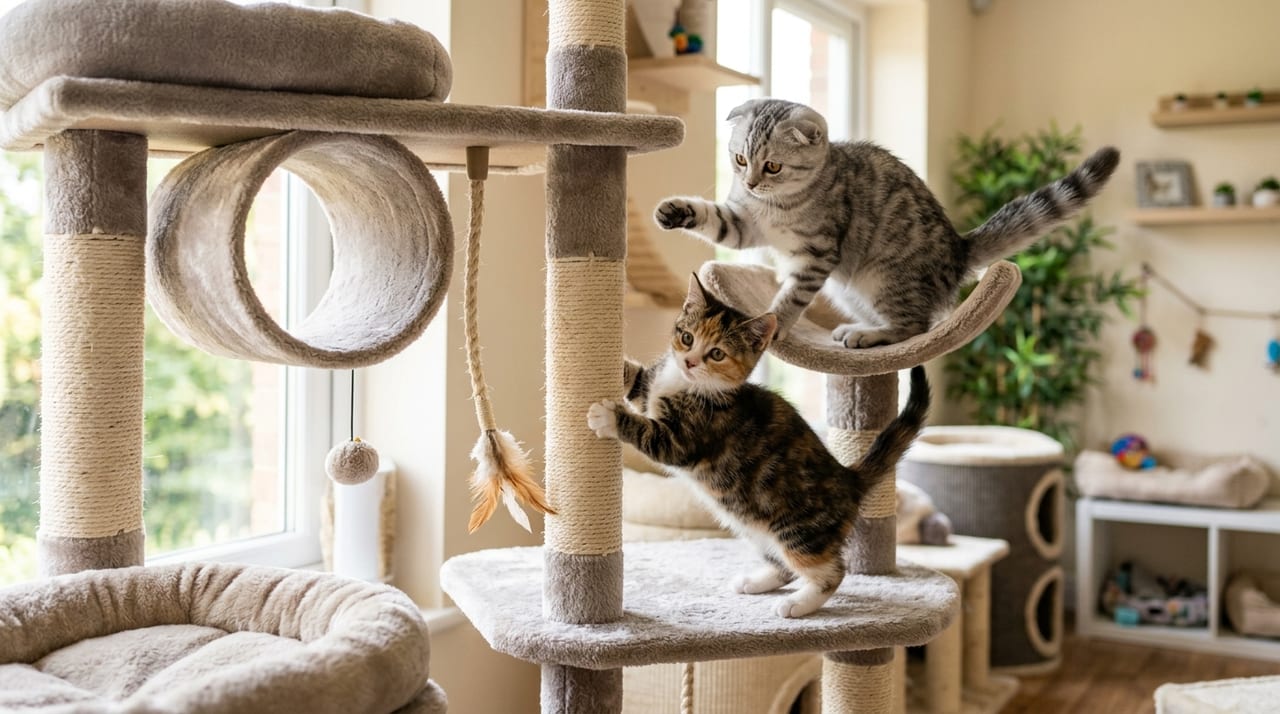
Increasing environmental complexity is also effective. Installing three-dimensional structures such as cat trees, climbing boards, and tunnels increases opportunities for spontaneous activity and disperses energy throughout the day. Providing window perches where your cat can observe outdoor movement also provides mental stimulation.
Summary
Cat high is a natural and necessary behavior for cats—the eruption of wild hunting instincts within the confined environment of a home. While the sudden full-speed sprinting, strange vocalizations, and excited expression may startle you, these are signs of physical and mental health. You can distinguish it from problem behavior by recognizing that it "begins spontaneously and ends quickly," the cat "relaxes afterward," and "the target of aggression doesn't remain fixed." If an older cat suddenly increases frequency, or if issues with defecation or breathing difficulties appear, don't hesitate to consult a veterinarian. By understanding your cat's natural rhythms and providing an appropriate play environment, you can coexist with cat high in a way that works for both of you.