Complete Water Quality Management Guide for Caridina Shrimp | Ideal pH, TDS, Hardness, Temperature & Adjustment Methods
A guide to water quality management essential for keeping Caridina shrimp (Crystal Red, Tiger Bee, Shadow Shrimp, etc.). Covers appropriate values for pH, TDS, GH, KH, and water temperature, along with concrete adjustment methods for maintaining soft water conditions.
Key Takeaways
A guide to water quality management essential for keeping Caridina shrimp (Crystal Red, Tiger Bee, Shadow Shrimp, etc.). Covers appropriate values for pH, TDS, GH, KH, and water temperature, along with concrete adjustment methods for maintaining soft water conditions.
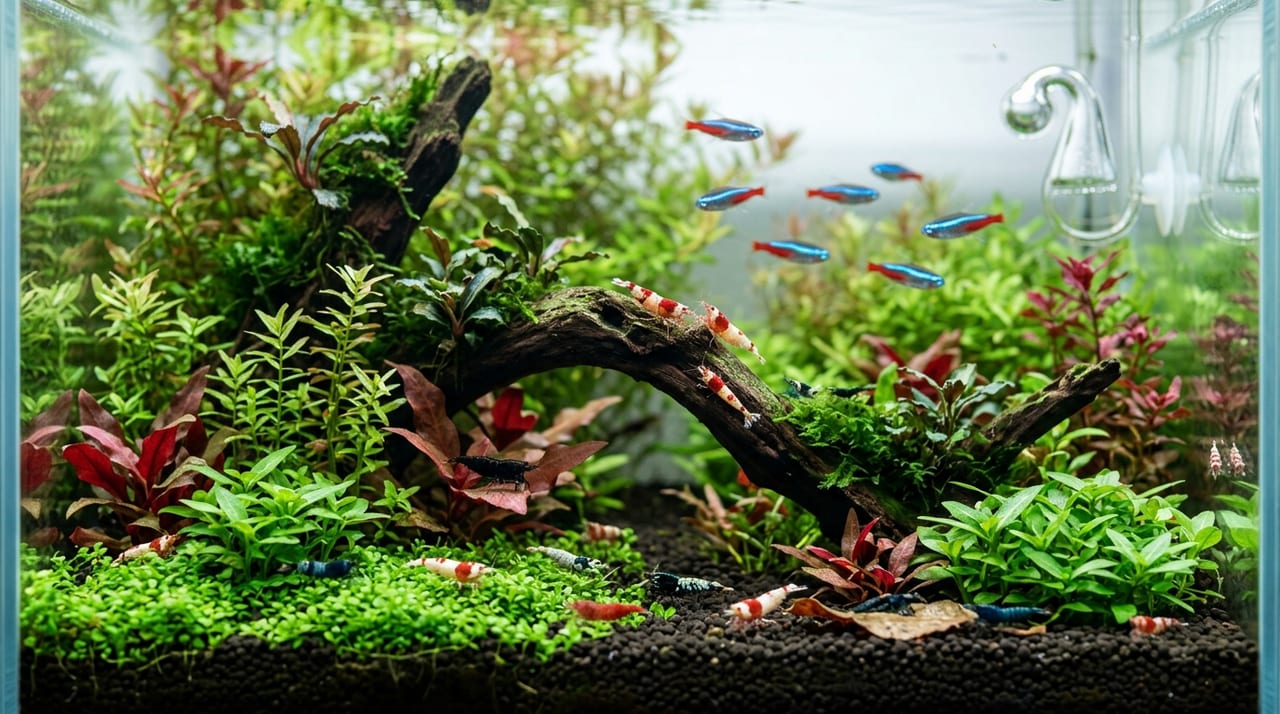
Caridina shrimp (Crystal Red Shrimp, Crystal Black Shrimp) and other Caridina species require more delicate water quality management compared to Cherry Shrimp (Neocaridina species). When proper water quality is maintained, breeding becomes enjoyable, but failure to maintain it risks total loss within a short period. This article explains the appropriate water quality parameters necessary for Caridina shrimp and concrete methods to achieve them.
✍️
BreederDirect Editorial
The BreederDirect editorial team specializes in care information for animals, covering veterinary care and breeding to deliver beginner-friendly guides.
Find Tropical Fish on BreederDirect
Buy directly from verified breeders
Browse Related Listings
Find Tropical Fish listings related to this article on BreederDirect. Buy directly from verified breeders.
Appropriate Water Quality Parameters for Caridina Shrimp
Caridina shrimp prefer slightly acidic, soft water environments. The following are generally recommended water quality guidelines.
Parameter
Ideal Range
Notes
pH
5.8–6.8
6.2–6.5 is ideal
TDS (Total Dissolved Solids)
100–150 ppm
High-grade varieties prefer 80–120
GH (General Hardness)
3–5 dGH
Maintain soft water
KH (Carbonate Hardness)
0–1 dKH
Zero is nearly ideal
Water Temperature
20–24°C
Cooling essential in summer
Ammonia
0 mg/L
Perform immediate water change if detected
Nitrite
0 mg/L
Confirm bacterial colonization
Neocaridina (Cherry Shrimp) can be kept at pH 6.5–7.5 and TDS 150–250 ppm, but Caridina requires lower hardness and more acidic water quality.
pH Management and Soil's Role
Soil plays a central role in pH management. Caridina-specific active soils (e.g., Master Soil, Project Soil, Life Soil) adsorb carbonates in the water and maintain pH at approximately 5.8–6.8.
However, the buffering effect of soil gradually decreases with use. Generally, pH-maintaining ability declines after 1–2 years, making periodic replacement necessary.
As alternative pH adjustment methods besides soil, there are leaf litter (Magic Leaf, Almond Leaf) and blackwater additives (containing tannins and humic acids). These gradually lower pH while also enhancing shrimp coloration.
TDS (Total Dissolved Solids) Management
TDS indicates the total amount of minerals and organic matter dissolved in water. For Caridina shrimp, 100–150 ppm is the target, with high-grade specimens (such as No Entry Grade and Flag Grade) tending to prefer lower levels (80–120 ppm).
Causes and Solutions for High TDS
TDS rises from accumulation of food and waste when water changes are neglected
Excessive addition of mineral supplements also raises TDS
Gradual reset through small 10–15% weekly water changes
When TDS is Too Low
Mineral deficiency causes molting failure and reduced reproduction
Adjust by adding small amounts of shrimp-specific mineral supplements (e.g., Salty Shrimp GH+)
A TDS meter costs several thousand yen and is extremely useful for daily management. I strongly recommend having one on hand along with a pH meter.
Water Source Selection: Methods for Softening Water
Japan's tap water hardness varies considerably by region. The Kanto Plain has relatively soft water, but some limestone areas and parts of western Japan have hard water.
Methods for Preparing Water for Caridina Shrimp
Using RO Water (Reverse Osmosis Filtered Water) The most reliable method for softening. RO water purifiers produce nearly pure water, to which you add shrimp-specific mineral supplements in appropriate amounts to adjust TDS. While initial investment (¥10,000–30,000) is required, water quality can be completely controlled.
Using Commercial Soft Water (Natural Spring Water) Another method is using ultra-soft bottled spring water such as Southern Alps natural water (hardness approximately 30 mg/L). For small tanks, this is economically feasible.
Using Ion Exchange Resin Another method involves using ion exchange resin filters to soften hard water.
Water Change Method and Frequency
Water changes suited to Caridina shrimp follow the principle of "small volume, low frequency, slow addition."
Volume: 10–15% of total (large water changes are prohibited)
Frequency: Once or twice per week
Method: Use drip or point-drop method for slow water addition
Temperature Difference: Keep temperature difference from tank water to 1°C or less
Abrupt water changes stress shrimp severely, triggering molting or worst-case shock death.
Conclusion
Success in keeping Caridina shrimp depends on precision in water quality management. Understanding appropriate values for pH, TDS, GH, and KH, and developing the habit of checking regularly with measuring instruments is the key to long-term care and successful breeding. It may seem difficult at first, but once stable water quality is established, the joy of witnessing the breeding cycle of egg-bearing, hatching, and juvenile shrimp growth awaits.
At BreederDirect, you can directly purchase high-quality Caridina shrimp managed by domestic breeders. Once your water quality is set up, please give it a try.