First Week After Receiving Your Pet — Complete Guide to Successful Acclimation
How to help your new pet adapt during the critical first week: water acclimation, temperature adjustment, feeding, and stress signs.
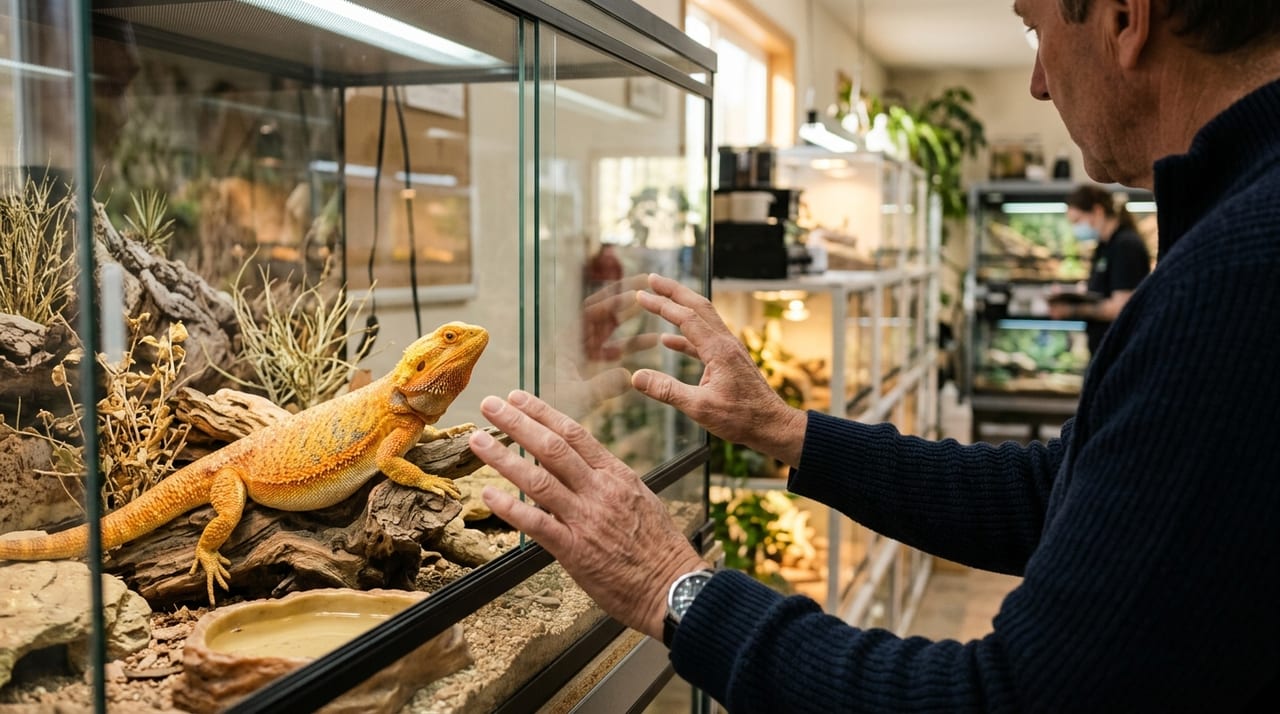
Key Takeaways
How to help your new pet adapt during the critical first week: water acclimation, temperature adjustment, feeding, and stress signs.
The first week after bringing your reptile home is critical. During acclimation period, stress-related health issues frequently arise. Proper first-week care determines whether your animal thrives or struggles with chronic health problems. We'll explain essential first-week management steps.
Preparing Before Arrival
Success begins before your animal arrives home.
Enclosure setup: - Set target temperature and verify it stabilizes 24-48 hours before arrival - Provide hiding spots (hides reduce stress significantly) - Position food and water access away from major air currents - Avoid direct sunlight exposure - Dim lighting initially (bright light stresses new arrivals)
Research species requirements: Know your specific animal's temperature, humidity, and feeding needs. Species-specific knowledge prevents trial-and-error mistakes that stress animals.
Gather supplies: Food appropriate for age/size, water dishes, temperature measuring devices, handling tools. Last-minute shopping creates unnecessary delays during critical acclimation.
Days 1-3: Minimal Handling
The first days demand patience. Resist urges to handle or observe constantly.
Initial placement: Move your animal from transport container to prepared enclosure quietly. Minimize noise and activity nearby. Let animal settle undisturbed for 24 hours.
Observation only: Monitor from distance—don't handle for at least 3 days. Observe for normal behavior indicators: exploring the enclosure, using hides, eventual feeding interest. These behaviors indicate successful settling.
Avoid early feeding: Many breeders recommend not feeding during days 1-3. Animals rarely eat during acute stress period anyway. Early feeding can cause regurgitation if animal eats before temperature stabilizes.
Environment stability: Maintain consistent temperature (within 1°C of target), humidity, and light cycle. Sudden environment changes stress animals during already vulnerable period.