Complete Guide to Ball Python Feeding Refusal Countermeasures | From Identifying Causes to Solutions
Comprehensive explanation of the causes and countermeasures for ball python feeding refusal. Practical introduction to cause-specific solutions including shedding, breeding season, stress, and environmental issues, as well as how to switch from frozen to live feeders.

Key Takeaways
Comprehensive explanation of the causes and countermeasures for ball python feeding refusal. Practical introduction to cause-specific solutions including shedding, breeding season, stress, and environmental issues, as well as how to switch from frozen to live feeders.
Related Species
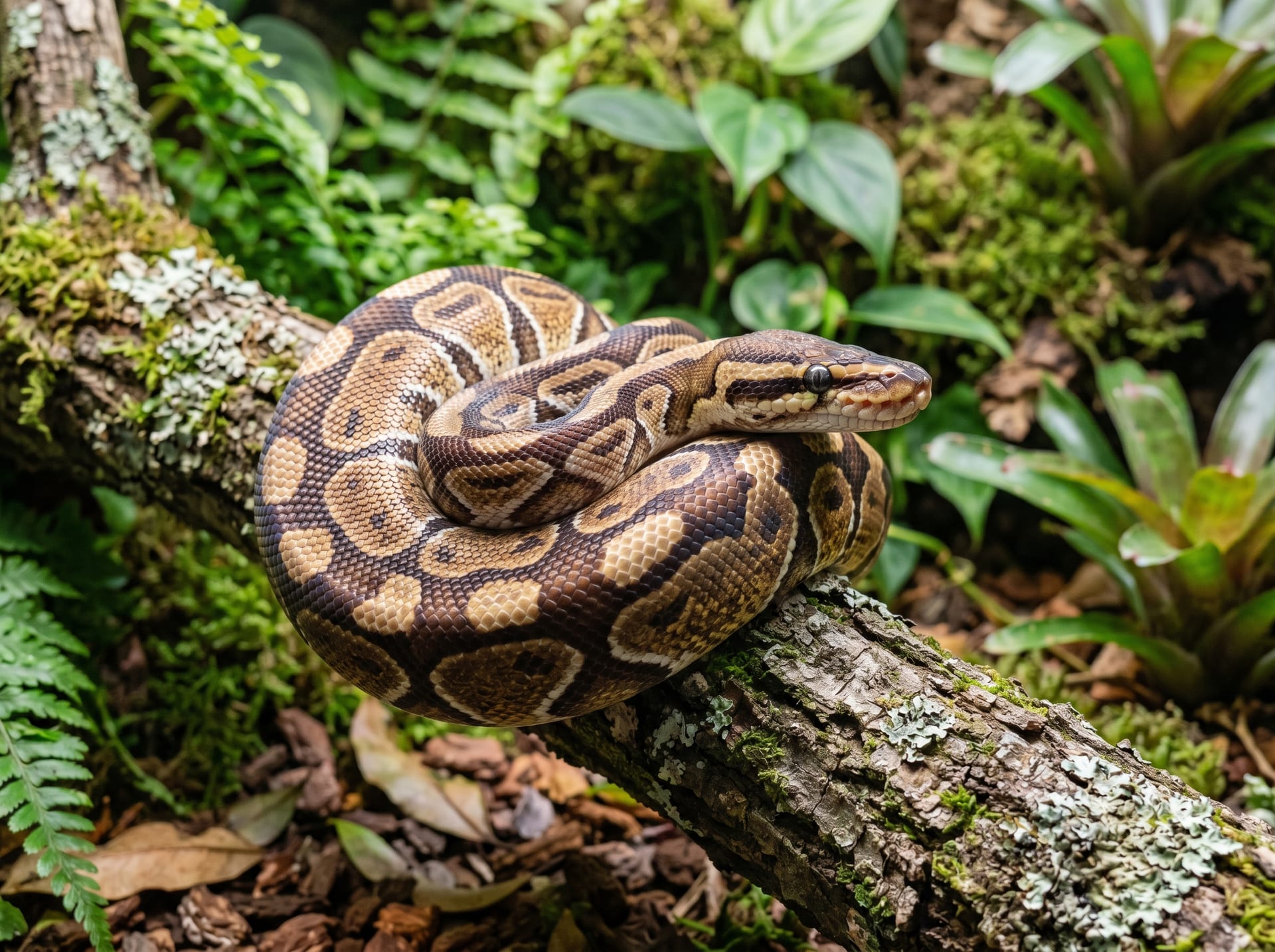
Is Ball Python Feeding Refusal "Normal"?
When keeping ball pythons, you may encounter a situation where your snake suddenly stops eating. This phenomenon is called "feeding refusal" (or anorexia), and it is one of the most troubling issues for keepers. However, what is important to understand is that ball pythons are particularly prone to feeding refusal among reptiles, and most cases can be resolved by properly identifying the cause and taking appropriate action.
In the wild, ball pythons commonly fast for several months during dry seasons when food is scarce. A healthy adult can withstand 2-3 months of feeding refusal without life-threatening consequences. However, juveniles (babies) or individuals less than 6 months old lack immunity and stamina, so feeding refusal lasting more than a month requires careful attention.
Feeding Refusal Causes and Solutions: Quick Reference
| Cause of Refusal | Signs | Solution |
|---|---|---|
| Pre-shedding (most common) | Eyes appear cloudy blue/body color dulls | Resume feeding 3-7 days after shed completion |
| Breeding season (winter, Oct-Feb) | Especially in males/seasonal pattern | Avoid forced feeding, focus on weight management |
| Environmental stress (temp/humidity) | Improper temperature/humidity | Warm side 35-38℃/cool side 27-30℃, humidity 60-70% |
| Inadequate shelter | Restless/won't hide | Provide hiding spots on both warm and cool sides |
| Feeding issues | Won't strike prey | Thaw to 40-42℃, size should match thickest part of body |
| Recently acclimated | Environmental change stress | Wait 2-4 weeks quietly, begin feeding after 1 week |
| Illness/parasites | 3+ months refusal/sudden weight loss/mouth discharge | Consult reptile veterinarian |
For healthy adults, 2-3 months of feeding refusal is usually not problematic, but babies should be monitored closely after 1 month.
7 Main Causes of Feeding Refusal
1. Pre-shedding Refusal (Most Common)
As shedding approaches, the eyes become cloudy blue (pre-shed), and the skin color dulls. Feeding refusal at this stage is completely normal. Resume feeding 3-7 days after the shed is complete. Attempting to force-feed a pre-shedding snake can cause digestive upset and should be avoided.
Confirmation checklist:
- Are the eyes cloudy blue?
- Has the skin lost its shine?
- Is the belly skin pinkish in color?
2. Breeding Season (Winter) Refusal
From October to February, especially males experience heightened breeding instinct and decreased appetite. This is also a natural phenomenon based on wild instincts. Females may also refuse food while preparing for egg production. Even if breeding is not intended, refusal during this period often persists for some time. Avoid forced feeding and focus on weight management instead.
3. Environmental Stress-Related Refusal
Improper management of temperature and humidity creates significant stress for ball pythons.
Temperature reference points:
- Hot spot (warm side): 35-38℃
- Cool spot (cool side): 27-30℃
- Nighttime temperature: 25-28℃
- Ideally use two thermometers (warm and cool sides) and verify with an infrared thermometer
Humidity reference points:
- Normal: 60-70%
- Pre-shedding: 70-80%
- Excessive dryness can cause feeding refusal and shedding problems
Low temperatures prevent digestive enzymes from functioning, which can result in "regurgitation" even after eating. If regurgitation occurs once, discontinue feeding for at least one week and review your care practices.
4. Enclosure Setup Issues (Inadequate Hiding Spots)
Ball pythons are shy by nature and require adequate hides where they can conceal themselves. Without appropriately sized hides, chronic stress develops, leading to feeding refusal.
Ideal hide conditions:
- Snug-fitting size (not too large)
- Opaque and not visible from outside
- One hide on the warm side and one on the cool side
- Plastic tub-style wet hides (which retain humidity) are effective
5. Feeding Method and Food Issues
Incorrect prey size: Frozen mouse or rat size should match the thickest part of the ball python's body. Prey that is too small may be ignored entirely.
Incomplete thawing of frozen food: If thawing is incomplete and the center is still cold, the snake cannot detect it through its heat sensors and won't strike. After thawing, verify with a thermometer that the prey has reached 40-42℃. Never use a microwave to thaw; water bath thawing at around 40℃ is optimal.
Changed food odor: Freezer odor transfer or excessively long storage periods reduce feeding response. The typical shelf life for frozen food is about 6 months.
6. Feeding Refusal After Acquisition
A newly acquired ball python may need 2-4 weeks to adjust to its new environment. Feeding refusal during this period is extremely common and the correct approach is to wait patiently for the snake to acclimate.
- Attempt first feeding one week or later after arrival
- Minimize handling and maintain a quiet environment
- Enclosure placement is also important (avoid high-traffic areas and areas near televisions)
7. Illness and Parasites
If the cause does not fit the above categories and refusal persists long-term (3+ months), or if you observe sudden weight loss, mouth discharge, or abnormal breathing, illness is possible. Consider consulting a reptile veterinarian.
Common diseases:
- Internal parasites (roundworms, coccidian)
- Respiratory infection
- Stomatitis (mouth rot)
- Internal organ disease
Practical Approaches to Managing Feeding Refusal
Step 1: Review Environment (Start with Environment)
Always verify temperature, humidity, and hides before feeding. Specifically, reconfirm that your thermostat is functioning correctly and your thermometer is accurate. Inexpensive bimetallic thermometers often have large margins of error; digital thermometers or infrared thermometers are recommended.
Step 2: Change Feeding Timing
Ball pythons are nocturnal. Attempting to feed in the evening (around 8 PM to 11 PM) with lights off often results in better feeding response than daytime feeding.
Step 3: Change How You Present the Food
- Brain spiking: Poke a needle into the head of a frozen mouse to release brain scent. Effective for ball pythons that hunt by smell.
- Wiggle with tongs: Move the prey like live food to stimulate the hunting instinct.
- Paper bag method: Place the snake and food in a small paper bag to darken the space. Being enclosed sometimes stimulates appetite.
Step 4: Change Food Type
- Frozen mice → Frozen rats (size increase)
- Mice → Different mouse sizes (adult, fuzzy, etc.)
- Occasionally switch to live food as a temporary measure (though not recommended due to bite injury risk)
Step 5: Soaking (Warm Bath)
A warm bath (10-15 minutes in approximately 30℃ water) can stimulate metabolism and aid digestion after feeding or help resolve feeding refusal as a supplementary measure. However, frequent soaking can be counterproductive; about once weekly is recommended.
Weight Management During Feeding Refusal
Continue monthly weight measurements during refusal periods. For adults, if weight loss exceeds 5% per month, consider consulting an animal hospital.
Baby to young weight guidelines:
- Hatchling: 60-80g
- 6 months: 200-300g
- 12 months: 400-600g
- Adult female: 1.2-1.8kg
- Adult male: 0.8-1.2kg
If a Snake Purchased from a Breeder Refuses Food
Questions to ask the breeder directly:
- What type and size of food was it eating?
- Feeding frequency and timing
- Enclosure size, temperature, and humidity settings
- Date of last feeding
After acquisition, shortening the refusal period is possible by matching conditions as closely as possible to the previous environment. One of the greatest benefits of purchasing from a breeder is being able to receive detailed feeding history.
Summary: Check Causes One by One Without Rushing
Most ball python feeding refusal is caused by environmental issues or physiological reasons. First verify temperature, humidity, and hides; next review feeding timing, food type, and thawing method. Following this order will resolve most cases. If refusal lasts more than 3 months or sudden weight loss is observed, do not hesitate to consult a reptile veterinarian.