Complete Guide to Ball Python Morphs (Color Variations) | Popular Varieties, Characteristics, and Price Ranges
Complete explanation of Ball Python morphs (color variation varieties). Covers genetic mechanisms, characteristics of popular morphs, precautions including neurological symptoms of Spider morphs, and selection tips and price ranges for reptile breeders.

Key Takeaways
Complete explanation of Ball Python morphs (color variation varieties). Covers genetic mechanisms, characteristics of popular morphs, precautions including neurological symptoms of Spider morphs, and selection tips and price ranges for reptile breeders.
Related Species
Calculate breeding probability on the spot
The genetic concepts explained in this article can be tested hands-on with the Morph Calculator. Simply select the morphs of the male and female parent, and the probability of appearance in offspring is displayed (compatible with Ball Pythons and Leopard Geckos • free).
What Are Ball Python Morphs?
The Ball Python (scientific name: Python regius) is a medium-sized python native to central West Africa. It is one of the most popular pet snakes in the world due to its docile temperament, compact body size, and relatively easy care requirements.
One of the Ball Python's greatest appeals is the abundance of "morphs." A morph is a genetic variation in color and pattern (a color morph), with over 1,000 morphs currently registered. These range from single morphs to "combo morphs" that combine multiple genes, creating virtually unlimited combinations.
Basic Genetics—Understanding Morphs
To understand Ball Python morphs, you need to know the basic mechanisms of genetics.
Types of Inheritance
1. Dominant Inheritance (Dominant) Expression occurs with just one copy. Heterozygotes (gene on one chromosome only) and homozygotes (gene on both chromosomes) may appear different.
Common examples: Spider, Pinstripe, Mojave
2. Recessive Inheritance (Recessive) Expression requires two copies (homozygous). With just one copy, the appearance is normal, but the individual carries the gene (heterozygous carrier).
Common examples: Albino, Axanthic, Clown, Piebald
3. Co-dominant Inheritance (Co-dominant) Expression occurs with one copy (heterozygous expression), and two copies produce a different phenotype (super form).
Common examples: Pastel, Lesser, Butter
Characteristics of Popular Morphs
Normal (Wild-type)
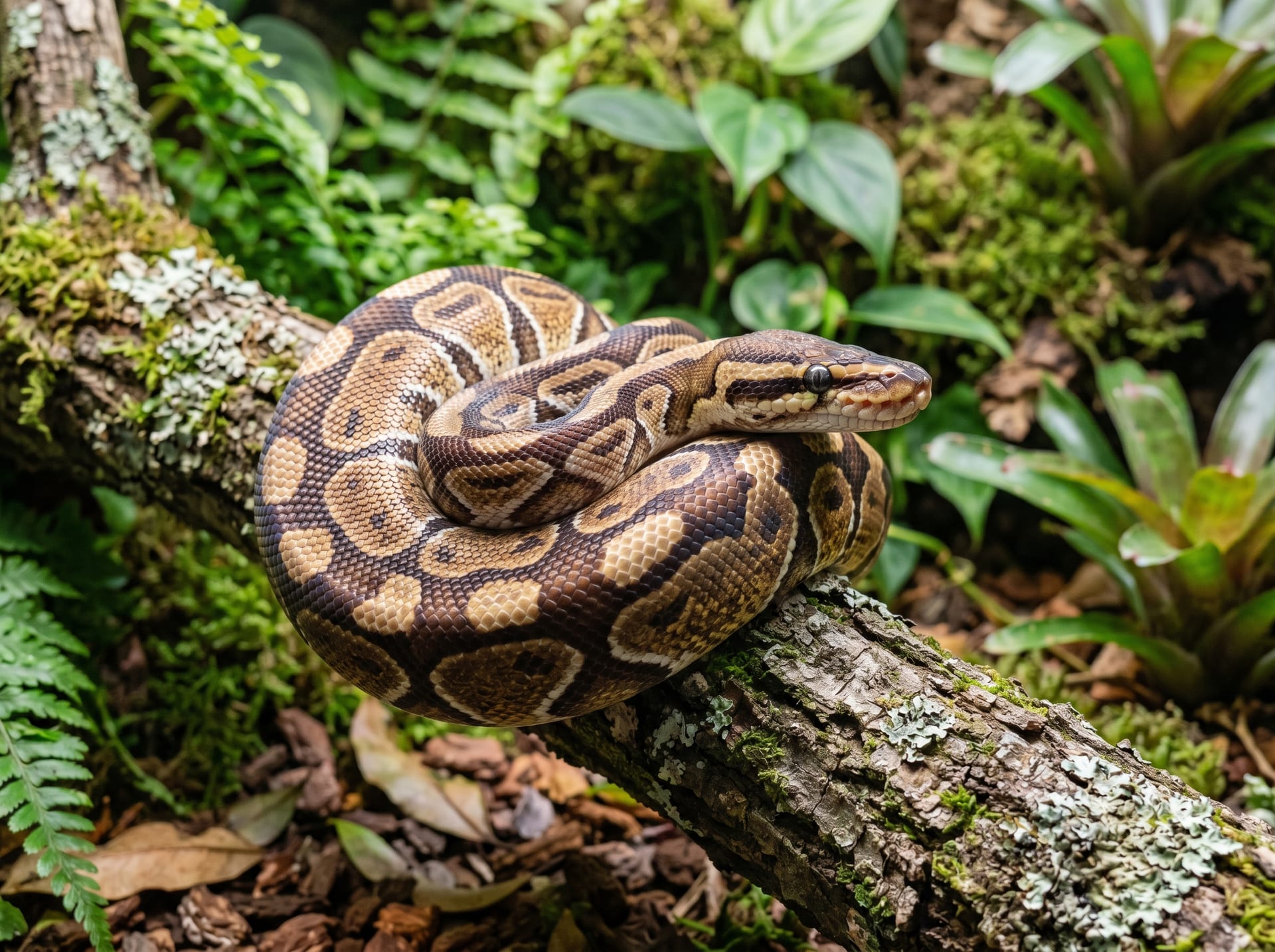
The wild-type with no morph, featuring a tan and black base with caramel-colored blotch patterns. Despite its simplicity, it retains the natural beauty of Ball Pythons and is ideal for beginners.
Price range: ¥3,000–¥10,000 (Japan domestic)
Albino (Albino)
A recessive morph with deficient black pigment (melanin), characterized by yellow, white, and orange patterns and red eyes. The first captive-bred individual was confirmed in 1992, making it a historic morph that essentially created the Ball Python morph market.
Price range: ¥15,000–¥40,000 Inheritance type: Recessive
Piebald (Piebald / Pied)
A morph with random white patches (piebald pattern) on the body, with the white area varying dramatically between individuals. Because it is recessive, it is only produced when both parents are heterozygous carriers. Its unpredictable pattern makes it highly popular.
Price range: ¥30,000–¥100,000 (more white area = higher price) Inheritance type: Recessive
Clown (Clown)
A recessive morph where body patterns become irregularly deformed and fragmented, with unique lines on the head. Despite its simplicity, it possesses distinctive beauty and creates various expressions when combined with other morphs.
Price range: ¥20,000–¥60,000 Inheritance type: Recessive
Pastel (Pastel)
A co-dominant morph with increased yellow tones and overall brightness. Simple on its own, but as an "amplifier" when combined with other morphs, it is an extremely important gene for highlighting color. Super Pastel (homozygous) becomes even more vivid yellow.
Price range: ¥10,000–¥30,000 Inheritance type: Co-dominant
Spider (Spider)
A morph where body patterns become thin spider web-like patterns and the ventral surface becomes white. It has strong visual impact and high popularity, but is known to carry neurological symptoms (wobble) (details below).
Price range: ¥15,000–¥40,000 Inheritance type: Dominant
Mojave (Mojave)
A co-dominant morph with a bluish body tone and distinctive patterns. Super Mojave displays a beautiful white and ice-blue coloration (also important as material for Super Blue Eyed Leucistic).
Price range: ¥15,000–¥40,000 Inheritance type: Co-dominant
Banana (Banana / Coral Glow)
A co-dominant morph characterized by orange to pink body color with black spots. A distinctive feature is that black spots (called "freckles") increase with age.
Price range: ¥20,000–¥60,000 Inheritance type: Co-dominant (with sex-linked characteristics)
Spider Morph Neurological Symptoms—Important Considerations
Spider morphs and combo morphs carrying the Spider gene are known to exhibit neurological symptoms (wobble syndrome).
Wobble Symptoms
- Head tremors and oscillation
- Missing when attempting to grasp food
- Corkscrew phenomenon (rolling in a spiral motion)
- Rolling upside down and losing directional sense
Care Considerations
Even individuals with mild wobble can typically feed and live normally in most cases. However:
- If the snake has difficulty striking food, support feeding with tongs
- These individuals tend to have difficulty shedding, so provide a permanent wet shelter
- In severe cases, consult a specialist (reptile veterinarian)
Ethical consideration: There is community discussion regarding whether to actively breed individuals with wobble. When using Spider genetics in breeding, transparency about this neurological symptom is important when explaining to potential buyers.
Combo Morph Examples
Combo morphs combining multiple single morphs often command high prices of tens of thousands of yen to hundreds of thousands of yen.
Popular combo morph examples
- Pastel Albino: Vibrant yellow and white combination (Pastel × Albino)
- Butter (Lesser × Butter) combo: Super form becomes Blue Eyed Leucistic (BEL), useful as breeding stock
- Clown Albino: Clown's pattern variation combined with Albino's yellow-white body color
- Pied Pastel: Pastel's vibrant colors enhance the white areas of Piebald
Selection Tips
Confirming Health Status
Health status takes priority over morph rarity.
- Eyes are clear (no cloudiness)
- Body has firmness throughout (no signs of dehydration)
- No wounds or infections on the ventral surface
- Normal breathing sounds (sounds from the mouth may indicate respiratory infection)
- Confirmed feeding response (if possible, ask to observe a feeding)
Choosing a Breeder
Purchasing from a trustworthy breeder is essential.
- Can provide genetic information (confirmed morph records)
- Can explain neurological symptoms if Spider genetics are involved
- Has records of parents' morphs and health status
Summary
Ball Python morphs represent a deep world where genetics and aesthetics converge. Beginners typically start with Normal or affordable morphs, gradually work toward combo morphs while learning genetics—this is the standard path.
Principles of morph selection
- Prioritize health over rarity; choose individual condition over appearance rarity
- For individuals carrying Spider genetics, consider them only after understanding the wobble risk
- Purchase from trustworthy breeders with genetic information provided
Ball Pythons live 20–30+ years or longer with proper care. Beyond the beauty of morphs, commit to long-term health management and responsible husbandry.