What to Do Right After Purchase | How to Spend the First Day to One Week with Your New Animal
A guide to the first steps after receiving your animal, laid out in a day-by-day schedule for the first week. Covers arrival confirmation, environmental acclimation, first feeding, and health check tips.
Key Takeaways
A guide to the first steps after receiving your animal, laid out in a day-by-day schedule for the first week. Covers arrival confirmation, environmental acclimation, first feeding, and health check tips.
Your long-awaited animal has finally arrived. I understand the excitement and the urge to touch it and feed it right away. However, the first week after bringing your animal home is the most delicate period for the animal. Successfully navigating this time—when environmental changes, transport stress, and differences in water conditions and temperature all converge—will pave the way for healthy care moving forward. This article provides a step-by-step guide from the unboxing process on arrival day through a health check one week later.
What to Do First Upon Arrival | Pre- and Post-Unboxing Checklist
When your animal arrives, first check that the packaging shows no signs of damage or severe tilting. If you suspect shipping damage, taking photos before opening will be helpful for resolving any issues later.
After unboxing, check the following points in order:
- Movement, breathing, and body color: Is it lively? Does it seem lethargic?
- Order accuracy: Does the species, sex, size, and other details match the listing information?
- Signs of injury or abnormality: Are there any wounds, bleeding, or missing body parts?
If there are no issues, confirm receipt in your account. If there are any problems with the animal's condition or the order doesn't match what you received, contact the breeder immediately and refer to the Return & Refund Guide for the proper steps to take. Be sure to save photos and videos at this stage for your records.
How to Spend the First Day | The Golden Rule: "Leave It Alone"
Your newly arrived animal's immune system is compromised from transport fatigue and stress. The basic approach for the first day is "observe, but don't interfere too much". While care varies by species, the common principle is to "let it rest quietly in a calm environment."
Reptiles and Amphibians
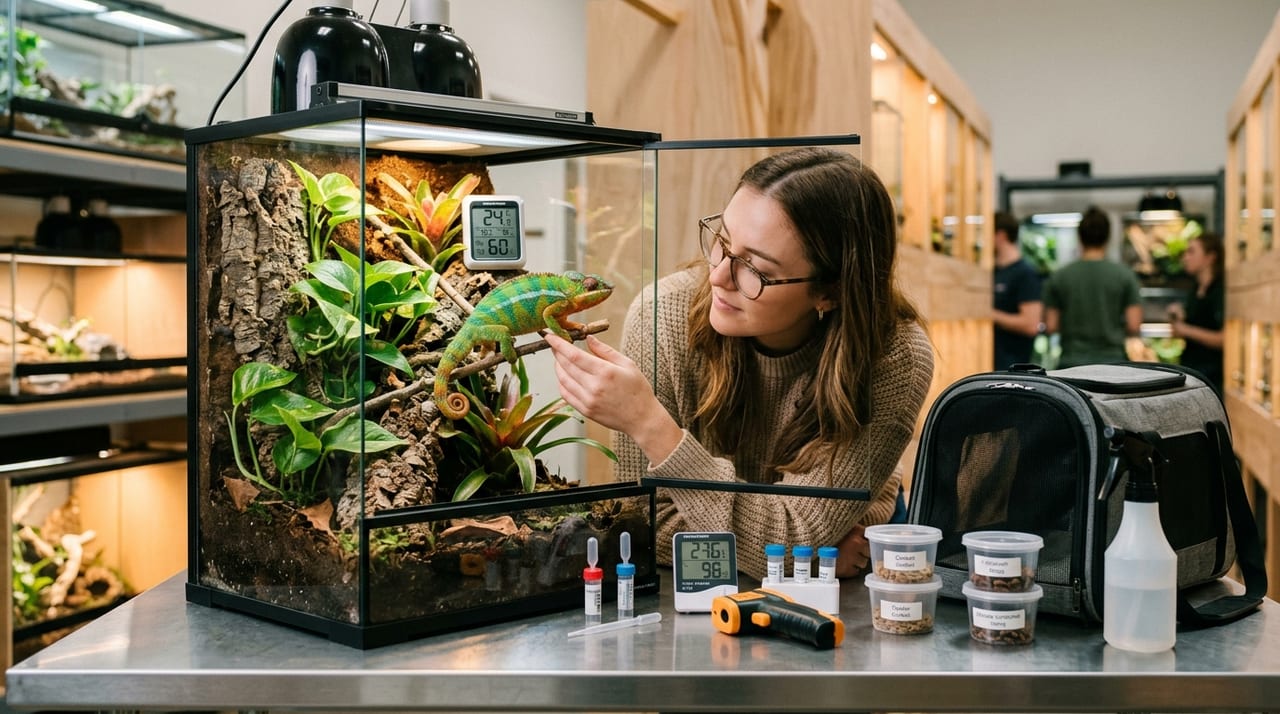
Transfer it gently to the enclosure and confirm that temperature and humidity are in the appropriate range. Be sure to provide a shelter (hiding spot). There is no need to feed on the first day. Since digestion requires energy, prioritize environmental acclimation first.