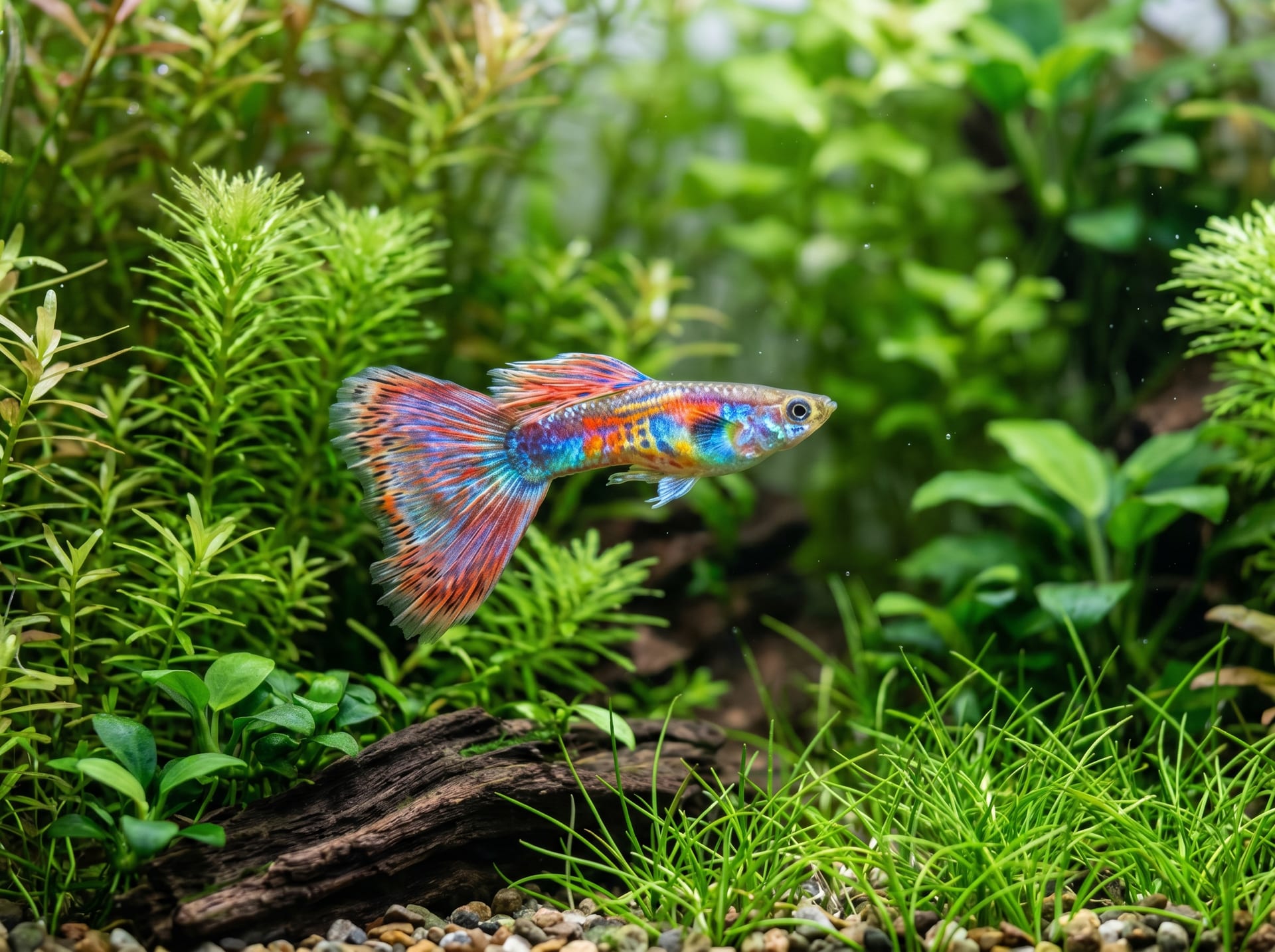
The fish that 'begins and ends' the tropical fish hobby. Livebearing makes breeding easy. Endless tail color and shape varieties.
View 孔雀魚 encyclopedia →前 3 筆銷售免佣金!於 2026 年 7 月 31 日前註冊成為繁殖者,前 3 筆銷售免收佣金!
繁殖者 招募中!
在 BreederDirect 上架,直接銷售給全國各地的客戶!
熱帶魚商品中,繁殖者會明確標示下列資訊。確保水質適性、性質、建議水槽尺寸的透明度。
想上架熱帶魚嗎?
註冊成為繁殖者,即可與買家直接聯繫。
價格區間
地區
屬性
Guppies originate from rivers and brackish waters of northern South America and the Caribbean, and were formally described in the late 19th century after Robert John Lechmere Guppy collected specimens in Trinidad — giving the fish its common name. Today's ornamental guppies are the result of decades of selective breeding, producing a stunning diversity of tail shapes including roundtail, delta, and swordtail forms, with body colors spanning red, blue, yellow, black, metallic, and countless combinations. Males are smaller but brilliantly colored, while females are drabber yet capable of delivering 20 to 100 or more live fry in a single birth. Their active yet peaceful temperament brings energy to community aquariums, and the ease of breeding makes them a rewarding choice for hobbyists at every level. Long celebrated in Japan as the "king of tropical fish," guppies remain a cornerstone species of the aquarium hobby worldwide.
1Ideal Temperature: 24–26°C
As a tropical fish, guppies thrive when water temperature is kept stable between 24–26°C (75–79°F). Temperatures below 20°C can cause lethargy and increase susceptibility to disease. Use a heater with a thermostat to maintain a consistent temperature year-round.
2Males and Females Look Very Different
Male guppies boast colorful, flowing tails that make them the stars of the aquarium, while females are larger but more plainly colored. Most commercially bred varieties focus on enhancing male appearance, so choose the sex based on your goals—whether for display or breeding.
3They Reproduce Very Readily
Guppies are livebearers and females can give birth approximately every four weeks. Simply housing males and females together will lead to breeding, and populations can grow rapidly. If you don't want to breed them, consider keeping only one sex or separating them into different tanks.
4Fry Can Be Eaten by Adults
Newborn fry are tiny and vulnerable to being eaten by adult fish, including their own parents. To raise fry successfully, consider using a breeding box or a separate grow-out tank. Densely planted aquascapes can also provide hiding spots that improve fry survival rates.
5Choose Peaceful Tankmates
Guppies are peaceful and generally do well in community tanks with other small tropical fish. Avoid keeping them with larger fish, fin-nippers like tiger barbs, or any species with mouths large enough to swallow them. Small, gentle species with similar water parameter requirements make the best tankmates.
View 孔雀魚 encyclopedia entry →
Care difficulty, lifespan, size and diet — all basics covered.
6Watch for Water Quality Decline
While guppies can adapt to a range of water conditions, they are sensitive to the buildup of ammonia and nitrites, which can cause fin deterioration. Make it a habit to perform partial water changes of about one-third of the tank volume weekly, and maintain your filtration system regularly.
7Initial Costs Are Relatively Low
Guppies are among the more affordable tropical fish, with common varieties available for just a few hundred yen. Basic equipment—a tank, heater, filter, and light—is all you need to get started, and a 20–45 liter aquarium is sufficient. However, rare or show-quality selectively bred varieties can cost several thousand to tens of thousands of yen.