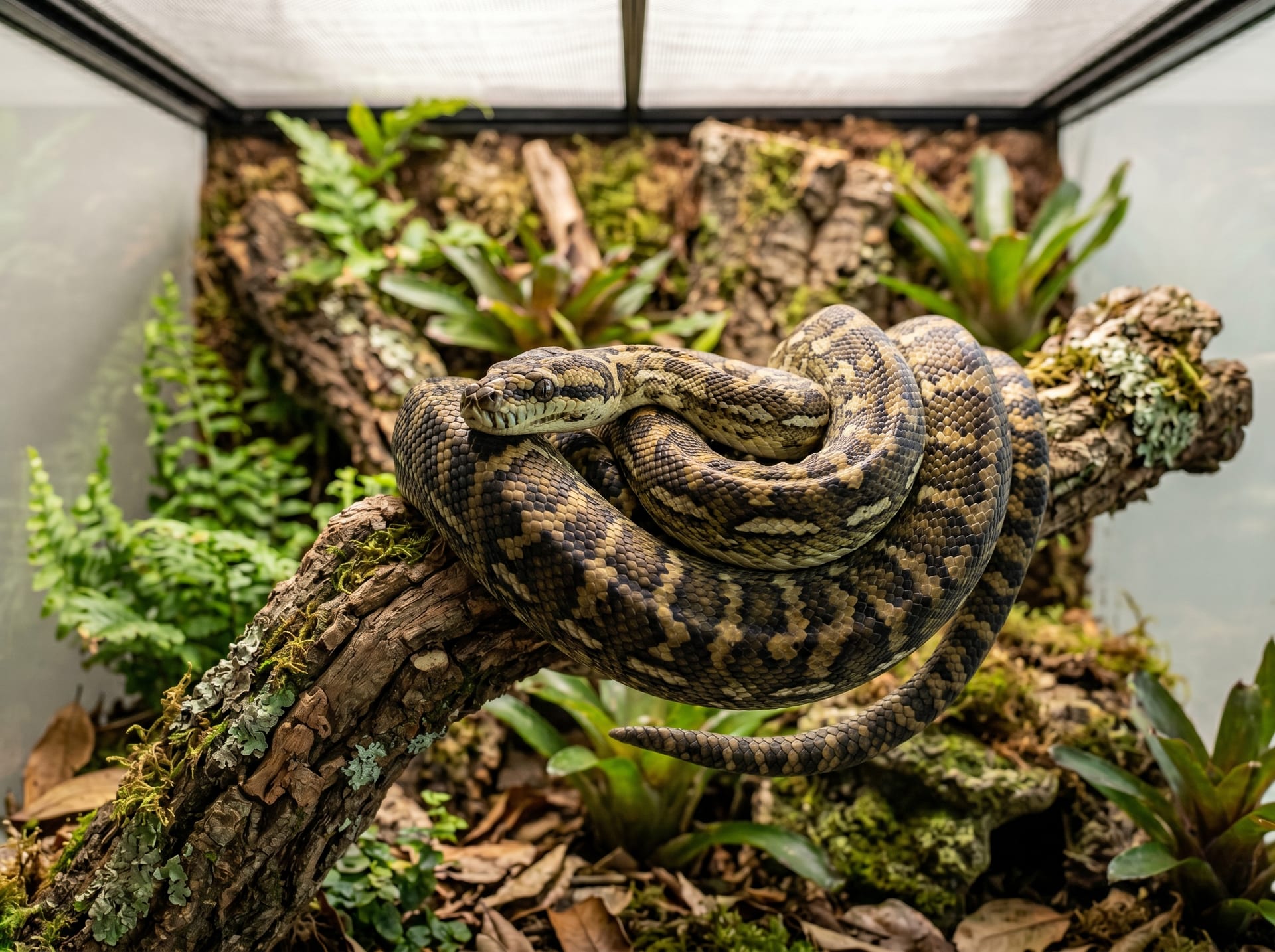
地毯蟒
澳大利亚产的中型蟒蛇。因美丽的花纹和适中的体型而受欢迎。不同亚种的色彩差异很大。寿命为15〜25年。成体体长为150〜250cm。食物为冷冻小鼠和大鼠。
View 地毯蟒 encyclopedia →成交手续费0%!2026年9月30日前注册,前 2 笔成交免佣金!
繁殖者 招募中!
在BreederDirect发布商品,直接销售给全国客户!
本平台承诺的 6 个透明度要点
爬行动物与两栖动物的出品中繁殖者将明示以下信息。确保形态、遗传、食性、气质的透明度。
- 形态明示
- 实物照片
- 食性标示
- 气质明示
- 遗传明示
- 月龄明示
查看全部280个品种
食性
没有符合条件的商品
请调整筛选条件,或在有新商品时接收通知。
「接收上架通知」需免费注册会员即可设置。当有符合您保存条件的新商品上架时,我们会通过邮件和站内通知提醒您。
已注册的繁殖者(抢先看)
地毯蟒的基本数据
- 饲养难度
- 适合中级者
- 寿命
- 15-25年
- 体型
- 150-250厘米
- 适宜温度
- 26〜32℃(晒背点35℃)
- 适宜湿度
- 50〜70%
- 饮食
- 冷冻鼠类
- 温度
- 26-32℃(日晒区35℃)
- 温度与湿度
- 湿度以50~70%为宜。设置晒背点35℃、冷区26℃的温度梯度,并常备水盆以防干燥。
- 饲养环境
- 成体需要宽度90~120厘米以上的饲养箱。树栖性也很强,请设置攀爬木,同时确保底面积和高度。
- 饵料与喂食
- 成体标准为每2~3周投喂一次解冻的冷冻小鼠或大鼠。选择与蛇身粗细相符的食物大小。
- 性格
- 幼体时神经质,成体则沉着冷静
关于地毯蟒
地毯蟒蛇(Morelia spilota)广泛分布于澳大利亚和新几内亚,属于游蛇科的中型蟒蛇。顾名思义,它以复杂的几何花纹而闻名,花纹如地毯织物般精美。存在多个亚种,如丛林地毯蟒、钻石蟒和沿海地毯蟒等,体色从奶油色×黑色到鲜艳的黄色×黑色。成体体长因亚种而异,大约为150〜250cm,相比大型蛇种,其适中的体型更易于饲养,是爬虫类爱好者青睐的原因之一。具有半树栖的习性,在野生环境中于森林和灌木地带缠绕在树枝上捕食小动物。人工饲养下,幼体期容易表现出神经质,但通过适当的接触与训练,可以培育出性情稳定的个体。寿命为15〜25年,在蛇类中相对较长,其美丽的外表和长期陪伴的特点使其持续吸引众多爱好者。
迎接地毯蟒前需要了解的7件事
1亚种间外观差异很大
地毯蟒蛇有丛林、沿海、钻石等多个亚种,体色和花纹差异很大。购买前最好先确认是哪个亚种,并查阅该亚种的成体大小和气质倾向。不同亚种的稀有性和价格范围也有所不同。
2笼舍需保留竖直空间
地毯蟒是半树栖性蛇类,天性喜欢攀爬高处。成体需要至少120厘米高的饲养箱,并配置坚固的沉木或架子等供其攀爬。布置环境时不仅要考虑水平面积,更要重视立体层次的设计。
3温度梯度的管理很重要
热点温度应维持在35~38℃,冷区在24~28℃,形成温度梯度。为防止消化不良和免疫功能下降,需特别注意夜间温度不要下降过多。应在多处安装温度计,每日进行监测。
4幼体阶段脾气可能较强
初养或幼体的地毯蟒可能会发出吹气声或进行轻咬。这是防卫本能的表现,通过频繁进行短时间的把玩,多数个体会逐渐变得温顺。避免强行接触,用蛇钩来帮助它们逐步适应人工操作也很有效。
5冷冻饲料足以满足饲喂需求
冷冻解冻后的小鼠或大鼠能充分补充营养。幼体每周饲喂1〜2次,成体每1〜2周饲喂1次较为合适。由于活饵存在蛇受伤的风险,建议让蛇适应冷冻饵料。解冻时在冷藏室内缓慢进行,饲喂前需温热至人体体温程度。
6注意脱皮不全
湿度不足会导致脱皮中途停止,容易引发"脱皮不全"。适宜湿度应保持在50〜70%,脱皮前需保持较高湿度,并准备湿润躲避所。若眼睛或指端有皮屑残留,用温水浸泡后轻轻清除。
7掌握长期饲养的成本
初期费用需要投资购置合适尺寸的饲养箱、恒温器、照明和温湿度计等设备。运营成本包括冷冻食物费用、电费以及大约每年一次的兽医检查费。这种生物能活15〜25年,请提前考虑是否能够继续长期饲养。
地毯蟒的常见问题
- Q.初学者能饲养地毯蟒蛇吗?
- A.只要有适当的设备和准备,即使初学者也可以饲养。但幼体中许多个体脾气较强,在习惯操作之前需要有耐心。建议先从饲养指南和爬虫类专门店充分收集信息。
- Q.需要多大尺寸的饲养箱?
- A.成体需要与其体长相匹配的空间,通常建议选择深度和宽度均在90cm以上、高度在60cm以上的饲养箱。由于亚种和个体差异导致成体大小不同,购买时请确认最大体长后再选择饲养箱。
- Q.会被咬伤吗?危险吗?
- A.特别是幼体或未经驯化的个体可能会咬伤。地毯蟒是无毒蛇,但其牙齿细小且向后弯曲,被咬伤时不要拉扯,应冷静地轻轻取出。伤口通常较浅,但一定要进行妥善消毒。
- Q.一定要用活饵吗?
- A.使用冷冻解冻的饵料(冷冻鼠类)完全可以饲养。将冷冻饵料用温水或微波炉解冻加热后投喂,大多数个体都能接受。活饵的管理成本高,卫生风险也大,因此通常推荐使用冷冻饵料。
- Q.可以合养(多条混养)吗?
- A.基本上推荐单独饲养。合养会增加进食时的竞争风险、应激反应加重,以及疾病传播的可能性。除了以繁殖为目的的短期配对外,应将每条蛇分别放在不同的饲养箱中管理,这样更加安全。
适合饲养地毯蟒的实用工具
在图鉴中详细了解地毯蟒
查看地毯蟒的图鉴条目 →
收录饲养难度、寿命、体长、食性等基础数据。