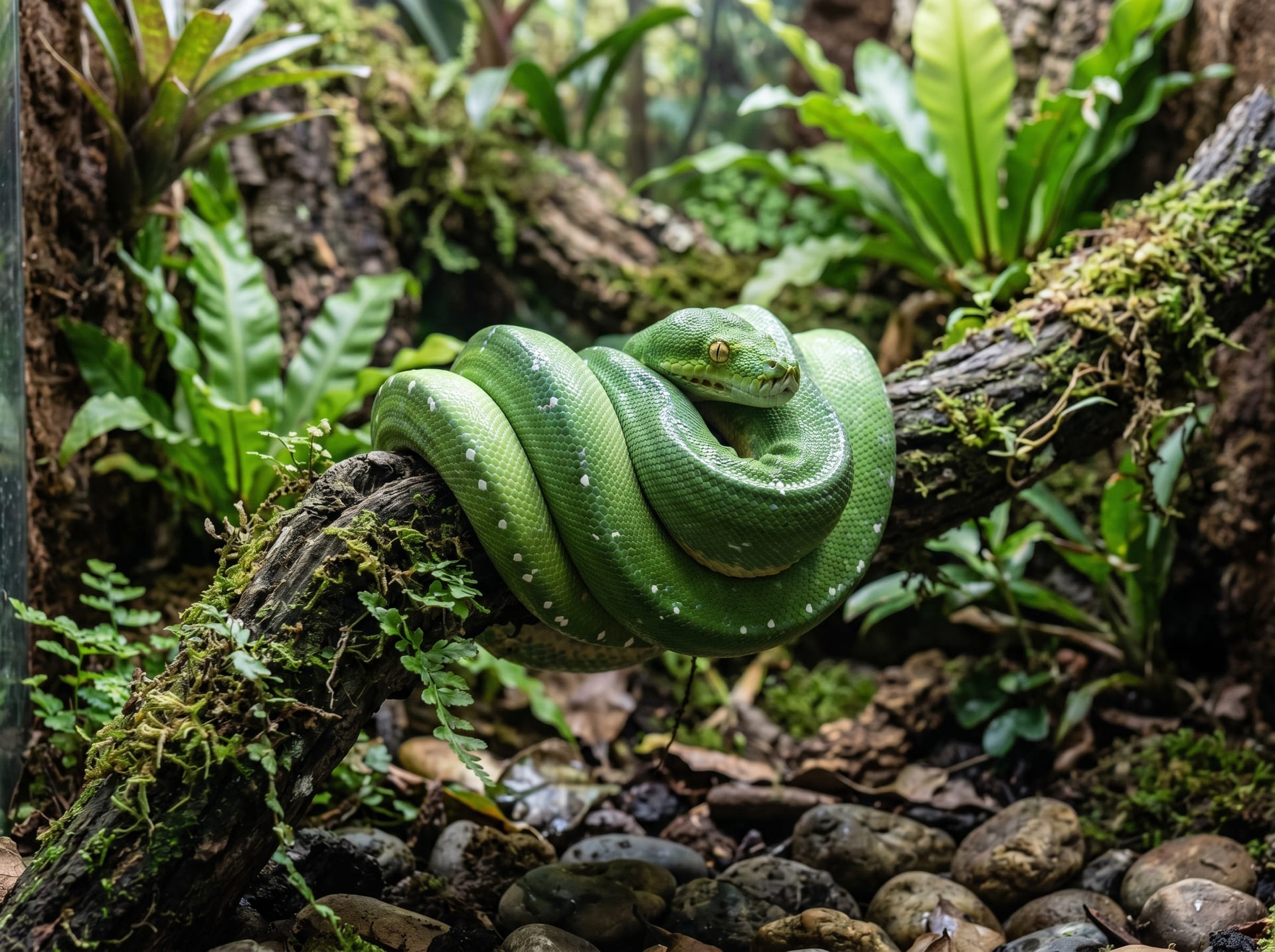
Nervous and prone to biting. Handling not recommended
Notes
Watch for respiratory issues — balance ventilation and humidity
特征ArborealBeautiful greenAdvancedNervous
关于绿树蟒
The Green Tree Python (Morelia viridis) is an arboreal python native to the rainforests of New Guinea and northern Australia. Its intense emerald-green coloration and characteristic resting posture — looped horizontally over a branch — make it one of the most visually striking reptiles in the hobby. The dorsal surface is often patterned with white or bluish spots, with noticeable variation between individuals. Hatchlings emerge in yellow or brick-red and undergo a dramatic color transformation over several months to a year, adding to the species' allure. Adults reach 120–200 cm in length and can live 15–20 years under proper care. Temperamentally, they tend to be alert and somewhat defensive, making them better suited to display-style keeping than frequent handling. Their gem-like appearance and fascinating biology have earned them devoted followings among collectors worldwide, and captive-bred specimens are increasingly available in Japan.
迎接绿树蟒前需要了解的7件事
1Choosing the Right Enclosure
As an arboreal species, Green Tree Pythons require a vertically oriented enclosure rather than a wide, flat one. A minimum of 60×60×90 cm is recommended for adults, furnished with multiple sturdy horizontal perches of varying diameters. Choose an enclosure that balances good ventilation with the ability to maintain adequate humidity.
2Temperature and Humidity Control
Daytime temperatures of 28–30°C with a nighttime drop to 24–26°C are ideal. Aim for 60–80% relative humidity, maintained through daily misting or an automated humidifier. Place thermometers and hygrometers at multiple spots in the enclosure to ensure consistent conditions throughout.
3The Remarkable Color Change
Juvenile Green Tree Pythons are yellow or brick-red, gradually shifting to their iconic green over a period of roughly 6 months to 2 years. The pace and final shade of this color change varies between individuals, which many keepers find captivating. During this transition, minimize handling and disturbances to reduce stress on the animal.
4Feeding Habits and Schedule
The primary diet consists of appropriately sized frozen-thawed mice or rats. Feed juveniles every 5–7 days and adults every 10–14 days. Presenting prey with feeding tongs near a perch mimics their natural hunting position and often improves feeding response. Persistent refusal to eat warrants a review of temperature, humidity, and potential stressors.
5Handle with Care and Patience
Green Tree Pythons tend to be defensive, and juveniles or individuals undergoing color change are particularly prone to biting. Introduce handling gradually once the snake has settled in, keeping sessions to around 10–15 minutes. Respecting the animal's comfort level and avoiding forced interaction builds trust over time.
绿树蟒的常见问题
Q.Should I start with a juvenile or an adult?
A.For beginners, starting with a young adult or sub-adult is generally recommended. Hatchlings are delicate and more vulnerable to husbandry errors involving temperature and humidity. If you want to witness the color change, juveniles are an option, but gaining some reptile-keeping experience first is advisable.
Initial setup costs for a proper enclosure, heating, humidification, and lighting often range from 50,000 to 150,000 yen. Individual prices vary widely based on locality, coloration, and age. Factor in ongoing monthly expenses such as food, electricity, and veterinary care when planning your budget before acquiring a snake.
7Find a Reptile-Specialist Vet
Veterinarians experienced with pythons are not universally available, so locate a reptile-specialist clinic before bringing your snake home. Watch for warning signs such as abnormal breathing sounds, mouth rot, retained shed, or unexplained weight loss and seek prompt veterinary attention if these appear. An annual wellness check is also advisable for long-term health monitoring.
Q.Can they be housed with other reptiles?
A.Housing Green Tree Pythons together with other reptiles, including their own species, is generally not recommended. They can be territorial, and cohabitation often leads to stress or bite injuries. Even for breeding purposes, keep individuals separately except during the mating period.
Q.What should I do if my python has a stuck shed?
A.Soaking the snake in lukewarm water (around 30°C) for 10–20 minutes softens retained shed and makes it easier to remove. Pay special attention to skin around the eyes and tail tip — never pull forcefully; wait until the skin is thoroughly softened before gently peeling it away. Revisit your humidity management to prevent recurrence.
Q.Is UVB lighting necessary?
A.Green Tree Pythons are largely crepuscular and typically hide in shaded canopy, so their UVB requirements are considered lower than many other reptiles. That said, some keepers provide low-level UVB (around UVI 1–2) to support circadian rhythm regulation and vitamin D3 synthesis. It is worth considering, though not universally regarded as mandatory.
Q.Why has my python stopped eating?
A.Refusal to eat is common before shedding, during breeding season, or during seasonal transitions. Incorrect temperature or humidity, as well as stress from excessive handling or enclosure changes, can also trigger fasting. Short-term refusal of 2–4 weeks is generally not a cause for alarm, but if significant weight loss occurs, consult a reptile-specialist veterinarian.