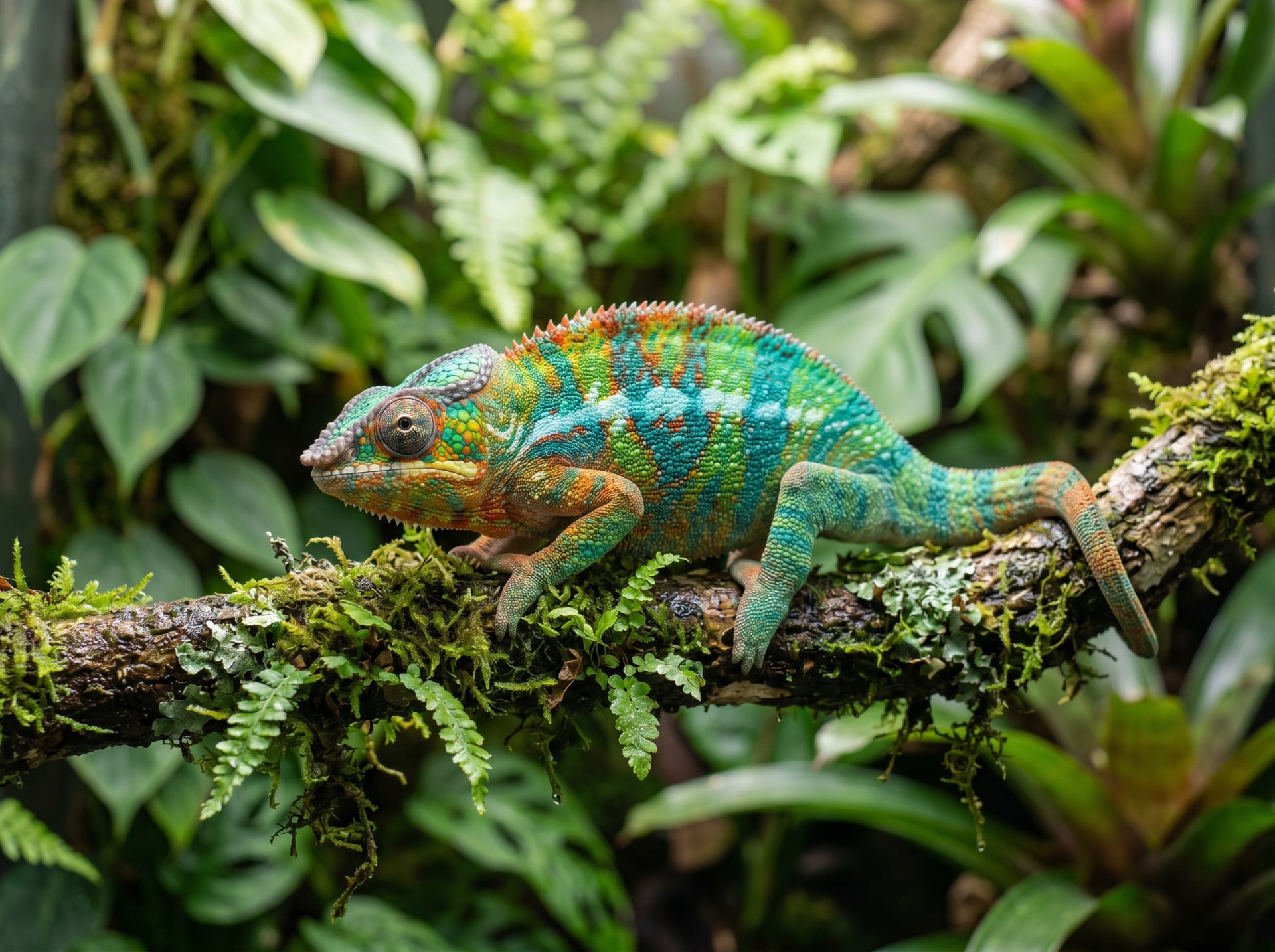
变色龙
变色龙以其改变体色的非凡能力、独立转动的双眼和利用长舌捕食等特征,是具有其他爬虫类所不具备的独特魅力的蜥蜴。它们偏好独处,更适合作为"观赏型宠物"供人欣赏而非与人互动,因此深受爱好者欢迎。由于需要适当的温度和湿度管理,该物种适合中级至高级爱好者饲养。
成交手续费0%!2026年9月30日前注册,前 2 笔成交免佣金!
繁殖者 招募中!
在BreederDirect发布商品,直接销售给全国客户!
本平台承诺的 6 个透明度要点
爬行动物与两栖动物的出品中繁殖者将明示以下信息。确保形态、遗传、食性、气质的透明度。
- 形态明示
- 实物照片
- 食性标示
- 气质明示
- 遗传明示
- 月龄明示
查看全部83个品种
食性
爬行动物与两栖动物分类正在招募认证繁殖者
繁殖者正在陆续注册,即将上架。设置上架通知,不错过新商品。
「接收上架通知」需免费注册会员即可设置。当有符合您保存条件的新商品上架时,我们会通过邮件和站内通知提醒您。
已注册的繁殖者(抢先看)
关于变色龙
变色龙主要分布在非洲和马达加斯加地区,已确认约220种,其中大部分高度适应树栖生活。体色变化不仅是伪装手段,近年研究表明还具有情感表达和交流的功能。其左右独立活动的眼睛可提供近360度的视野,粘性舌头长度可达体长的2倍,能在瞬间捕捉昆虫。作为宠物流通的代表种是带纹变色龙(也门变色龙)和豹纹变色龙,前者相对较强壮,被认为适合初学者饲养。饲养的最大魅力在于能近距离观察其神秘的外观和行为。虽然日常环境管理需要花费精力,但在精心布置的饲养空间中,看到其生机勃勃的样子,会给您带来其他宠物无法比得的满足感。
迎接变色龙前需要了解的6件事
1湿度管理最为重要
变色龙需要高湿度(50〜80%),但通风不良易导致呼吸道疾病。应使用网笼,通过喷雾或自动喷雾系统维持适当湿度。
2全身UVB光照必须
变色龙合成维生素D3需要UVB光,照射不足会导致佝偻病等代谢性骨病。应使用高质量的UVB荧光灯(5.0〜10.0),每天点亮10〜12小时,并定期更换灯管。
3尽量减少接触
变色龙对压力极其敏感,过度接触可能引起免疫力下降和拒食。建议以观察为主要目的,除笼舍维护工作外,应尽量减少直接接触的机会。
4从雾水中饮水的习性
变色龙不会从水盆饮水,而是有舔食叶片和壁面上水滴的习性。建议每天喷雾两次以上,或安装滴水系统,确保始终有水滴可供饮用。
5只接受活体饲料
变色龙会对移动的东西产生捕食反应,因此几乎不接受人工饲料。应以蟋蟀、杜比亚、面包虫等活体饲料为主食,并记得补充钙和维生素粉。
6从体色变化中读懂信号
变色龙的体色变化反映了气温、心情和健康状况。鲜艳的色彩表明它活跃且压力较低,而长期呈现暗沉的颜色可能是体况不良或压力的信号。养成日常观察体色的习惯吧。
变色龙的常见问题
- Q.初学者也能饲养变色龙吗?
- A.由于需要同时管理温度、湿度、通风和紫外线,所以一般认为适合中至高级饲养者。建议从比较健壮的品种(如束带变色龙)开始,事先充分准备饲育环境是成功的关键。
- Q.为什么体色会变化呢?
- A.皮肤内特殊的色素细胞(chromatophore)通过改变对光的反射而改变颜色。气温、光照、情绪、健康状况、以及对其他个体的反应等多个因素会影响体色,不仅仅是为了隐藏。
- Q.寿命是多少?
- A.寿命因种类而异,但据说面纱变色龙在适当饲养条件下,雄性约能活6~8年,雌性约能活4~5年。由于雌性因产卵产生的压力会影响寿命,无精卵的产卵管理也很重要。
- Q.能否多只合养?
- A.基本上,单独饲养是原则。将它们放在同一个笼子里会造成强烈压力,导致拒食、免疫力下降和打斗受伤的风险增加。除繁殖目的的临时同居外,建议遵循"1笼1只"的饲养原则。
- Q.变色龙会与人亲近吗?
- A.它们不像狗或猫那样与人亲近,即使适应了人,也几乎不会表现出对人的依赖或偏爱。不过,通过每天的饲养护理,它们会逐渐习惯人的存在,完全可以期待它们成为允许无压力观察的个体。