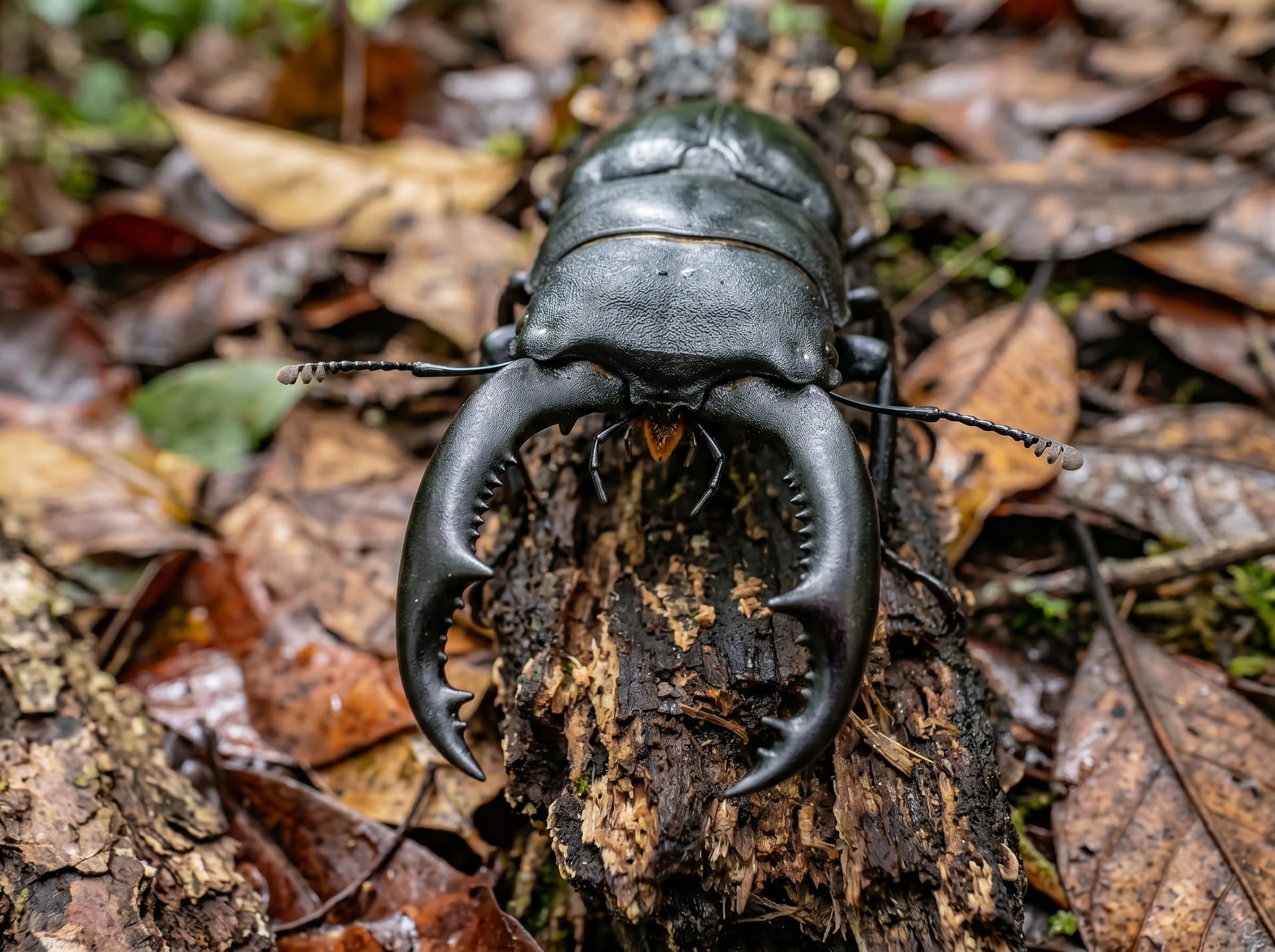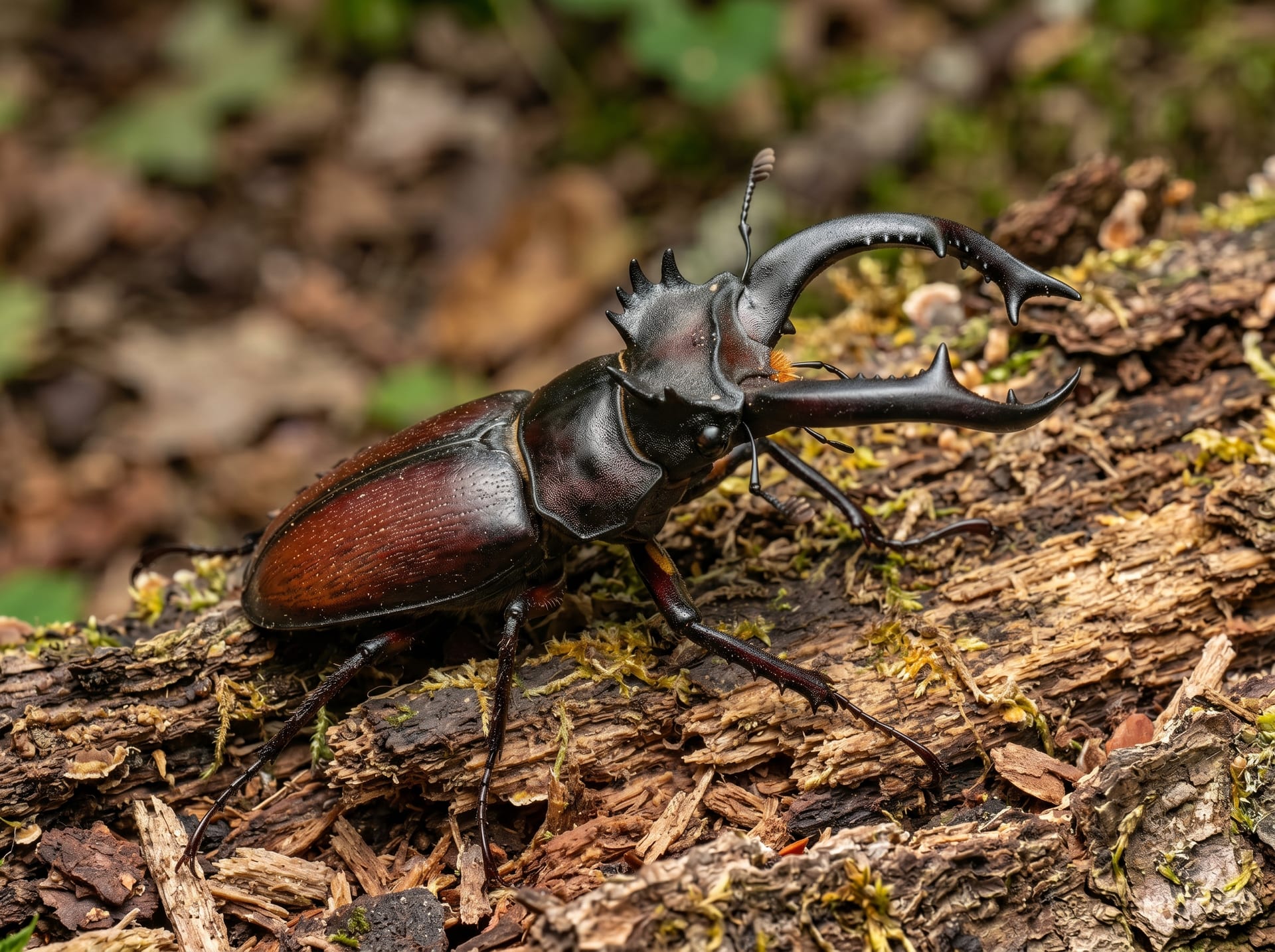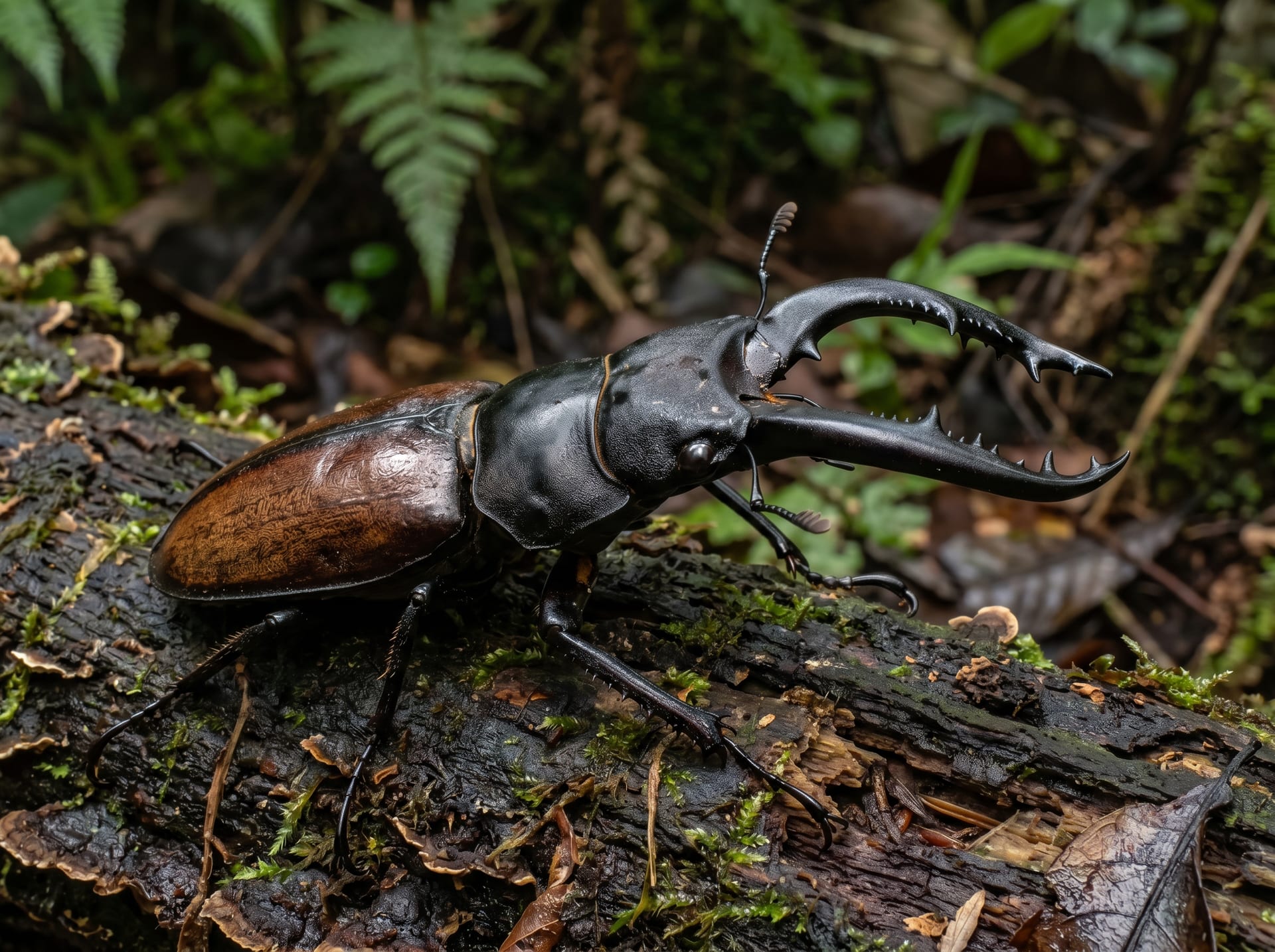
AI-generated image
Parryi Stag Beetle
IntermediateHexarthrius parryi
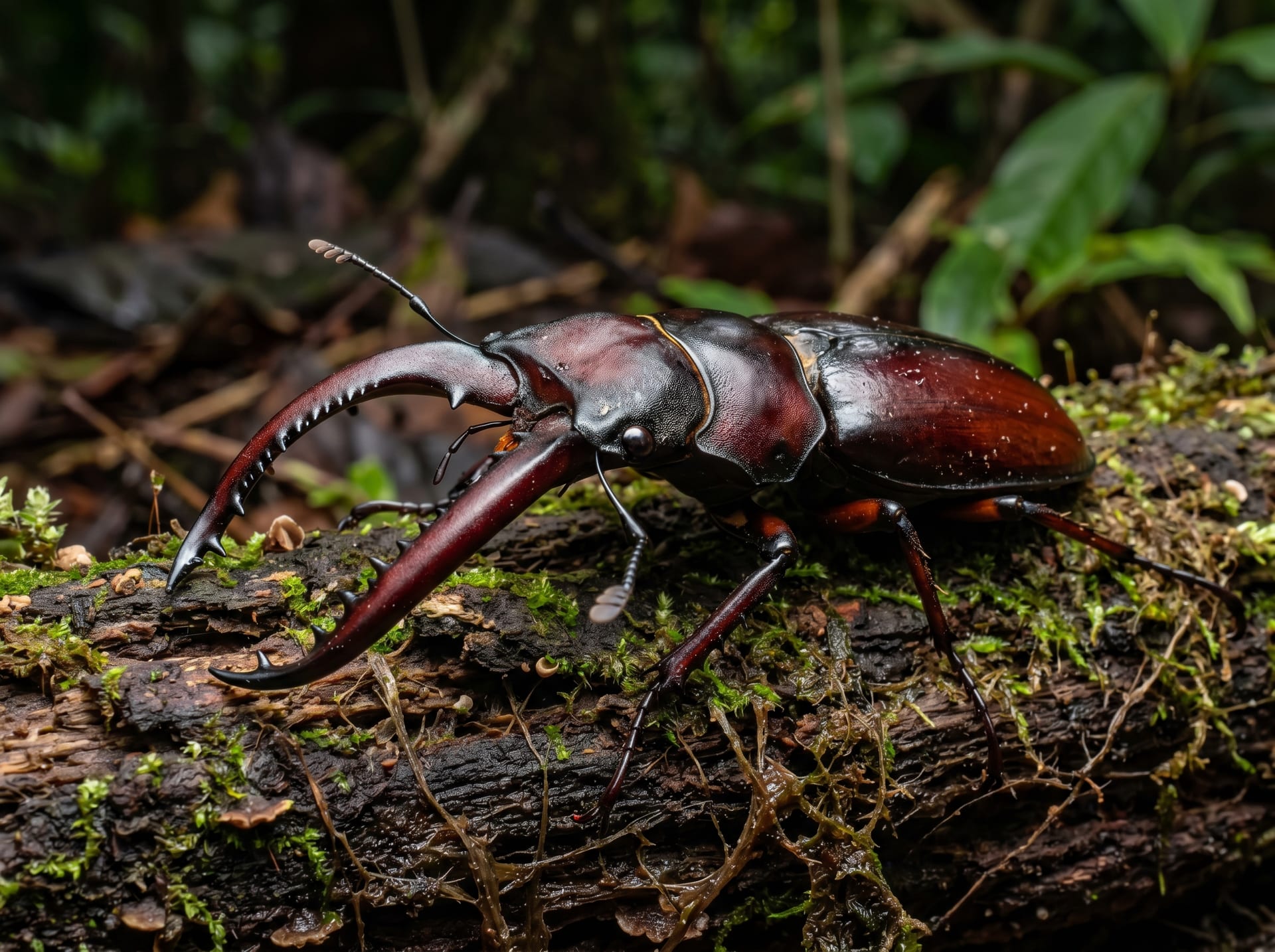
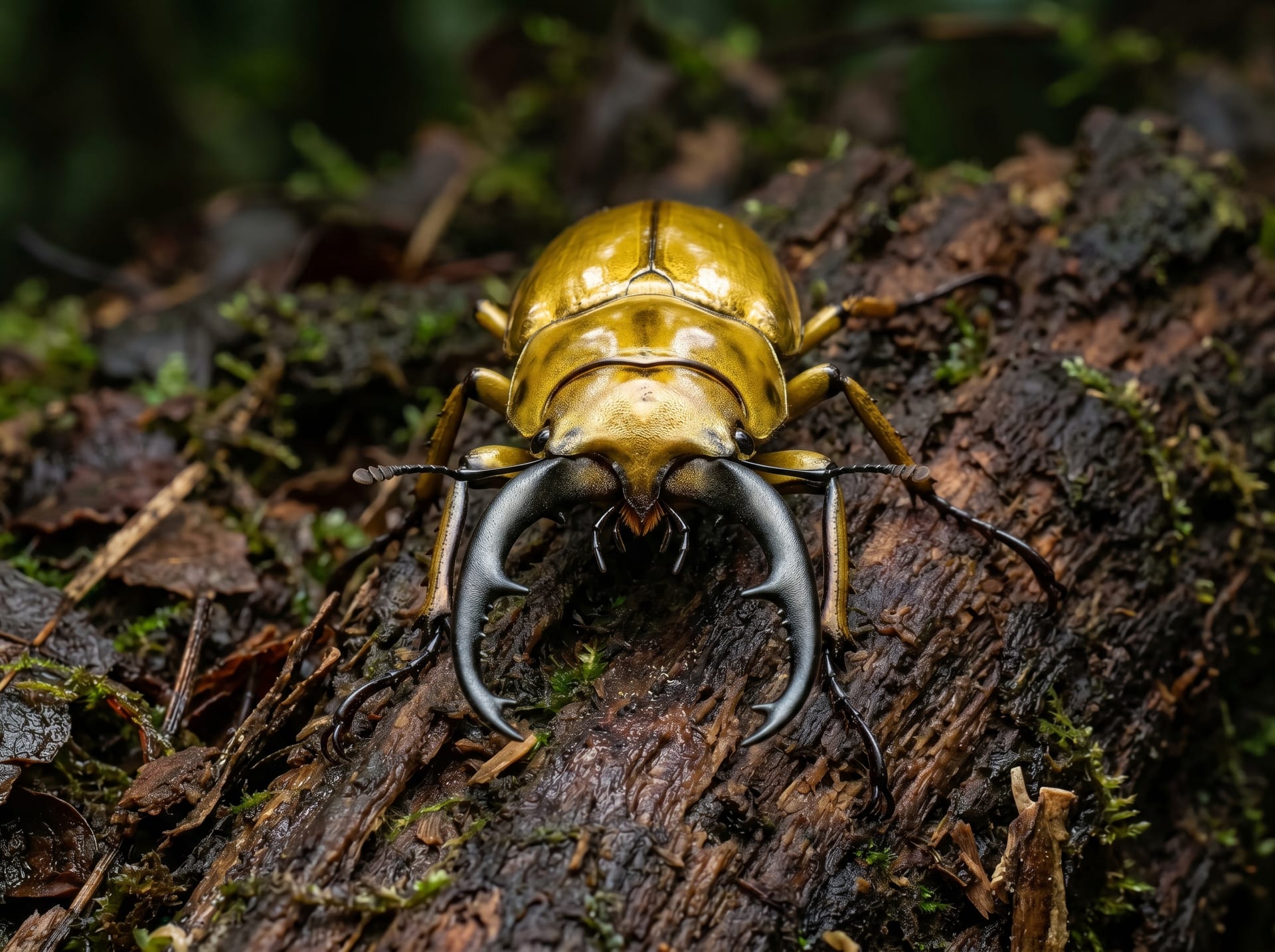
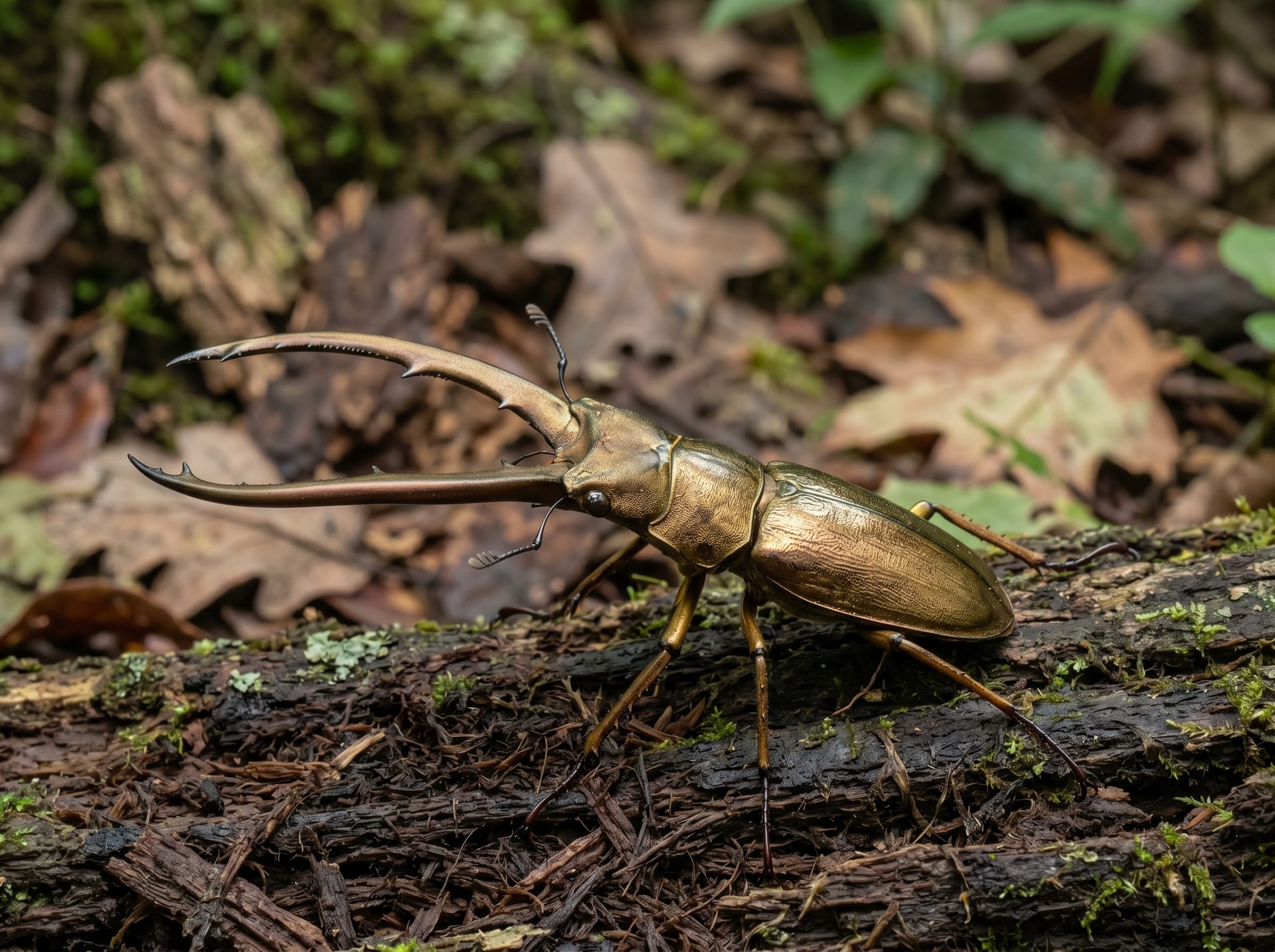
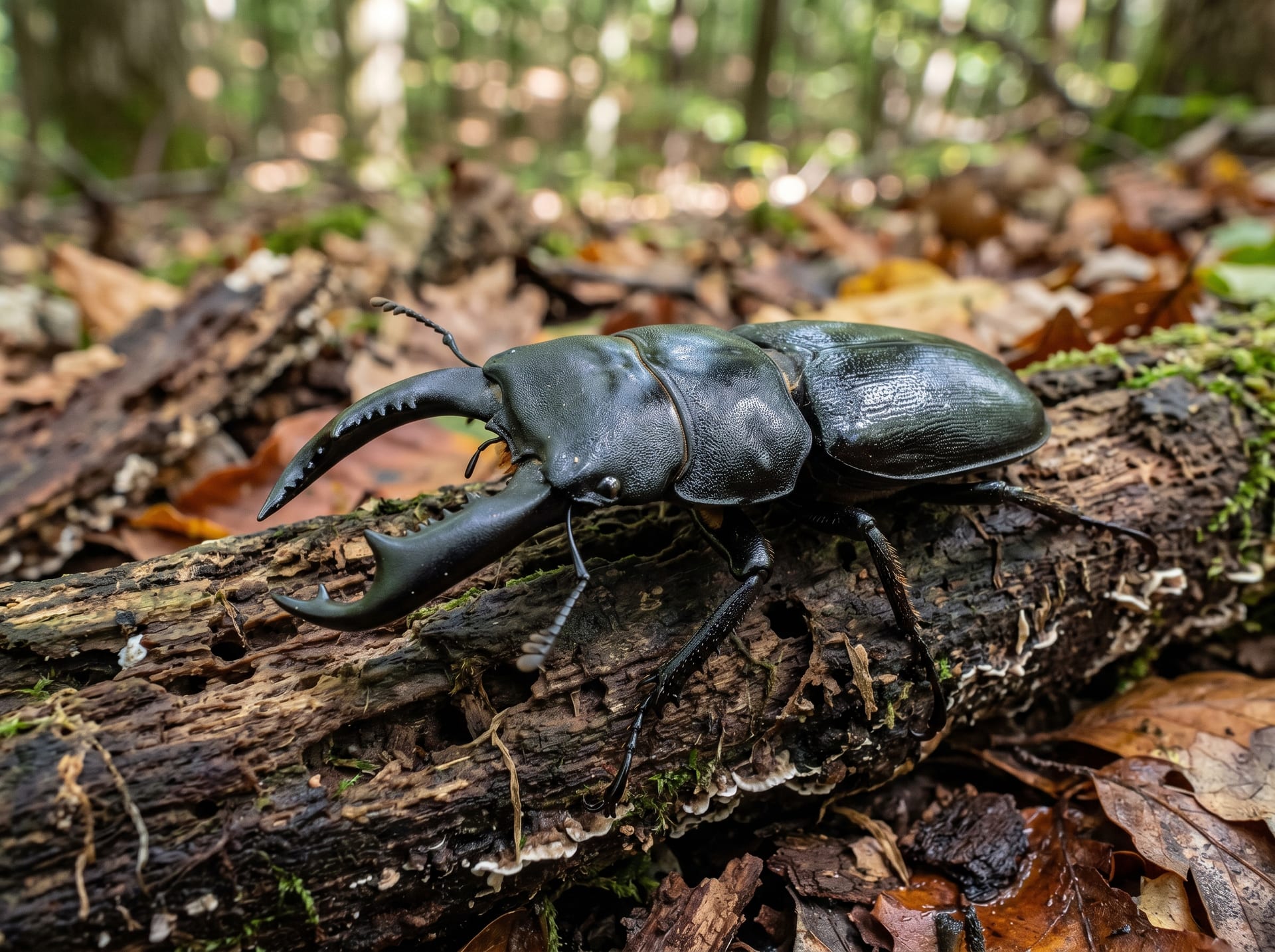
A large two-pronged stag beetle distributed in India, Myanmar, Thailand, and nearby areas. Features long bifurcated mandibles and is one of the largest species in its genus. The body luster and mandible shape are highly valued by enthusiasts.
Difficulty
Intermediate
Temperature
20〜27℃
Lifespan
Adult 6mo-1yr
Size
40-100mm
Humidity
60〜80%
Diet
Tree sap, beetle jelly
About
Hexarthrius parryi is a large fork-jawed stag beetle distributed across India, Myanmar, and Thailand. Its long, forked mandibles are its hallmark, and it is known to grow particularly large within the genus. The glossy body and mandible shape are admired by enthusiasts. Husbandry uses a small to medium enclosure with oviposition logs and fermented substrate. Adults are fed insect jelly, and larvae reared in fungal substrate bottles can yield large individuals. Because the mandibles are long and powerful, careful handling is needed. Combining presence and beauty, it is popular in breeding.
Source: Wikipedia (CC BY-SA 4.0)
Lifespan of the Parryi Stag Beetle
The Parryi Stag Beetle lives Adult 6mo-1yr.
Size of the Parryi Stag Beetle
The Parryi Stag Beetle grows to 40-100mm.
Temperature & humidity for the Parryi Stag Beetle
The ideal temperature for the Parryi Stag Beetle is 20〜27℃.
Basic Info
Origin
India, Myanmar, and Thailand
Lifespan
Adult 6mo-1yr
Size
40-100mm
Temperature
Care Specifications
AggressiveSolitaryBreeding: Hard
Sources: Wikipedia — Hexarthrius (genus; JA)
Captive Breeding
Egg-laying
Breeding season: Early summer to summer (adult active season)
Breeding notes
Females lay eggs in fermented wood or substrate; hatched larvae are reared in fermented mat or fungal (mycelium) bottles. After eclosion, adults require several months of dormancy before they are ready to breed.
Breeding requires planning, proper husbandry, and responsibility. These figures are general guidelines.
Sources: Wikipedia — Hexarthrius (genus; JA)
Breeding Records & Localities
Captive record (♂)
92.1 mm
Wild record (♂)
96.1 mm
Record source: BE-KUWA 2025 edition (Parry paradoxus captive-bred 92.1mm Kyō Shirō 2017 / wild 96.1mm)
Notable localities
SumatraMalay PeninsulaBorneoIndia
Regional subspecies
- Hexarthrius parryi paradoxus — Sumatra (large)
- Hexarthrius parryi elongatus
- Hexarthrius parryi deyrollei
Two-pronged stag beetle characterized by bifurcated mandibles. Captive-breeding records are updated annually through BE-KUWA (Mushi-sha) contests. Individual value fluctuates significantly based on locality, generation (CBF/WF/WD), and size.
Generation codes
- WD
- Wild-caught
- WF1
- Offspring of a wild-caught female
- F1〜
- Captive generations (same locality)
- CBF1
References & Sources
Edited & verified by: BreederDirect editorial team
The taxonomic, regulatory, and husbandry data on this page are compiled and verified against the authoritative primary sources below.
Taxonomy & Authority
Accepted name: Hexarthrius parryi Hope, 1842
Authority databases: GBIF
Nomenclature follows global taxonomic authority databases.
Regulations & Conservation Status
Not CITES-listed
Plant Protection Act: When importing live specimens of Scarabaeoidea (including rhinoceros beetles, stag beetles, flower beetles, etc.), a species identification certificate issued by the exporting country government agency or equivalent must be attached in accordance with the Invasive Species Act (import ports are limited to Narita, Chubu, Kansai, Fukuoka, and Kagoshima airports). This species itself is not a designated invasive species, and import is possible upon submission of the certificate.
Sources: Ministry of the Environment, Invasive Species Act: "Guidance for Those Importing Live Insects in Scarabaeoidea" / CITES Appendix (checklist.cites.org)
Regulations may change. Always verify the latest information with the relevant authorities.
Parryi Stag Beetle Listings
Loading latest listingsFind listings for this species