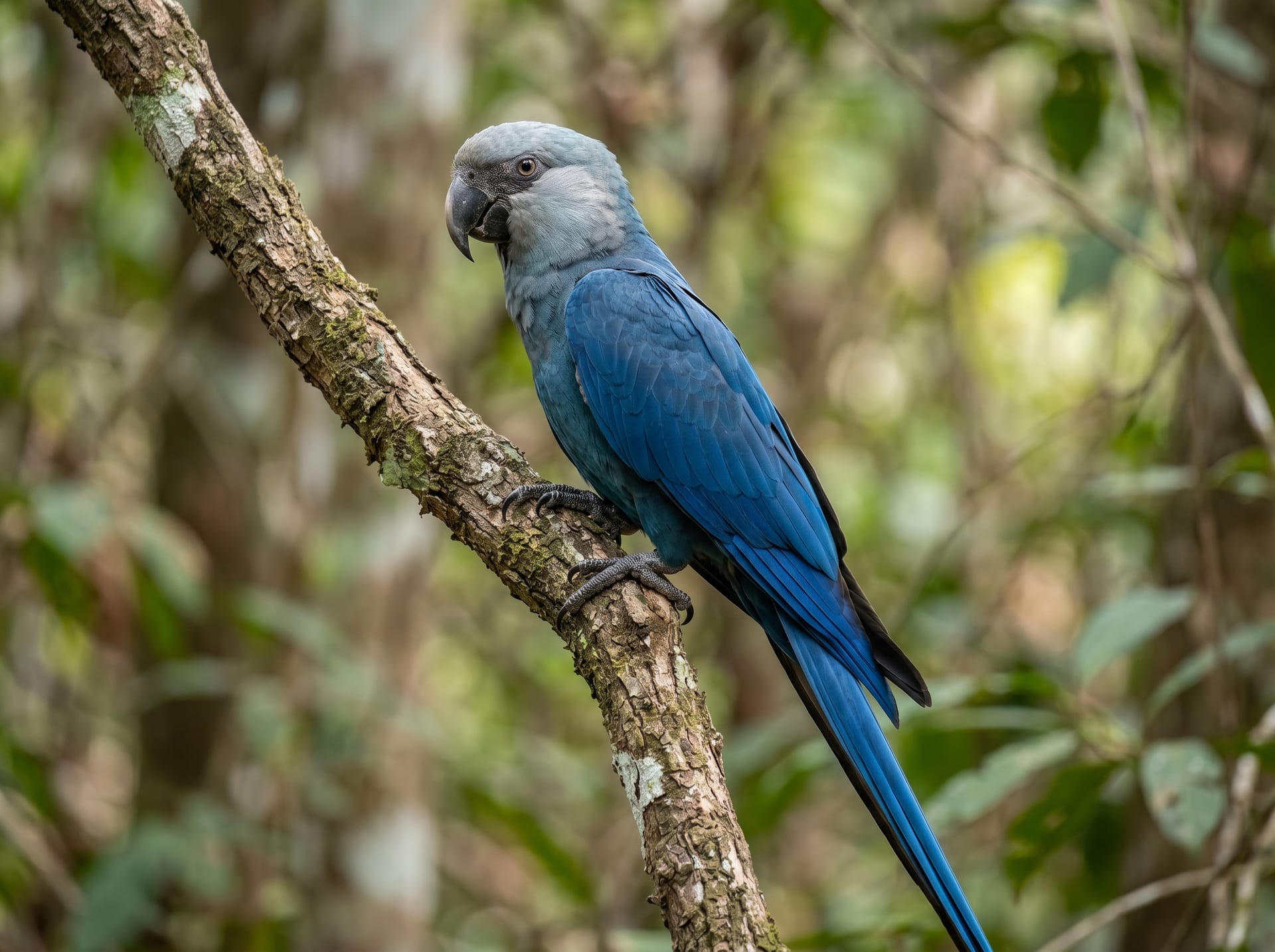
AI-generated image
Spix's Macaw
AdvancedCyanopsitta spixii
The macaw made famous by the movie 'Rio.' Extinct in the wild with beautiful pale blue plumage. Now only in conservation breeding programs. Not available as pets — presented for educational purposes.
Difficulty
Advanced
Temperature
20〜30℃
Lifespan
40-50 years (estimated)
Size
55-57cm
Humidity
40〜60%
Diet
Seeds, fruits, nuts
About
Spix's macaw (Cyanopsitta spixii), also known as the little blue macaw, is a small macaw endemic to a small area of arid caatinga in north-eastern Brazil. Pale blue-grey with a greyish head, it became famous through the film 'Rio'. Driven to extinction in the wild, it survives only through managed conservation breeding and reintroduction programmes and is listed on CITES Appendix I; it is not a pet species.
Source: Wikipedia (CC BY-SA 4.0)
Lifespan of the Spix's Macaw
The Spix's Macaw lives 40-50 years (estimated).
Size of the Spix's Macaw
The Spix's Macaw grows to 55-57cm.
Temperature & humidity for the Spix's Macaw
The ideal temperature for the Spix's Macaw is 20〜30℃. Ideal humidity is 40〜60%.
Basic Info
Origin
north-eastern Brazil (caatinga)
Lifespan
40-50 years (estimated)
Size
55-57cm
Temperature
20〜30℃
References & Sources
Edited & verified by: BreederDirect editorial team
The taxonomic, regulatory, and husbandry data on this page are compiled and verified against the authoritative primary sources below.
Taxonomy & Authority
Accepted name: Cyanopsitta spixii (Wagler, 1832)
Authority databases: GBIF
Nomenclature follows global taxonomic authority databases.
Regulations & Conservation Status
CITES Appendix IIUCN EW · Extinct in the Wild
Cyanopsitta spixii. CITES Appendix I, IUCN Extinct in the Wild (EW).
Sources: CITES Appendices (valid from 25.05.2024) / CITES species page
Regulations may change. Always verify the latest information with the relevant authorities.
Spix's Macaw Listings
Loading latest listingsFind listings for this species