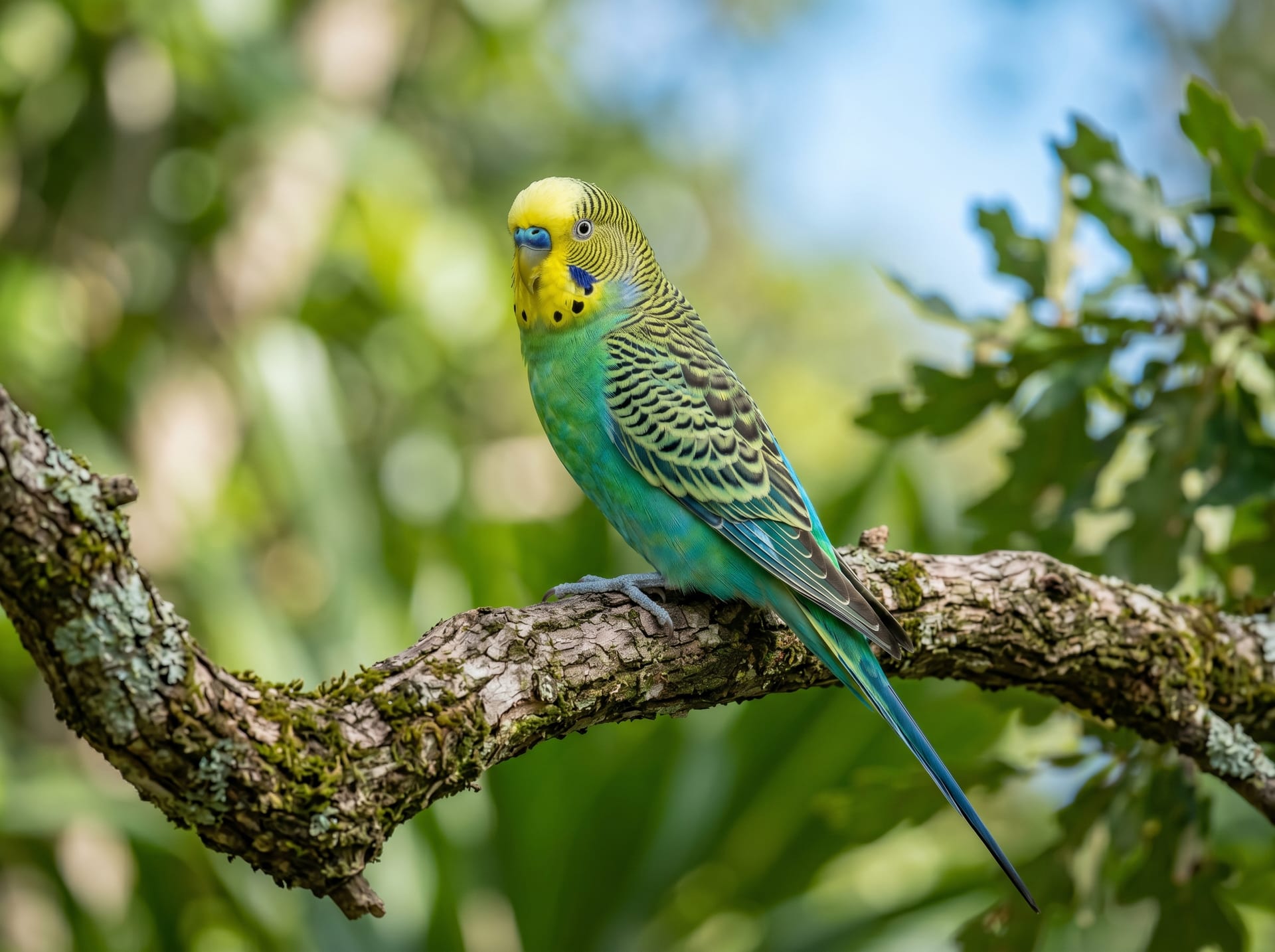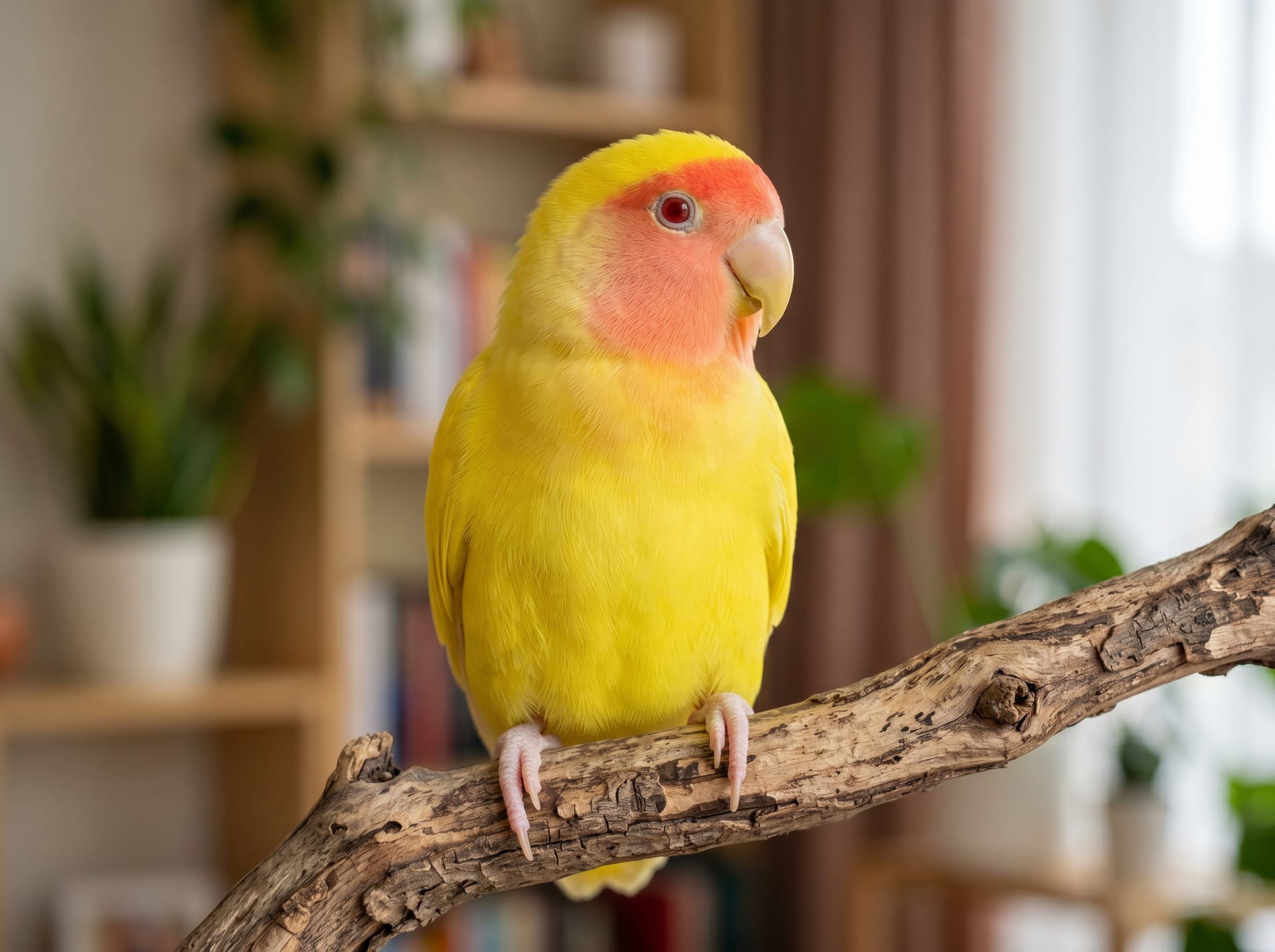
AI-generated image
Peach-faced Lovebird Lutino
BeginnerAgapornis roseicollis
Lutino mutation of Peach-faced Lovebird. Vivid yellow body with red face. Same active, affectionate personality as wild type. Popular color breeding variety.
Difficulty
Beginner
Temperature
20〜30℃
Lifespan
10-15 years
Size
15-17cm
Humidity
40〜60%
Diet
Seeds, pellets, vegetables, fruits
About
The lutino is a yellow colour mutation of the rosy-faced (peach-faced) lovebird (Agapornis roseicollis), belonging to the same species. Lacking dark pigment, the bird becomes bright yellow to cream with the red face standing out. The wild rosy-faced lovebird is native to arid south-western Africa; care is identical to the wild-type bird.
Source: Wikipedia (CC BY-SA 4.0)
Lifespan of the Peach-faced Lovebird Lutino
The Peach-faced Lovebird Lutino lives 10-15 years.
Size of the Peach-faced Lovebird Lutino
The Peach-faced Lovebird Lutino grows to 15-17cm.
Temperature & humidity for the Peach-faced Lovebird Lutino
The ideal temperature for the Peach-faced Lovebird Lutino is 20〜30℃. Ideal humidity is 40〜60%.
Basic Info
Origin
colour mutation of the rosy-faced lovebird, native to south-western Africa
Lifespan
10-15 years
Size
15-17cm
Temperature
20〜30℃
Morphs (Varieties)
Lutino is sex-linked inheritance (grouped here as recessive).
RecessiveVisual only with two copies; one copy = het (carrier).
Lutino
A curated selection of notable morphs. Inheritance modes are a breeding-planning guide; actual appearance varies with combos.
Calls & Media
Calls / Song
Call · © African Bioacoustics Community · xeno-canto XC1087077 (CC BY-NC 4.0)
Sources: xeno-canto
References & Sources
Edited & verified by: BreederDirect editorial team
The taxonomic, regulatory, and husbandry data on this page are compiled and verified against the authoritative primary sources below.
Taxonomy & Authority
Accepted name: Agapornis roseicollis (Vieillot, 1818)
Synonyms: Psittacus roseicollis
Authority databases: GBIF
Nomenclature follows global taxonomic authority databases.
Regulations & Conservation Status
Not CITES-listed
Agapornis roseicollis (Lutino). One of 4 species explicitly exempted from the appendices by notation in Psittaciformes Appendix II (Agapornis roseicollis / Melopsittacus undulatus / Nymphicus hollandicus / Psittacula krameri). Not subject to CITES.
Sources: CITES Psittaciformes spp. Appendix II Annotation
Regulations may change. Always verify the latest information with the relevant authorities.
Peach-faced Lovebird Lutino Listings
Loading latest listingsFind listings for this species