Source: Wikimedia Commons
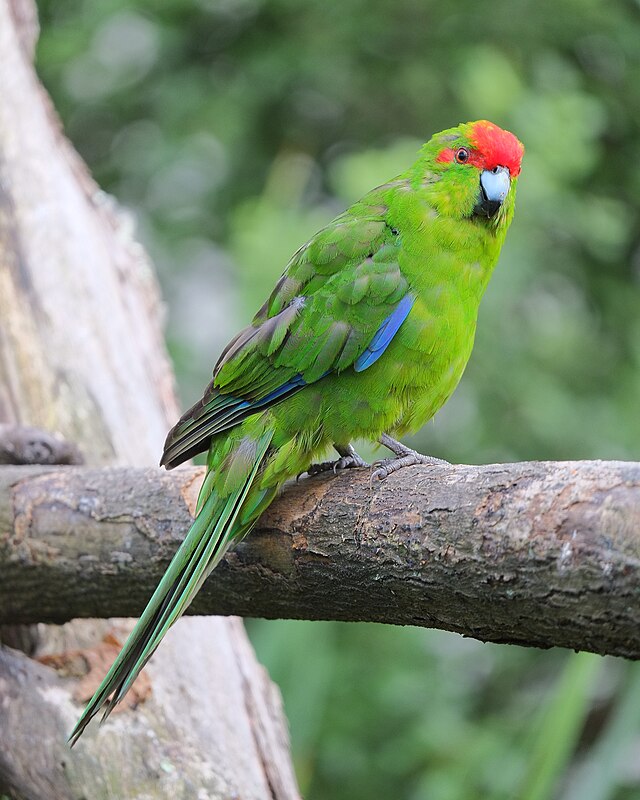
Kakariki
BeginnerAn active parakeet from New Zealand. Unique ground-walking behavior and extremely curious personality.
Difficulty
Beginner
Temperature
15〜30℃
Lifespan
10-15 years
Size
25-28cm
Humidity
40〜60%
Diet
Seeds, Pellets, Vegetables, Fruits
About
The three species of kākāriki, or New Zealand parakeets, are the most common species of parakeets in the genus Cyanoramphus, family Psittaculidae. The most commonly used name kākāriki is Māori in origin meaning "small parrot"; it has also been used to refer to the colour green because of the birds' predominantly green plumage. The patches of red on the birds' rumps are, according to legend, the blood of the demigod Tāwhaki.
Source: Wikipedia (CC BY-SA 4.0)
Lifespan of the Kakariki
The Kakariki lives 10-15 years.
Size of the Kakariki
The Kakariki grows to 25-28cm.
Basic Info
Origin
New Zealand
Lifespan
10-15 years
Size
25-28cm
Temperature
15〜30℃
Humidity
40〜60%
Diet
Seeds, Pellets, Vegetables, Fruits
Morphs (Varieties)
Representative color morphs of captive Cyanoramphus. Lutino and cinnamon are sex-linked and denoted as recessive in this schema. Yellow combines dominant and recessive pied and is not a single-gene trait.
RecessiveVisual only with two copies; one copy = het (carrier).
LutinoCinnamonRecessive Pied
DominantVisual with a single copy; no distinct super form.
Dominant Pied
Other
Yellow
Sources: Feathered Treasures Aviary: Kakariki Mutations / AFA Watchbird: Pied Redfronted Kakarikis
A curated selection of notable morphs. Inheritance modes are a breeding-planning guide; actual appearance varies with combos.
Calls & Media
Calls / Song
Song · © Meena Haribal · xeno-canto XC956617 (CC BY-NC 4.0)
Call · © David Boyle · xeno-canto XC975396 (CC BY-NC 4.0)
Sources: xeno-canto
References & Sources
Edited & verified by: BreederDirect editorial team
The taxonomic, regulatory, and husbandry data on this page are compiled and verified against the authoritative primary sources below.
Kakariki Listings
Loading latest listingsFind listings for this species