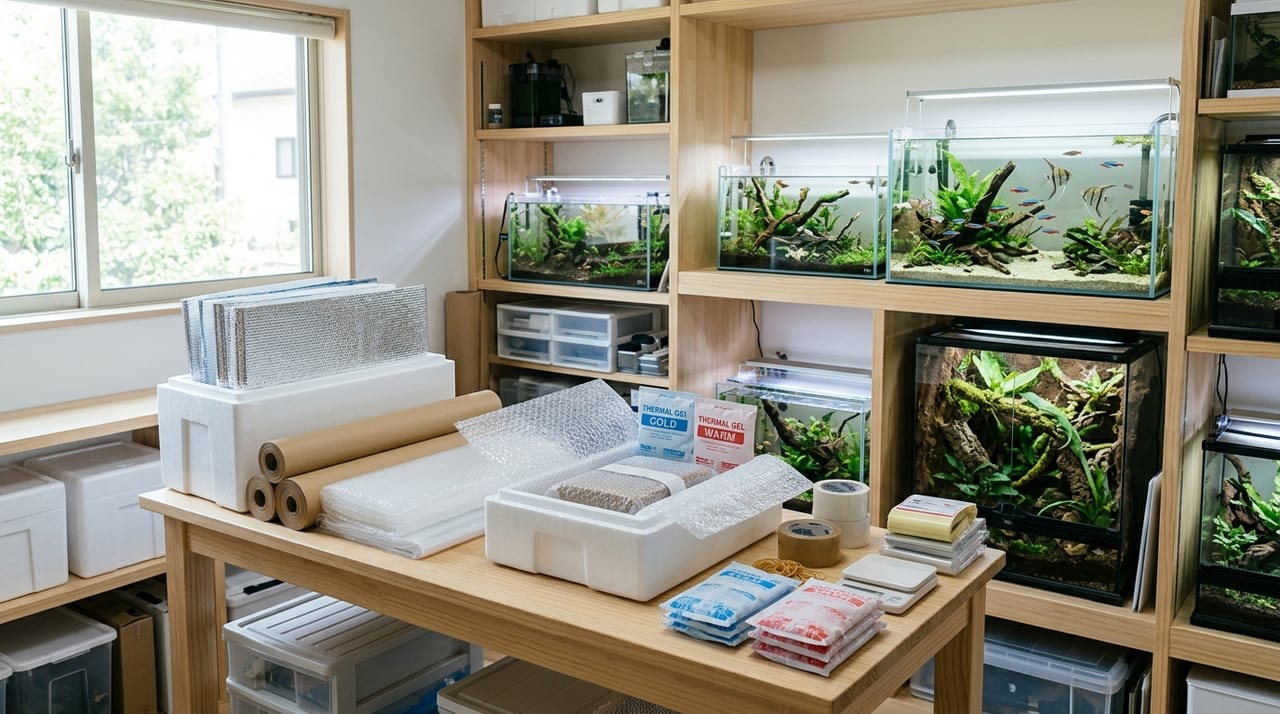
Safe Shipping Methods for Live Animals | Packaging & Temperature Management Tips
A comprehensive guide to safe shipping methods for live animals, including packaging techniques, temperature control, and seasonal precautions. Learn how to properly use foam boxes, select heating and cooling materials, and implement strategies for both summer and winter shipping.
Key Takeaways
A comprehensive guide to safe shipping methods for live animals, including packaging techniques, temperature control, and seasonal precautions. Learn how to properly use foam boxes, select heating and cooling materials, and implement strategies for both summer and winter shipping.
Shipping live animals is a responsible act of entrusting lives to your care. Whether the animals arrive safely at the buyer's location depends entirely on the care taken in packaging and the precision of temperature management. While appropriate packaging methods vary depending on the type of animal—whether fish, corals, reptiles, or insects—three fundamental principles are universal: "cushion impacts," "maintain consistent temperature," and "ensure adequate oxygen and ventilation."
✍️
BreederDirect Editorial
The BreederDirect editorial team specializes in care information for animals, covering veterinary care and breeding to deliver beginner-friendly guides.
Find Breeders on BreederDirect
Buy directly from verified breeders
Related Articles
Browse by Category
🪸Coral
🐠Marine Fish
🐟Tropical Fish
🐡Goldfish
🐟Medaka
🦎Reptiles
Share
In this article, we provide detailed guidance that even beginners can put into practice, covering everything from step-by-step packaging procedures by animal type, to temperature management by season, and how to choose the best shipping timing.
Packaging Procedures for Aquatic Life (Fish, Corals, Shrimp)
The most critical aspects of shipping aquatic animals are "preventing water leaks" and "ensuring adequate oxygen." If packaging is inadequate, water may leak upon arrival or animals may be weakened by oxygen deprivation. By following the steps below, you can significantly reduce these risks.
Basic Packaging Steps
Place the animal in a plastic bag with aquarium water — Fill the bag approximately one-third full with the animal's aquarium water, then transfer the animal. Fill the remaining space with pure oxygen (or use an oxygen tank) and seal tightly. By using pure oxygen rather than air from an air pump, you can handle longer transit times safely.
Double-bag — To prevent water leaks, always use two bags. Fill the outer bag with air (or oxygen) and seal it as well. This way, even if the inner bag ruptures, you have a backup layer.
Wrap with newspaper or bubble wrap — For shock absorption and insulation, wrap the double-bagged animal thoroughly with newspaper or bubble wrap.
Place in a foam box — Foam boxes are essential to minimize the impact of outside temperatures. Using dense, thick foam provides better insulation.
Seal with a cardboard box — Place the foam box inside a cardboard box and secure it on all sides with cushioning materials. Don't forget to apply stickers reading "Do Not Turn Upside Down" and "Live Animals Inside—Handle With Care."
Packaging Procedures for Reptiles, Amphibians & Land Animals
Unlike aquatic animals, reptiles and land insects prioritize "maintaining ventilation" above all else. Sealing them completely can lead to oxygen deprivation or suffocation, which can be life-threatening, so choosing the right packing materials is crucial.
Packaging Tips
Use cloth bags, deli cups, or plastic containers structured so the animal cannot escape. For delicate species like chameleons, avoid placing them directly in containers—wrapping them in a cloth bag first reduces stress.
Line the interior with paper towels or moisture-dampened sphagnum moss to maintain appropriate humidity. Some species can develop dehydration if conditions are too dry, so careful monitoring is needed.
Fill gaps around the container with newspaper or bubble wrap to prevent the container from shifting due to vibrations.
Create small ventilation holes in multiple spots on the cardboard box to allow air circulation. Holes around 1-2 cm in diameter are sufficient, but make sure they are too small for the animal to escape through.
Add cautionary labels such as "Live Animals Inside," "Do Not Turn Upside Down," and "Do Not Block Ventilation Holes" on the outside of the box. This helps communicate important information to the shipping carrier.
Comprehensive Temperature Management Guide by Season
Many live animal shipping failures stem from inadequate temperature control. High summer temperatures and low winter temperatures can be life-threatening for animals. Prepare appropriate countermeasures for each season in advance.
Summer (June–September): Heat Management
During summer, package internal temperatures can rise beyond expectations. Inside delivery vehicles exposed to direct sunlight, temperatures can exceed 40°C, making cooling measures essential.
Use cooling packs — Wrap cooling packs with towels or newspaper before including them to prevent direct contact with animals, which can cause cold injury.
Specify morning delivery — Arrange for morning delivery (between 10 AM and 12 PM) to ensure the package arrives before daytime temperatures peak.
Ship only to areas with next-day delivery — During summer, avoid shipping to distant areas requiring two or more days. Extended transit times increase stress and temperature risk.
Utilize cool delivery services — For animals especially sensitive to temperature fluctuations, such as fish, shrimp, and corals, using a cooled delivery service (set to 15°C) provides extra safety.
Winter (November–March): Cold Temperature Protection
As winter brings rapid drops in water and air temperatures, proper insulation measures are essential.
Include disposable hand warmers — Wrap hand warmers (around 40°C) with newspaper and place them inside the foam box. Always use cushioning material between warmers and animals to prevent heat injury.
Foam boxes are essential — In winter, insulation performance is particularly critical. Avoid thin foam; use thicker foam to prevent outside cold from penetrating.
Consult regarding cold region shipping — Shipping to cold regions such as Hokkaido, northeastern Japan, and mountainous areas carries higher risk in winter when temperatures drop below freezing. If there's a possibility of freezing, either postpone shipping or arrange special handling such as using a heat box.
Shipping Timing and Carrier Selection
Even with perfect packaging, incorrect shipping timing or carrier choice can add unnecessary stress to the animal.
Pay Attention to Shipping Day of the Week
Avoid shipping on weekends (Friday and Saturday). When packages spend the weekend in a carrier's storage facility, delivery is delayed and animals remain confined in the package for extended periods. Morning shipment from Monday through Wednesday offers the highest probability of next-day delivery and the most peace of mind.
Choosing a Shipping Carrier
Yamato Transport — Offers live animal shipping with extensive experience. Flexible options for cooled delivery and time-specific delivery.
Seino Transportation (Kangaroo Delivery) — Well-suited for large reptiles and multiple-item shipments.
Japan Post (Yu-Pack) — Handles some live animals. Confirm acceptable species in advance.
Note: When using air freight, certain animals cannot be transported by air (certain dangerous species, for example), so advance confirmation is necessary.
BreederDirect's Safety and Assurance Systems
BreederDirect has implemented various measures to ensure safe transactions for live animals.
When listing animals, breeders can choose from three shipping options: "shipping," "in-person handoff," or "both." If there's a nearby breeder, you can select in-person handoff, allowing you to receive animals with zero transportation stress.
Before completing a transaction, you can also use the messaging feature to ask breeders directly about packaging methods and shipping conditions. Experienced breeders will patiently answer specific questions such as "How do you manage high temperatures in summer?" or "Which shipping carrier do you use?"
Additionally, BreederDirect's rating and review system allows you to evaluate breeders with a proven track record of safe shipping. Even first-time animal purchasers who feel uncertain can easily find trusted breeders by referring to reviews—we've created an environment to make this easier.
To safely deliver living creatures, sellers and buyers must share information and collaborate. BreederDirect serves as a bridge to make this happen, continuing to provide a place where precious lives connect with smiles.