Safe Pet Shipping and Receiving Methods
Buyer's guide to receiving live animals. Includes arrival inspection checklist, unboxing procedures, and troubleshooting steps.
Key Takeaways
Buyer's guide to receiving live animals. Includes arrival inspection checklist, unboxing procedures, and troubleshooting steps.
When purchasing live animals online, the condition of the animals during shipping depends greatly on your preparation and handling as a buyer. Unlike ordinary packages, live animals are sensitive to many factors including temperature, vibration, and oxygen levels. This guide provides detailed explanations from preparation through post-arrival care, so even first-time buyers can receive their animals with confidence.
Pre-Arrival Preparation: Setting Up Your Husbandry Environment
As a prerequisite, your husbandry environment must be completely set up by the day before shipment to avoid complications when the animals arrive.
For Aquatic Animals (Fish, Coral, Shrimp, etc.)
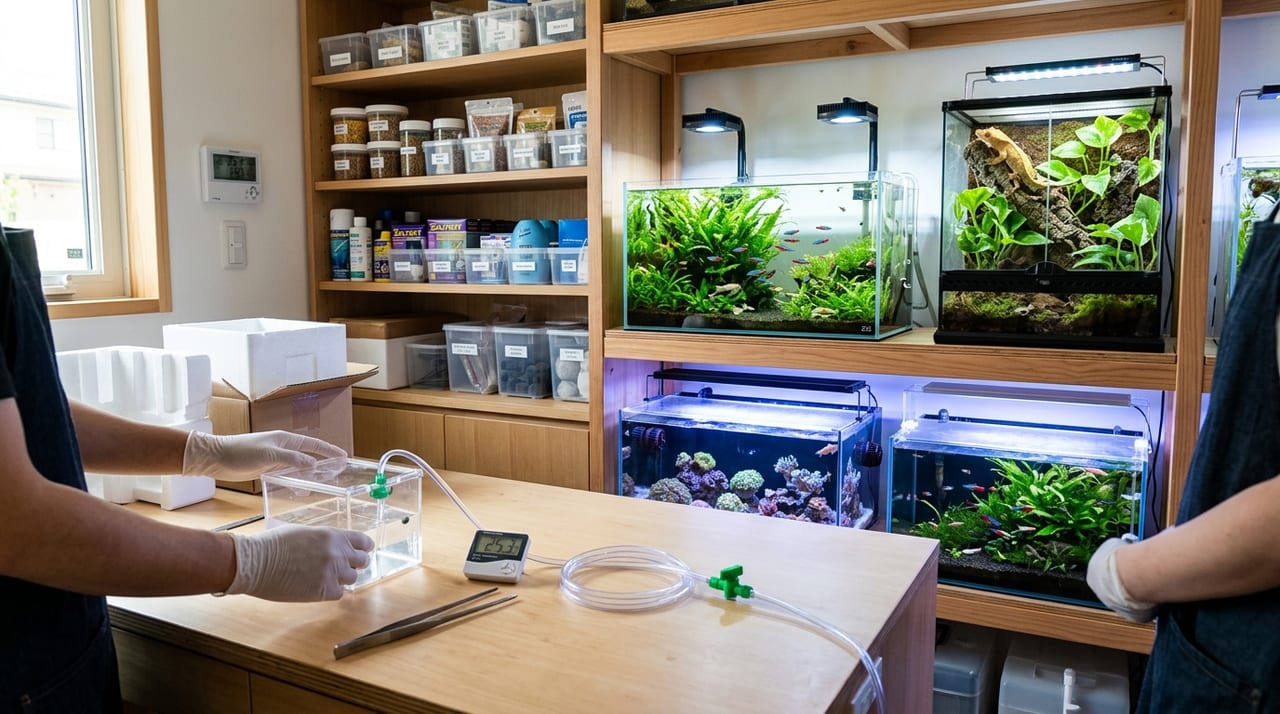
Set up your aquarium at least one week in advance to stabilize water chemistry. Adjust the water temperature to match the species and maintain precise control on the day of arrival. Verify that your filter is operating normally and that oxygen supply is adequate. Preparing dechlorinated water and thin tubing for drip-acclimation in advance will make the process smoother.
For Reptiles and Amphibians
Verify that the temperature gradient in your enclosure (basking spot and cool spot) is correctly set. Install shelters and hiding places so the animal can settle down immediately. If the species requires UVB lighting, turn it on beforehand to stabilize the temperature.
For Small Animals, Birds, and Insects
Confirm that the cage or container size is appropriate and that food and water supplies are filled. Insects in particular are prone to escape, so check the seal of the container in advance for peace of mind.
Adjusting Delivery Time and Communicating with the Breeder
"Redelivery due to absence" is one of the greatest risks in live animal shipping. The longer the animal must wait for redelivery, the greater the stress it endures.
Confirm Delivery with a Specified Time Window
Live animal shipments are typically arranged for "morning delivery" or a "specified time slot." Always designate a time you can receive the package, and if you have plans that day, consult with the breeder to adjust the shipping date. Delivery to a parcel locker should generally be avoided due to temperature control concerns.
Pre-Delivery Confirmation Points with the Breeder
- Shipping date and method (e.g., Yamato Transport's specialized live animal service)
- Packing method (presence of heat packs, oxygen insertion, etc.)
- Tracking number
- Estimated delivery time
Once you receive the tracking number from the breeder, check the shipping status regularly for peace of mind. Especially in peak summer and winter, monitor closely for any delays, as temperature fluctuations during transport are severe during these seasons.
Inspection Checklist Upon Arrival
When your package arrives, check its condition immediately. The series of checks beginning before opening the box is crucial for the safety of your animals.
Inspecting the Outside of the Box
- Check for damage or deformation — Confirm the box is not crushed and corners are not severely dented.
- Check orientation — Verify the box has been transported according to the "This Side Up" and "Fragile" labels. If the box arrived upside down, contact the breeder immediately.
- Check box temperature — Feel the box to confirm there is no abnormal heat or cold. If extreme, photograph before opening.
Unboxing Steps
- Open the package in a quiet place (away from TV or loud noises).
- Slowly remove packing materials and cushioning to retrieve the animal's container.
- For aquatic animals, inspect the color, clarity, and odor of the water in the bag.
- For reptiles, slightly open the container lid to confirm breathing and movement.
Checking Animal Condition
- Movement and responsiveness — Is the animal not excessively lethargic? Does it respond to stimuli?
- Body color and appearance — Are there any unusual discoloration, bleaching, or excessive mucus secretion?
- External injuries — Are there any wounds or missing parts that appear to have occurred during transport?
- Aquatic animal specifics — Is the fish swimming normally (not rolling or sinking)? Is the gill movement normal?
Post-Arrival Care: Acclimate Carefully and Patiently
Even after your animals arrive safely, improper handling can cause health problems within a few days. Follow proper acclimation methods to minimize transport stress.
Water Acclimation for Aquatic Animals
Float the bag in your aquarium for 15-20 minutes to equalize the water temperature. Then, using the drip method, gradually add small amounts of water from your aquarium into the bag every 30 minutes to 1 hour to acclimate the animal to your water chemistry. Once acclimation is complete, transfer only the animal into the aquarium and discard the bag water. Do not feed on the day of introduction and keep lighting dim so the animal can rest.
Environmental Acclimation for Reptiles and Amphibians
Once you place the animal in its enclosure, simply observe quietly without handling on the first day. If it hides in a shelter, this is a sign it is adapting to its new environment. Do not feed for 48-72 hours; offer only water. For the first feeding, use tweezers and observe closely, starting with small amounts for safety.
For Small Animals, Birds, and Insects
Place the animal in its cage and allow it to settle in a quiet environment. Birds especially can have weakened immunity from transport stress, so keep them in a warm, quiet location and limit care to essentials for several days.
What to Do If Problems Occur
If your animal arrives in poor condition or deceased, it is important to calmly document everything and respond promptly.
Documentation and Communication Steps
- Take photos and videos — Record the condition of the outer box before opening and the animal immediately after opening. This documentation is crucial as evidence.
- Do not click the delivery confirmation button — Suspend confirmation until the issue is resolved.
- Contact the breeder promptly — Use BreederDirect's messaging feature to report the situation with photos.
- Consult customer support if unresolved — If you cannot reach the breeder or are unsatisfied with their response, contact BreederDirect's support team.
Safe and Secure Practices at BreederDirect
BreederDirect has established systems so both buyers and sellers can trade with confidence.
Payment methods and timing are arranged directly between the breeder and buyer. By arranging to pay after arrival and confirming the animal's condition, you have the opportunity to review transaction terms if any problems occur during arrival.
All communications take place through BreederDirect's messaging feature, so our team can review the entire transaction history and provide support if needed. Most sellers on BreederDirect are experienced breeders with years of handling live animals and extensive knowledge of packing and shipping methods.
Live animal transport carries inherent risks no matter how carefully it is packaged. That is why your preparation and handling as the receiving end greatly determine the animal's survival rate. Using this guide, practice safe and secure receipt of your live animals.