Complete Guide to Reptile Body Language | Reading Stress Signals, Threat Displays, and Relaxation Signs
We explain reptile body language by species type. By understanding the differences between stress signals, threat displays, and relaxed states, you can determine the right timing for handling and identify necessary environmental improvements.
Key Takeaways
We explain reptile body language by species type. By understanding the differences between stress signals, threat displays, and relaxed states, you can determine the right timing for handling and identify necessary environmental improvements.
The Importance of Understanding Reptile Communication
Unlike dogs and cats, reptiles communicate very little through vocalizations. Instead, they transmit rich information through changes in body color, posture, movement patterns, and tail movements. Whether you can read these signals significantly affects both your safety as a keeper and the welfare of the individual animal.
✍️
BreederDirect Editorial
The BreederDirect editorial team specializes in care information for animals, covering veterinary care and breeding to deliver beginner-friendly guides.
Find Reptiles on BreederDirect
Buy directly from verified breeders
Browse Related Listings
Find Reptiles listings related to this article on BreederDirect. Buy directly from verified breeders.
If you overlook stress in reptiles, they easily enter a spiral of immunosuppression → infection → loss of appetite. Conversely, if you can recognize when an individual is relaxed, you can accurately judge the right timing for handling and identify when environmental improvements are necessary.
Since body language varies by species, understanding the specific behavioral repertoire of the species you're keeping is essential. This guide explains both signals common to a wide range of reptiles including lizards, turtles, and snakes, as well as distinctive signals particular to representative species.
Reading Stress Signals
Below are the typical body language signals displayed by stressed individuals.
Loss of appetite / indifference to food: One of the most common stress signals. Appetite decreases due to environmental changes, excessive handling, improper temperature, and other factors. However, natural loss of appetite also occurs during breeding season, before shedding, and during cooling periods, so a comprehensive assessment is necessary.
Escape behavior / increased hiding time: "Glass surfing," where the animal suddenly moves frantically around the enclosure (particularly common in snakes), can signal environmental dissatisfaction, hunger, or excitement during breeding season. On the other hand, if the animal suddenly spends much longer hiding and not emerging from its shelter, it may indicate illness or stress from excessive handling.
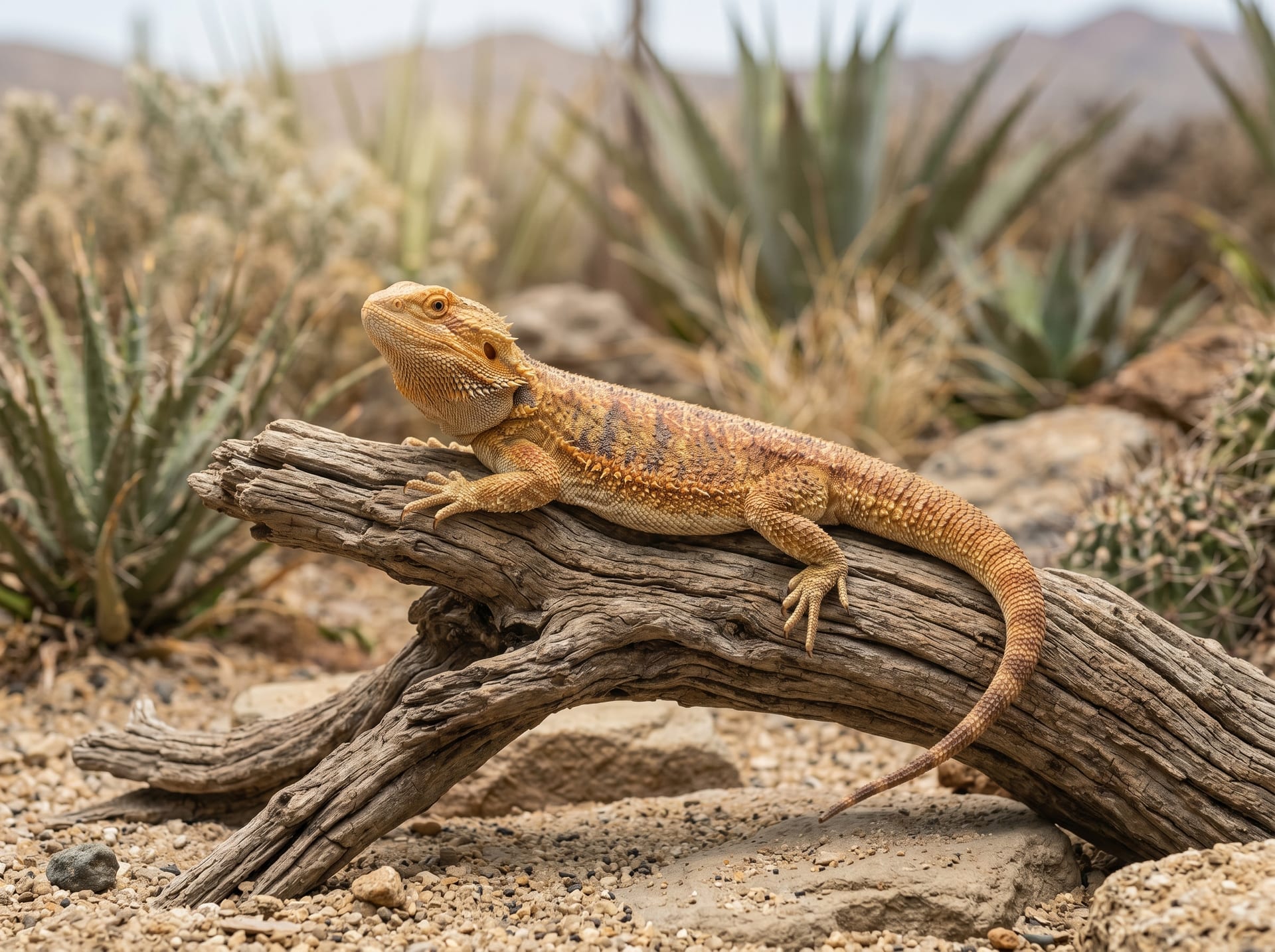
Change in body color: While most pronounced in chameleons, the darkening of the beard (throat and cheek area) in bearded dragons and the overall darkening of color in leopard geckos are also known signs of stress and discomfort.
Open-mouth threat / hissing (hissing sound): "Gaping," where the animal holds its mouth wide open, is a threat and defensive posture seen in bearded dragons, basilisks, and other species. When snakes hiss or exhale with a "shhhh" sound, it's a clear sign of fear and defensiveness. Handling during this state puts significant stress on the animal and carries a risk of biting.
Vigorous tail movement: In chameleons and agama species, curling or coiling the tail can be a normal postural behavior depending on the species. However, "tail-wagging," where a leopard gecko raises its tail and waves it, is often a sign of excitement or alertness. Conversely, when a bearded dragon raises its tail and waves it slowly, it can have more of a "communication and greeting" meaning.
Varieties of Threat and Defensive Behavior
Defensive behaviors displayed when reptiles perceive external threats or humans vary greatly by species.
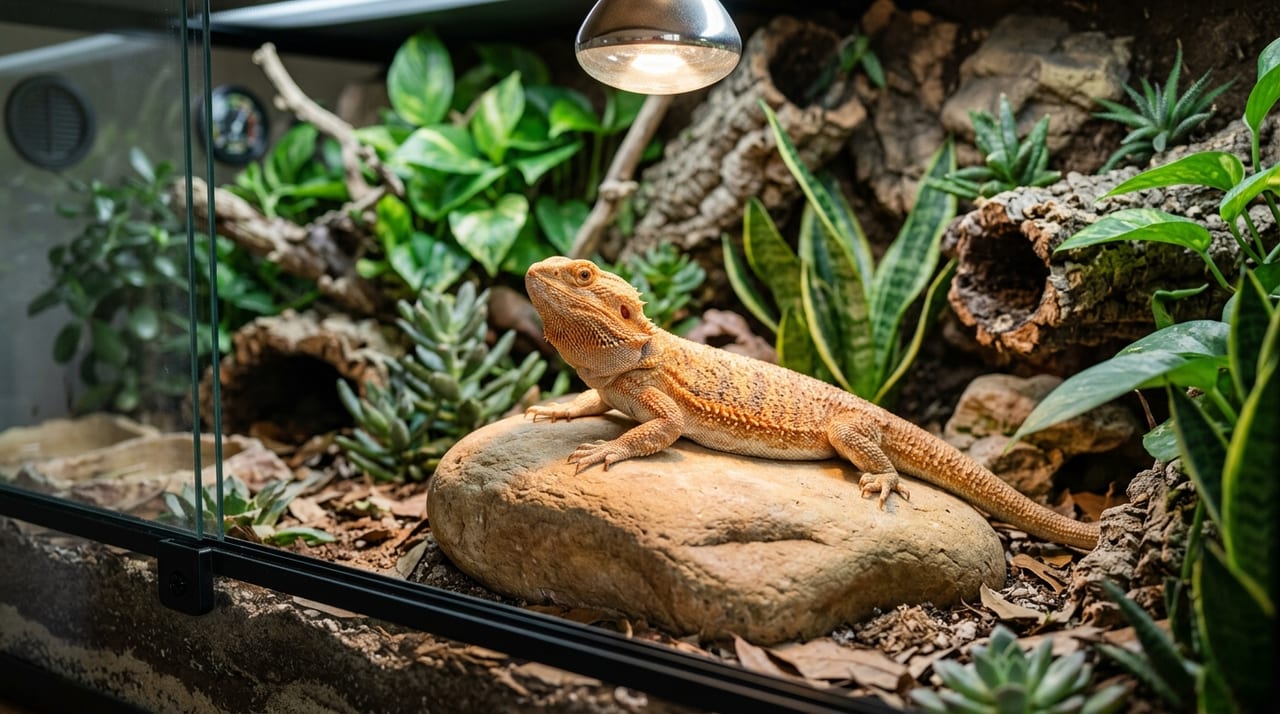
Bearded dragon: The beard (throat area) becomes darkened and enlarged, the body flattens out, and the animal appears larger to its opponent. It may also open its mouth. This is a clear defensive signal meaning "come no further," and handling during this state significantly increases stress.
Leopard gecko: Slowly raising and arching the tail back is an early sign of tension and alertness. If heightened further, the body arches upward into a curved posture and may produce a hissing sound. A "lunge," where the head swings sharply forward in a striking motion, is a sign immediately preceding an attack.
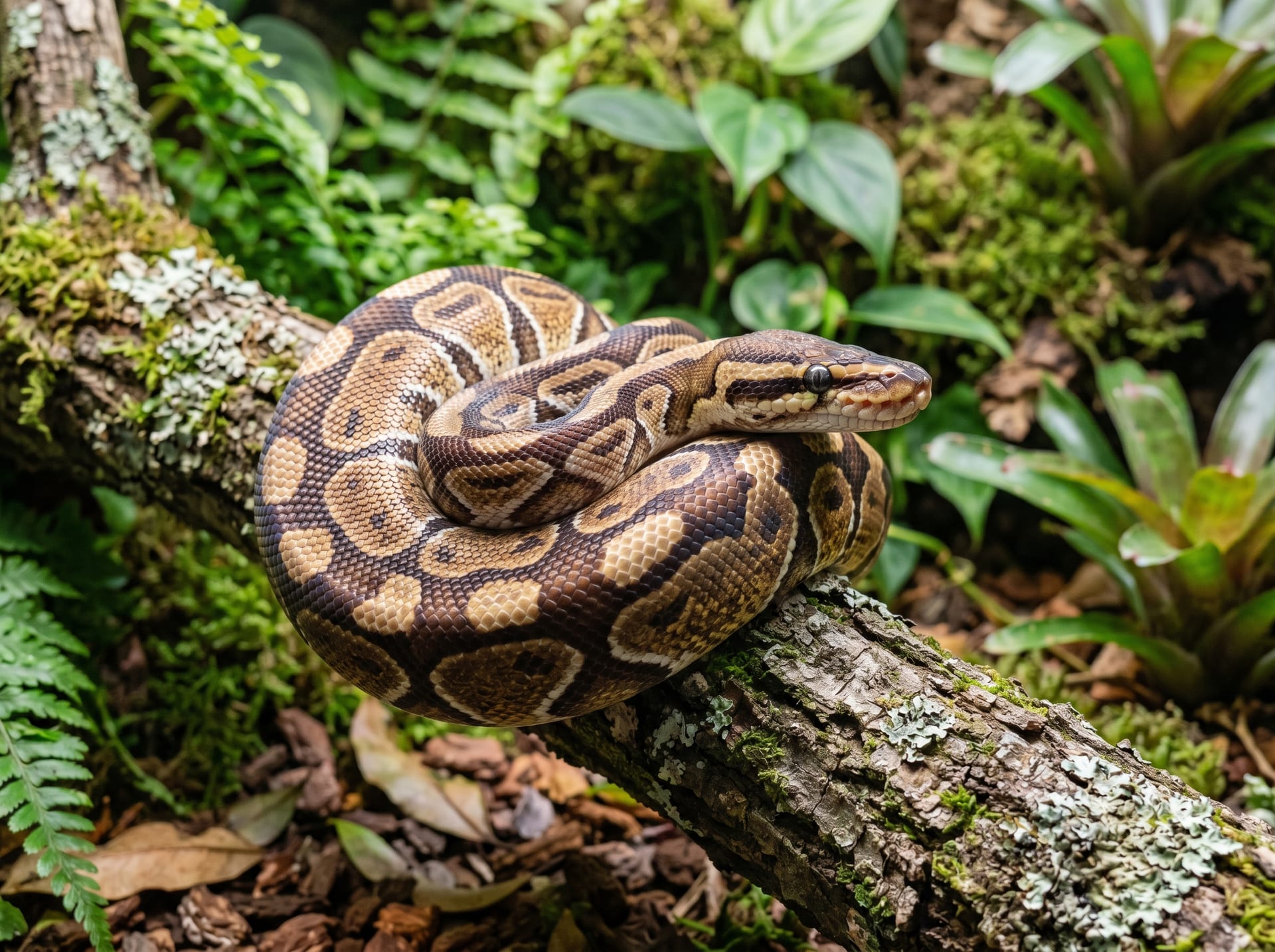
Ball python: Coiling the body into a ball shape, as the name suggests, is a classic sign of fear and defense. A snake in this state is under extreme stress, so handling should be avoided and the animal should be allowed to calm down in a quiet environment.
Turtles: Retracting the head and limbs into the shell is a basic defensive reaction. When they remain retracted and completely immobile, it often indicates a severe stress state.
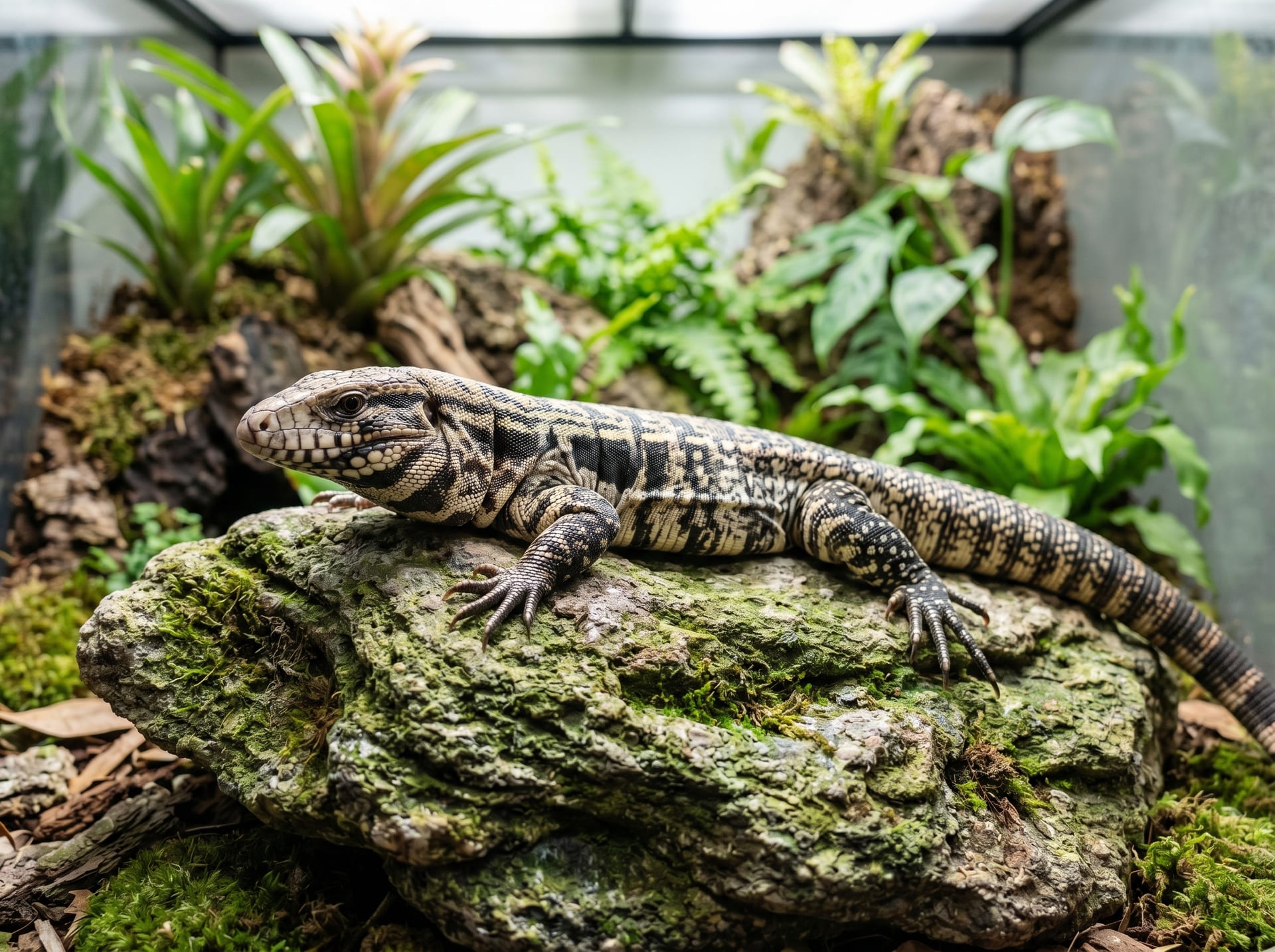
Water monitors and tegus: Positioning the body in an S-curve facing the opponent, rapidly flicking the tongue in and out while raising the body, is a sign immediately preceding aggressive defense. Since they also strike with their tail, maintain distance.
Signs of Relaxation and How to Confirm Good Health
Understanding what a relaxed individual looks like is equally important as recognizing stress signals.
Voluntary activity and exploratory behavior: Moving actively around the enclosure and exploring the environment is evidence of health and security. The ability to smoothly move between basking spots and cooler areas on its own also indicates good condition.
Voluntary feeding: Actively hunting when food is presented and showing a lively response to food is one of the best signs of health.
Tolerance to handling: An animal that doesn't attempt to escape during handling and remains still or sleeps on your hand is considered accustomed to humans and relaxed. However, stillness doesn't always mean safety, so also check that the body isn't rigid or tense.
Regular shedding cycle and maintained appetite: An animal with regular, smooth shedding and minimal appetite fluctuation around shedding is well-adapted to its environment.
Relaxed breathing and normal body color: In snakes, relaxation is shown by the entire body being loosely relaxed with scales not flared (the body not puffed up).
Proper Timing and Methods for Handling
By applying your understanding of body language to handling, you can significantly reduce stress in your animals.
States to avoid handling: Before and after shedding (when eyes are cloudy or immediately after shedding), during digestion (within 48 hours of feeding), while in a threat posture, when illness is suspected, before and after egg-laying, and before and after hibernation in turtles.
Appropriate frequency: While it varies between individuals, the basic guideline is 2-3 times per week for 10-20 minutes per session. Animals accustomed to handling may tolerate daily handling, while nervous individuals should be limited to about once weekly.
Approach method: Grabbing from above reminds many reptiles of predation by birds of prey and causes significant stress. The basic technique is to slowly introduce your hand from the side and support the animal's belly. The ideal approach is to avoid sudden movements and allow the animal to voluntarily climb onto your hand at its own pace.
When you purchase an animal from BreederDirect, you can ask the seller directly about that individual's body language characteristics. Welcoming a handling-accustomed animal from a trusted breeder makes it easier to start building a good relationship.