Lamé Medaka Body Type and Genetics Guide | Lamé Expression and Selective Breeding for Body Type Maintenance
An explanation of lamé medaka genetics and body type. This guide introduces the mechanisms of lamé expression, methods for maintaining body type, and key selection points.

Key Takeaways
An explanation of lamé medaka genetics and body type. This guide introduces the mechanisms of lamé expression, methods for maintaining body type, and key selection points.
Related Species
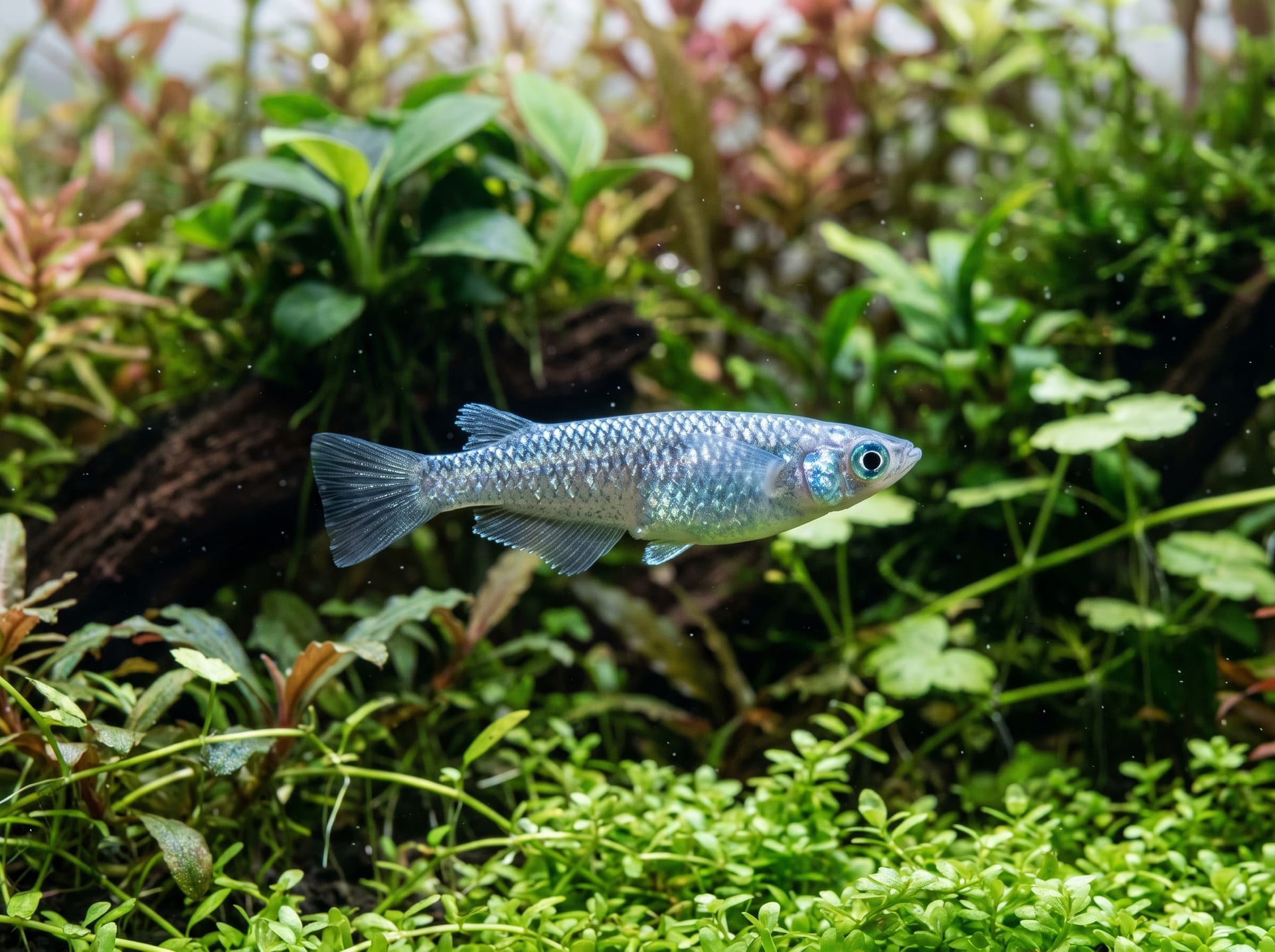
Lamé medaka are a particularly popular ornamental fish variety, with shimmering lamé (crystals of iridophores) scattered across the surface of their scales. The beauty of scales that gleam like jewels depending on how light strikes them is so captivating that once seen, it's unforgettable. However, to bring out this beauty, you must correctly understand the mechanisms of lamé expression and employ selective breeding that keeps body type in mind. This article will explain lamé medaka's genetic characteristics through practical selective breeding techniques in a way that's easy for beginners to understand.
Understanding the Mechanisms of Lamé Expression
The shimmer of lamé comes from cells called "iridophores." In ordinary medaka, iridophores exist beneath the skin and do not reflect light from the surface. However, lamé medaka possess a genetic mutation where iridophores are pushed up close to the surface of the scales, and this is what reflects light to create the sparkling "lamé" appearance we see.
This mutation is said to be inherited in a manner consistent with autosomal recessive inheritance, so breeding lamé with lamé produces lamé offspring at a high rate. However, the "quantity" and "quality" of lamé varies greatly from individual to individual—even among fry from the same parents, some will have abundant lamé while others have little. This is both what makes selective breeding challenging and what makes it rewarding.
Lamé color also shows great diversity. Gold lamé, silver lamé, blue lamé, and multi-colored lamé vary in appearance depending on the combination of pigments in the iridophores, and some strains even produce individuals with black or purplish lamé.
Selection Points for Distinguishing Lamé Quantity and Quality
To breed high-quality lamé medaka, you must first understand the difference between lamé "quantity" and lamé "quality."
Lamé Density and Grain Size
"Density" refers to how much lamé is present per scale. The higher the density, the more sparkle across the entire body and the greater the ornamental value. Additionally, larger lamé particles reflect light more strongly and have presence even when viewed from afar. The impression differs considerably between "fine lamé" (small grains in high numbers) and "coarse lamé" (large grains in lower numbers), so set your selection standards according to your preference.
Uniformity of Distribution
Individuals with lamé distributed evenly from head to tail fin are considered superior. Individuals with abundant lamé on the body but little on the head, or those with lamé biased to one side, have reduced ornamental value and are best avoided for breeding, since they tend to produce offspring with uneven lamé distribution.
Confirming Lamé by Proper Lighting
Always observe under light during selection. Natural light or angled light makes lamé shimmer easier to confirm than fluorescent light, and photography shows dramatically different results depending on angle. Smartphone macro photography capabilities have improved in recent years, and comparing photos and short videos taken from multiple angles and lighting conditions makes it easier to confirm lamé distribution and how the shimmer looks in motion—details that are hard to discern from still images alone. When purchasing, it's recommended to check photos the seller has taken from multiple angles.
Maintaining Body Type Alongside Lamé Beauty is the Greatest Challenge
The most difficult aspect of raising and breeding lamé medaka is maintaining both beautiful lamé and a healthy body type simultaneously.
Body Type Deterioration Caused by Pursuing Lamé
If you continue selecting only for beautiful lamé, body type checks tend to become lax without you realizing it. Spinal curvature (the so-called "bend") is highly heritable and, if left unchecked, can spread throughout the entire line. It's essential to exclude individuals with awkward swimming patterns, those whose back line isn't straight when viewed from the side, and those with overly thin caudal peduncles from breeding stock.
Standards for Ideal Body Type
The standards to aim for in lamé medaka body type are as follows.
- Back line: Straight and symmetrical when viewed from above
- Body height: Varies by strain, but individuals with adequate height are preferred
- Tail fin: Opens wide in a fan shape with no tears or missing sections
- Abdomen: Not excessively bloated, but with appropriate fullness
- Swimming: Swims stably in a horizontal position without tilting to one side
Good body type also affects how lamé appears. Individuals with straight backs reflect light evenly, making lamé appear more beautiful. Conversely, individuals with curvature can appear distorted even with abundant lamé, reducing ornamental value.
Breeding Strategy | Increasing Lamé While Preserving Body Type
The Basics: Lamé × Lamé Line Breeding
Lamé inheritance is relatively stable, and breeding lamé with lamé produces lamé offspring at a high rate. First, carefully select individuals superior in both body type and lamé within the same line, and be sure to review breeding partners before inbreeding problems emerge.
Body Type Improvement Through Outcrossing
Continuing the same line can result in body type deterioration and reduced vitality. In such cases, introduce lamé medaka from a different line with superior body type and perform "outcrossing" (cross-line breeding). In the F1 (first generation), lamé quantity may decrease compared to the parental generation, but body type improves more readily, and by continuing selection from F2 (second generation) onward, you can restore lamé quantity while maintaining body type.
Two-Line Management: Body Type Priority and Lamé Priority
Advanced breeders should consider "two-line management"—maintaining one line focused on body type and another focused on lamé quantity, and periodically crossing them. By continuing specialized selection in each line and choosing individuals from F1 that possess the strengths of both, then using them as parents for the next generation, you can achieve high-level balance between lamé and body type.
Daily Management and Timing of Selection
Selection During the Fry Stage
Lamé is difficult to confirm during the fry stage, and many individuals don't begin to show shimmer until they've grown somewhat. Generally, around 1.5–2 cm in body length, you begin to see gradual increases in lamé quantity. During the fry stage, prioritize body type assessment. Separating individuals with obviously curved spines or notably stunted growth early will make later selection easier.
Final Selection During the Adult Stage
Lamé expression is easiest to evaluate once medaka reach adulthood. When selecting individuals for breeding, comprehensively evaluate body type, lamé quantity, distribution, and color in their mature state. Particularly for females, egg production is an important factor; even with beautiful lamé, individuals with low fecundity may not be suitable for line maintenance.
Rearing Water and Health Management
Stable water quality is essential to bring out lamé's full shimmer. In water where ammonia or nitrite accumulates, scale condition deteriorates and lamé can appear cloudy. Make weekly water changes a habit and maintain proper filtration to create an environment where medaka can stay healthy.
BreederDirect's Safe and Reliable System
Lamé medaka show wide quality variation and can be difficult to judge from photos alone. Breeders listing on BreederDirect are experienced professionals who have practiced selective breeding that emphasizes balance between body type and lamé. When listings are posted, they include photos taken from multiple angles of actual individuals, allowing you to personally confirm lamé quantity, distribution, and body type before purchasing.
Additionally, you can use the breeder question feature to ask detailed questions like "How prone is spinal curvature in this line?" or "What are the tips for selection from F2 onward?" and receive direct answers. Even those hesitant about buying living creatures online can confidently welcome their ideal fish through BreederDirect's transparent transaction system.
The world of lamé medaka is rich with depth, and the higher you set your selection standards, the more new discoveries await. We encourage you to connect with excellent breeders through BreederDirect and develop your own beautiful lamé medaka.