Complete Guide to Creating a Medaka Biotope | Containers, Plants, and Layout
A complete guide to creating a medaka biotope from scratch. Covers container selection, substrate, choosing aquatic plants, layout tips, and maintenance methods.
Key Takeaways
A complete guide to creating a medaka biotope from scratch. Covers container selection, substrate, choosing aquatic plants, layout tips, and maintenance methods.
A medaka biotope is an appealing way to cultivate aquatic life in an environment close to nature. With aquatic plants flourishing and medaka swimming gracefully, it truly becomes a small ecosystem. Simply placing one on your balcony or in your garden creates a healing space in your daily life. This article explains how to create a medaka biotope from scratch.
Choosing a Container
When selecting a biotope container, choose based on the balance between appearance and functionality.
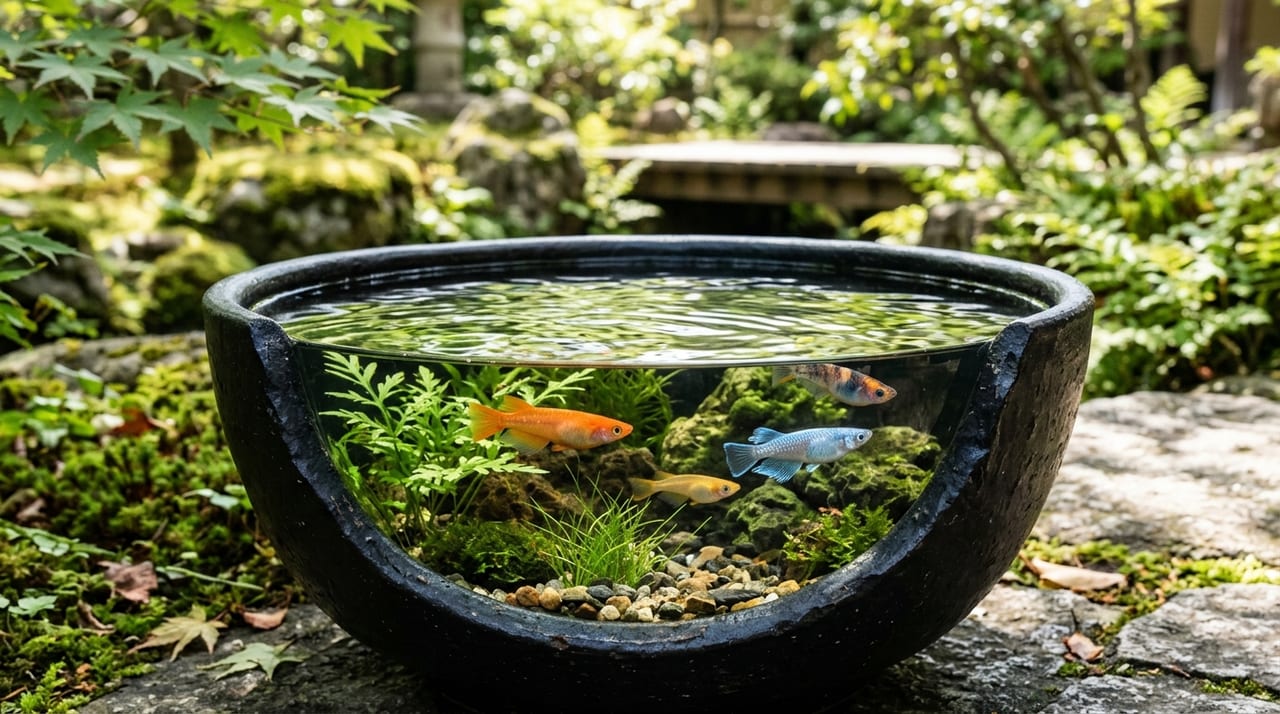
Water lily pots are the most popular choice. Ceramic pots have excellent insulation, resulting in gradual temperature changes and an attractive aesthetic. The basic guideline is to choose one with a diameter of at least 40 cm and a water volume of at least 20 liters. Selecting darker colors helps suppress water temperature increases and enhances the medaka's coloration.
Plastic tubs (toro tubs) make it easy to maintain adequate water volume and are well-suited for managing multiple varieties. With large containers of 40-80 liters, water quality remains stable and you can raise many medaka. Since the appearance is simple, you can decorate it by adding a wooden frame or arranging bricks around it.
Styrofoam containers offer the highest insulation and excel at preventing high summer temperatures and winter freezing. While plain in appearance, they have excellent practicality as breeding containers. Black styrofoam containers designed specifically for medaka are also available.
Choosing a Substrate
Akadama soil is the standard substrate for biotopes. Being porous, it promotes bacterial growth and has the effect of slightly acidifying water quality. The guideline is to layer hard akadama soil about 2-3 cm thick. It's also attractive for being affordable and easy to obtain.
Aquatic plant soil is available in medaka-specific formulations with better water quality stabilization than akadama, though at a higher cost.
Arakida soil is paddy field soil that naturally promotes the growth of microorganisms like daphnia. While water tends to become cloudy, it has the advantage of producing abundant plankton that serves as food for fry.
Choosing Aquatic Plants
Arrange three types of plants in a biotope in balanced proportions: submerged plants (rooted underwater), floating plants (on the water surface), and emergent plants (at the water's edge).
Submerged plants: Anacharis (waterweed) is a hardy, fast-growing species with excellent water-purifying abilities, ideal for beginners. Fontinalis is a rootless, floating type that also serves as a spawning substrate for medaka. Cabomba has attractive feather-like leaves but is somewhat delicate.
Floating plants: Water hyacinth is a biotope staple where medaka lay their eggs on the roots. It propagates vigorously and requires regular thinning. It also provides shade from direct summer sunlight. Salvinia (floating fern) and Amazon frogbit are also popular choices.
Emergent plants: Planting dwarf umbrella sedge and water coin at the water's edge creates a natural atmosphere. Water lilies add elegance when they bloom.
Layout Tips
Keep in mind the principle of "arranging plants naturally" when designing your biotope layout.
Group plants toward the back and sides of the container, leaving the center and front as open swimming space for medaka. Placing a stone or driftwood as one or two accent pieces increases the natural feel.
Creating height variation is also important. Positioning emergent plants in back and submerged plants in front creates depth. You can also plant aquatic plants in small pots and sink them in the container for easy layout adjustments.
Initial Setup and Maintenance
After setting up your biotope, fill it with water and let it circulate for 1-2 weeks without adding fish. During this time, bacteria will colonize and water quality will stabilize. Use dechlorinated tap water or water that has been left to sit.
Basic daily maintenance involves weekly removal of surface debris and topping up evaporated water. Since biotope water quality is maintained by plants and bacteria, avoid full water changes. Instead, use a siphon to remove sediment from the bottom only when needed.
Thin out floating plants regularly to prevent overgrowth. If left unchecked, they will cover the entire water surface and block light from reaching the bottom. Ideally, keep one-third to half of the water surface open.
Water Quality Management for Your Biotope
While biotope water quality is maintained through natural cycles, complete neglect isn't possible. Keep these points in mind:
- Topping up water: Refill only the evaporated portion with dechlorinated water. As water volume decreases, temperature fluctuations become more severe
- Algae management: Remove filamentous algae by hand if it becomes excessive. Moderate algae serves as medaka food, so complete removal is unnecessary
- Bottom sediment management: Excessive organic matter accumulation degrades water quality. Perform partial resets once or twice yearly, ideally in spring and autumn
- Plant thinning: Overgrown plants reduce swimming space and block light from the water surface
- Temperature management: In summer, prevent water temperature from exceeding 30°C using screens or shade netting
The greatest appeal of a biotope is the ability to observe up close a small ecosystem where medaka coexist with aquatic plants, snails, and shrimp. A well-balanced biotope requires minimal effort while maintaining a stable environment over the long term.
Beautiful Medaka for Your Biotope at BreederDirect
Once your biotope is complete, it's time to add medaka. At BreederDirect, you can purchase beautiful medaka varieties directly from breeders that will thrive in your biotope. For viewing from above, we recommend varieties like the Mikino strain with beautiful body luster or vibrant tri-color types. By communicating your rearing environment to the breeder, you can select hardy individuals suited to outdoor biotopes.