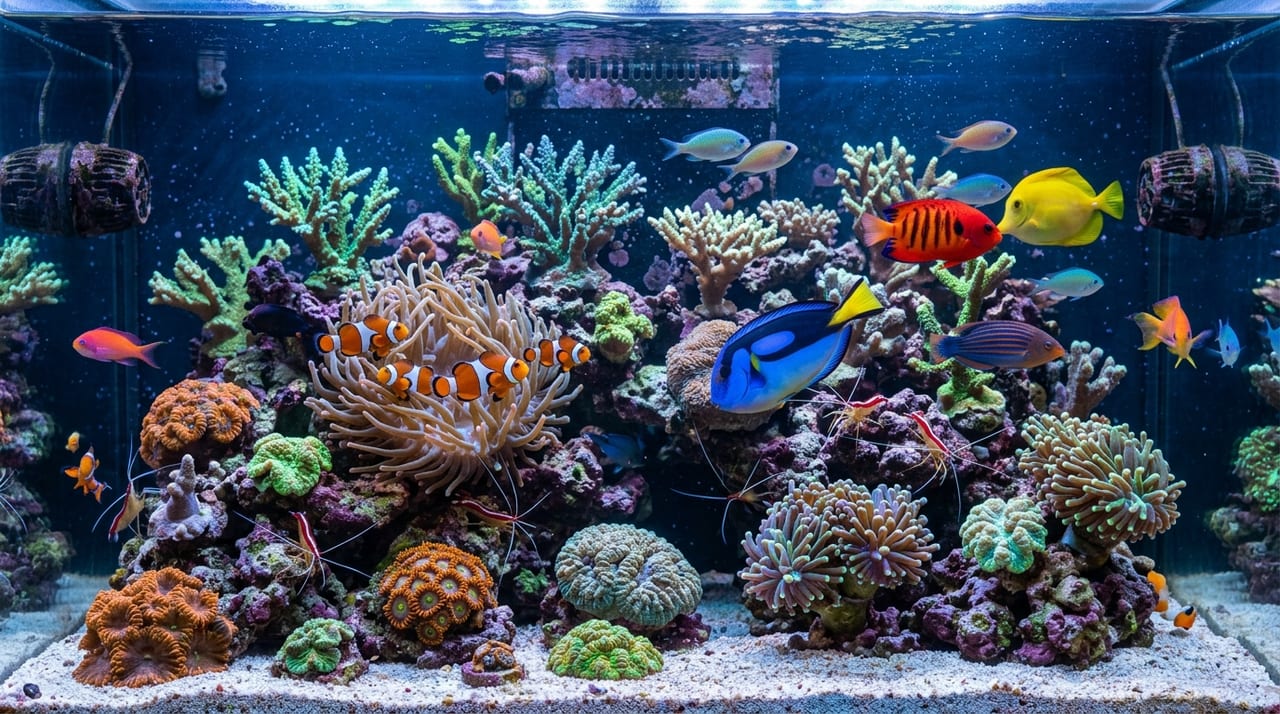
Complete guide to marine ich (Cryptocaryon irritans): lifecycle, symptoms, prevention through quarantine, and treatment methods including copper therapy and hyposalinity.
Key Takeaways
Complete guide to marine ich (Cryptocaryon irritans): lifecycle, symptoms, prevention through quarantine, and treatment methods including copper therapy and hyposalinity.
Marine fish white spot disease is a typical illness that many aquarium keepers experience at least once while enjoying the hobby. Formally known as a parasitic disease caused by a ciliate protozoan called Cryptocaryon irritans, it differs from freshwater fish white spot disease (Ichthyophthirius infection) in its causative organism. With proper knowledge and preventive measures, you can significantly reduce the risk of infection.
This article systematically explains everything from the causes and symptoms of marine white spot disease to prevention methods and treatment options when infection occurs.
Causes and Life Cycle of Marine White Spot Disease
Cryptocaryon irritans multiplies through the following life cycle:
Parasitic stage (trophont): Attaches to the fish's body surface and gills, burrows beneath the mucous layer, and absorbs nutrients. The visible white spots at this stage are diagnostic of this condition, but medications are difficult to penetrate at this point
Maturation and detachment stage: Once fully developed, the parasite leaves the fish and attaches to the tank bottom or rock crevices to form a cyst (tomon)
Cyst stage (tomont): Divides repeatedly within the cyst, producing hundreds to thousands of new individuals. This stage is also protected by a hard outer shell, making medications ineffective
Free-swimming stage (theront): Free-swimming individuals released from cysts swim through the water seeking a new host. This is the stage where medications are most effective
The life cycle of marine white spot parasites varies with water temperature but generally takes 2 to 6 weeks per cycle. Because this cycle is longer than freshwater white spot parasites, treatment requires an extended period, which is a defining characteristic of this disease.
Symptoms of White Spot Disease
If you observe any of the following symptoms, suspect white spot disease:
White granular spots scattered across the body surface and fins (approximately 0.5-1mm)
Increased flashing behavior (rubbing against rocks, corals, and substrate)
✍️
BreederDirect Editorial
The BreederDirect editorial team specializes in care information for animals, covering veterinary care and breeding to deliver beginner-friendly guides.
Find Marine Fish on BreederDirect
Buy directly from verified breeders
Browse Related Listings
Find Marine Fish listings related to this article on BreederDirect. Buy directly from verified breeders.
Related Tools
Related Articles
Browse by Category
🪸Coral
🐠Marine Fish
🐟Tropical Fish
🐡Goldfish
🐟Medaka
🦎Reptiles
Share
Rapid breathing and vigorous gill plate movements
Loss of appetite
Faded coloration and excessive mucus secretion
In severe cases, fins become tattered and eyes may become cloudy
White spot disease can progress rapidly, making early detection crucial. Daily observation of changes in your fish's behavior patterns is essential.
Prevention Methods for White Spot Disease
Prevention is more important than treatment. Practice the following preventive measures regularly:
Quarantine tank management: The most effective preventive measure is to avoid placing newly purchased fish directly in the main tank. Instead, observe them in a quarantine tank (isolation tank) for 2-4 weeks. Confirm that there are no signs of white spot disease during this period before introducing them to the main tank. A simple setup with a 30-60L small tank equipped with a sponge filter and heater is sufficient for quarantine purposes.
Stable water quality management: Sudden water quality fluctuations increase fish stress and compromise immunity. Maintain water temperature (24-26°C), specific gravity (1.023-1.025), and zero ammonia and nitrite levels. Perform regular water changes, replacing 10-15% per week gradually rather than large-volume changes all at once.
Avoid overcrowding: Excessive fish populations increase white spot disease risk through both increased stress and water quality deterioration. Maintain fish populations appropriate for your tank's capacity.
Proper acclimation during new introductions: Sudden temperature and water quality changes cause significant stress. Gradually acclimate fish over 1-2 hours using the drip method to minimize stress.
Nutritious feeding: Feed containing vitamins and garlic-infused foods are reported to boost fish immunity. Provide a balanced combination of frozen and dried foods.
Treatment Methods for White Spot Disease
Here are the main treatment methods for white spot disease. Note that treatment should be conducted in a quarantine tank, not the main tank. Copper ion treatment in the main tank can cause fatal damage to corals and invertebrates.
Copper ion treatment: This is the most established effective treatment method. Use copper sulfate or chelated copper medications, maintaining copper ion concentration at 0.15-0.25ppm. Measure concentration daily with a copper test kit and continue for 14-30 days. Because copper is absorbed by activated carbon and live rock, these should not be placed in the quarantine tank.
Low specific gravity therapy (hyposalinity): Reduces specific gravity to 1.009-1.010, killing parasites through osmotic pressure changes. Fish can tolerate this range, but it cannot be used with invertebrates and corals. This method requires 4-6 weeks, and specific gravity changes should be made slowly (0.002-0.003 per day).
Tank transfer method: Move fish to a clean separate tank every 2-3 days to separate detached parasite cysts from the fish. This method avoids medication stress on fish but requires multiple containers and effort.
Fish-free period in the main tank: After moving all fish to the quarantine tank, maintain the main tank fish-free for 6-8 weeks to eliminate parasites through host deprivation. Corals and invertebrates can remain in the tank without issue.
Welcome Home Healthy Saltwater Fish from BreederDirect
White spot disease very frequently spreads from infected fish that were already infected at purchase. Therefore, obtaining healthy individuals from trusted breeders is one of the most important preventive measures.
BreederDirect allows you to purchase saltwater fish directly from specialized breeders, so you can verify the health status and quarantine practices of individuals in advance. You can also consult directly with breeders about water quality management and treatment methods for white spot disease prevention, allowing even beginners to start saltwater fish keeping with confidence.