A Beginner's Guide to Goldfish Behavior | Recognizing Stress Signs and Health Check Points
Learn how to assess your goldfish's health by observing daily behavior. This guide provides practical methods for distinguishing stress signals, disease precursors, and normal behavior patterns.
Key Takeaways
Learn how to assess your goldfish's health by observing daily behavior. This guide provides practical methods for distinguishing stress signals, disease precursors, and normal behavior patterns.
Reading Your Goldfish's Health Through Daily Behavior
In goldfish health management, daily behavioral observation is one of the most important skills. While water quality testing and physical inspections matter, changes in behavior—"swimming differently than usual" or "spending more time motionless at the bottom"—are among the earliest signals of disease or water quality deterioration. This article explains how to distinguish between normal and abnormal goldfish behavior and identifies the key observation points for early problem detection.
Normal Goldfish Behavior Patterns
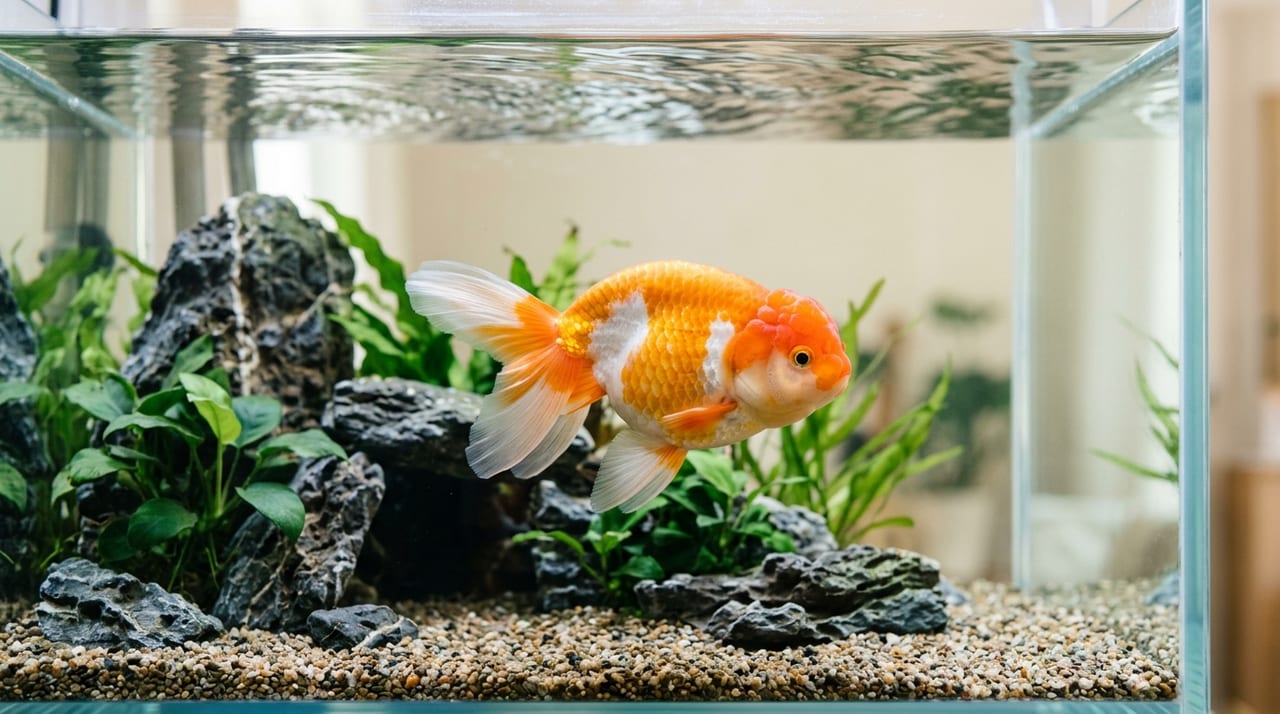
Healthy goldfish typically display the following behavior patterns.
Swimming and Activity Levels
- Swimming throughout the tank: Moving freely between the water surface, middle layers, and bottom areas
- Stable fin movement: Back fin held upright while swimming, with natural use of pectoral and tail fins
- Increased activity at feeding time: Quick response to feeding and active food-seeking behavior
- Adequate rest periods: Remaining stationary near the bottom or in plant cover during nighttime or after lights out (sleep behavior)
Social Behavior
- Group formation: In multi-fish tanks, loosely swimming as groups
- Gentle chasing: During breeding season, males chase females (non-aggressive behavior)
Respiration and Mouth Movement
- Regular gill cover movement: Approximately 60–120 times per minute (varies with water temperature and activity level)
- Consistent mouth-opening frequency: Does not continuously open mouth rapidly at the water surface
Recognizing Stress Signs—Abnormal Behavior Patterns
Goldfish stress manifests as behavioral changes. The following signs suggest water quality problems, disease, environmental incompatibility, or other troubles.
1. Continuous Mouth-Gaping at the Water Surface (Gasping)
Causes:
- Dissolved oxygen deficiency (insufficient aeration, high water temperature, overstocking)
- Ammonia or nitrite poisoning (gill damage reduces oxygen uptake)
- Gill disease (parasitic or bacterial infection)
Response:
- Immediately strengthen aeration
- Test water quality; if ammonia or nitrite are detected, perform water change immediately
- If gills show redness or excessive mucus, suspect parasitic or bacterial infection and consider salt bath or medicated bath
2. Remaining Stationary at the Bottom
Causes:
- Water temperature too low (reduced activity)
- Water quality deterioration or ammonia poisoning
- Disease (early symptoms) or weakness
- Stress (immediately after tank transfer or bullying by other fish)
Response:
- Check water temperature and adjust to optimal range (18–25°C)
- Test water quality for NH3/NO2
- Observe for abnormalities on body surface and gills
- Check if the fish is being bullied by other fish
3. Rubbing Body Against Tank Walls or Substrate (Flashing)
Causes:
- Parasites (anchor worms, fish lice, Gyrodactylus, Dactylogyrus, etc.)
- Early bacterial infection (itchy skin)
- Skin irritation from poor water quality
Response:
- Carefully inspect body surface (check for white spots, excessive mucus, redness, external parasites)
- If white spot disease, immediately perform heat treatment (28°C or higher) with medicated bath
- If external parasites are visible, use parasite treatment
- If water quality is poor, perform water change and salt bath
4. Not Eating or Poor Feeding Response
Causes:
- Early disease symptoms
- Water quality deterioration or stress
- Digestive issues (low water temperature or overfeeding)
- Females during breeding season (reduced appetite before spawning)
Response:
- Be alert if not eating for 2+ days
- Check water quality, temperature, and condition of other fish
- Observe for disease signs (abnormalities on body surface or swimming changes)
5. Unstable Swimming (Listing, Sideways Orientation, Upside-Down)
Causes:
- Swim bladder disease (swim bladder abnormality or indigestion)
- Bacterial infection or internal organ disease
- Neurological issues (heavy metal poisoning or aftereffects of oxygen deprivation)
Response:
- In case of swim bladder disease: fasting plus heat and salt bath
- For suspected other diseases, consult a specialist
- If water quality is the cause, correct immediately
6. Rapidly Moving Fins Without Forward Movement at One Location
Causes:
- Water current too strong (near pump outlet)
- Startled into panic
- Neurological abnormality
Response:
- Reduce water flow
- Remove triggers for fright (noise, vibration, aggression from other fish)
- If symptoms persist, isolate and keep at rest
Disease Precursors—Observation Checklist for Early Detection
Goldfish disease may manifest as subtle behavioral changes before onset. During daily feeding, check the following points:
| Observation Point | Normal | Caution |
|---|---|---|
| Appetite | Immediate response to food | Reduced feeding response or no response |
| Swimming | Smooth and stable | Listing or tilting at angle |
| Fin condition | Back fin held upright | Back fin closed |
| Body surface | Shiny and smooth | White spots, excessive mucus, or redness |
| Gill movement | Consistent rhythm | Rapid or uneven (one side only) |
| Feces | Brown to black and solid | White, transparent, or stringy and long |
Golden Rule for Early Detection: If you notice anything unusual, first test water quality and check temperature, then intensify observation. If no improvement within 24 hours, begin salt bath treatment. If no change after 48 hours, consider medicated bath or consulting a specialist.
Creating a Stress-Minimizing Environment
Reducing goldfish stress is fundamental to disease prevention.
Water Quality Management
- Weekly water change (20–30%)
- Regular filter cleaning
- Keep ammonia and nitrite at zero; nitrate below 20 ppm
Stocking Density
- Maintain minimum 30 liters per 10 cm body length goldfish
- Overstocking causes oxygen depletion, water quality deterioration, and aggression
Stable Environment
- Avoid sudden temperature fluctuations (temperature acclimation takes 30+ minutes)
- Place tank in a quiet location (vibration and noise are major stressors)
- Maintain consistent lighting cycle (8–12 hours on during day, off at night)
Hiding Places and Refuge
- Create visual barriers with aquatic plants and driftwood
- In multi-fish tanks, ensure weaker individuals have escape areas
Conclusion—Daily Observation as the Best Prevention
Goldfish behavior is a "living indicator" that reflects water quality and health status. Just a few minutes of observation during daily feeding, focused on these key points, significantly improves disease early detection rates:
- Any unnatural swimming patterns?
- Appetite normal?
- Gill movement regular?
- Any body rubbing?
When you notice something unusual, first check water quality and temperature, then promptly take necessary steps such as salt bath, isolation, or medicated treatment. Goldfish can live over 10 years, and some varieties exceed 20 years. A daily observation habit is the most reliable way to support their long and healthy lives.