Pet Care Guide for Senior Animals | Recognizing Signs of Aging and Managing Care During the Senior Years
Learn to recognize signs of aging in your pets early and adjust their living environment, diet, and medical care accordingly for the senior years. This guide introduces practical caregiving techniques to support your pet's longevity.
Key Takeaways
Learn to recognize signs of aging in your pets early and adjust their living environment, diet, and medical care accordingly for the senior years. This guide introduces practical caregiving techniques to support your pet's longevity.
The longer you share life with a beloved animal, the more certain it becomes that the senior years will arrive. While some reptiles live over 15 years and large parrots over 50 years, many kept animals begin showing signs of aging between 5 and 15 years. Aging cannot be avoided, but by detecting changes early and providing appropriate care, you can maintain your animal's quality of life (QOL) and allow it to spend its final years peacefully. This article provides practical guidance on caring for various animals during their senior years.
Recognizing Signs of Aging
Signs of aging in animals appear in three areas: behavior, appearance, and appetite.
| Area | Changes Observed |
|---|---|
| Behavior | A decrease in activity is the most obvious sign. Animals that were active in their youth spend much of the day sleeping and respond sluggishly to food. In reptiles, the frequency of moving to basking spots decreases, and they spend longer periods in the same location. |
| Appearance | Dulling of body color and changes in the texture of scales or feathers are observed. In fish, body color fades and fins lose their firmness. In birds, feathers lose their luster and molting intervals may become irregular. |
| Appetite | The amount eaten may gradually decrease or preferences may change. If the animal begins avoiding hard food, it may be due to wear on the teeth or beak. |
It is important to observe and record these changes daily. Sudden changes may indicate disease rather than aging, so consider consulting a veterinarian.
Making the Living Environment Barrier-Free
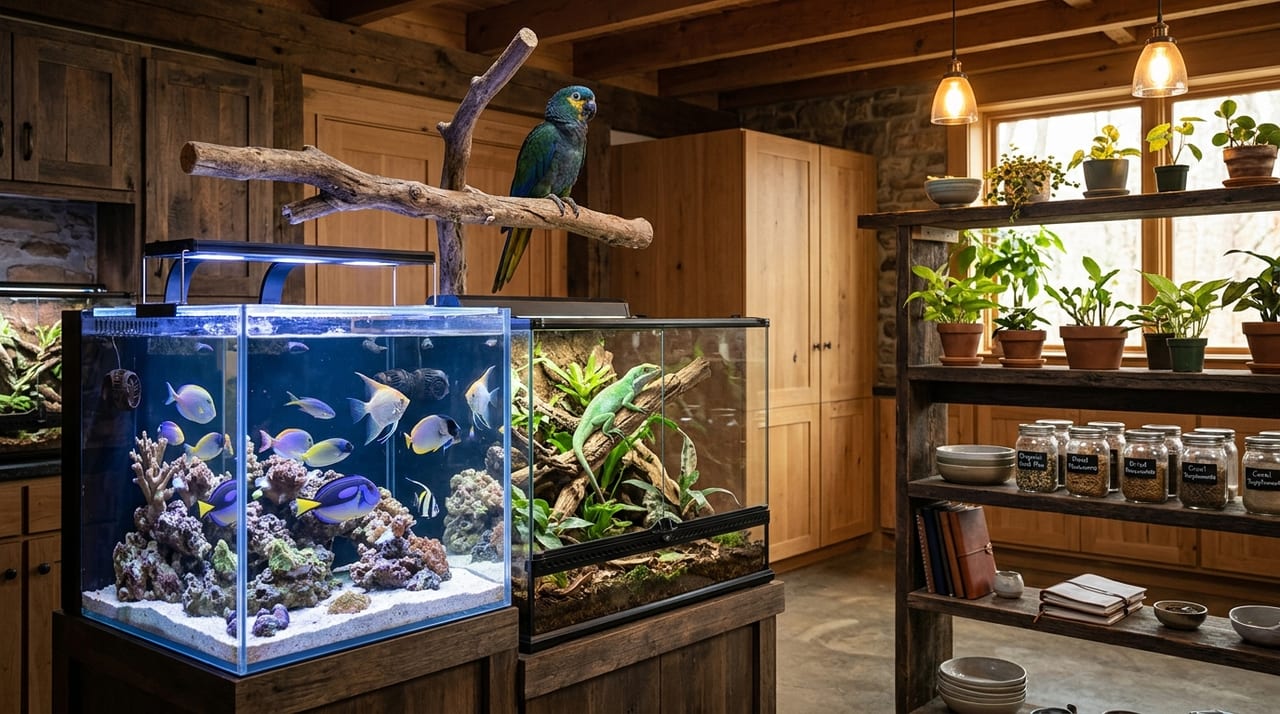
It is important to review the living environment to suit your animal's senior years. In reptile enclosures, lower the layout to reduce the strain of climbing up and down. Move basking spots that were in high places to positions closer to the floor and install ramps to eliminate height differences. Slippery substrate puts strain on the legs and joints, so consider switching to materials with better grip such as paper towels or pet sheets. In aquariums, you can reduce swimming strain by weakening the water current. Older fish lack the stamina to swim against strong currents, so attach a sponge to the filter outlet or redirect the water flow to create calm areas. Slightly lowering the water level in the tank makes it easier for water-breathing species to breathe. In small animal enclosures, either enlarge the exercise wheel to reduce strain on the lower back, or consider removing it if activity has significantly decreased.
Senior Period Food Management
As aging progresses, digestive function and metabolism decline, requiring adjustments to diet. In reptiles, lengthen feeding intervals while switching to smaller, more digestible food. Animals such as leopard geckos can have reduced digestive strain by switching from crickets to softer foods like silkworms or honey worms. However, since honey worms are high in fat, adjust portions to prevent obesity. For fish, finely crushed pellet food or frozen brine shrimp are appropriate digestible options. If floating food becomes difficult to eat, switching to sinking food allows for easier feeding near the tank bottom. For birds, consider transitioning from hard seeds to pellet food. Pellets are nutritionally balanced and easy to eat even for animals with weakened beak strength. Common to all animals, the importance of supplements like vitamins and calcium increases during the senior years. Consult with your veterinarian to provide appropriate nutritional support.
The Importance of a Regular Veterinarian
Regular health checkups are especially important for senior animals. Having health checks one or two times a year increases the likelihood of detecting diseases in their early stages. Because veterinary clinics that can treat exotic animals are limited, it is ideal to find a regular veterinarian while your animal is still young. For reptiles, blood tests can detect declining liver and kidney function early. X-ray examinations can reveal the progression of metabolic bone disease and internal tumors. For fish, while specialized veterinarians are scarce, you can record symptoms along with water quality data and utilize aquarium specialty shops or online veterinary consultation services. To prepare for treatment costs, consider pet insurance or setting up a dedicated savings fund for pet medical expenses. Particularly during the senior years, unexpected veterinary costs are likely to arise, and financial preparedness provides peace of mind.
Key Points for Reviewing Your Senior Pet's Living Environment
Pet owners should review the living environment as their animals age to ensure comfortable living.
- Reduce strain on joints by using non-slip substrate and installing ramps at height differences
- If vision or hearing has declined, keep furniture placement unchanged and maintain a familiar environment
- Move the toilet area closer and make it easily accessible
- Maintain more precise temperature control; since older animals have reduced adaptability to temperature changes, take measures to keep temperatures consistent
- Increase the frequency of regular health checkups to at least twice a year and prioritize early detection and early treatment
Senior Pet Dietary Management
As elderly pets have declining digestive function, a review of their diet is necessary. Senior pet food has good digestibility and absorption, with enhanced joint support ingredients and vitamins. You can reduce digestive strain by dividing meals into two to three per day and reducing portion sizes. If hard food becomes difficult to eat, soften it before serving or switch to wet food. Since water intake tends to decrease, add water to food or install multiple water bowls to encourage hydration.
In the final stages of senior care, you may face the difficult decision of determining how far to pursue treatment. Continuing life-extending treatments does not necessarily lead to your animal's happiness. Sometimes creating a peaceful living environment is the best choice over treatments that involve suffering. It is important to discuss thoroughly with your veterinarian and make decisions based on an accurate understanding of your animal's condition. Through BreederDirect, you can directly ask breeders at the time of purchase about the average lifespan and characteristics of the senior years for the species. Welcoming an animal after establishing a view of future care needs is the first step of responsible pet ownership. Allowing an animal that has been by your side for many years to spend its final moments in the best possible environment is perhaps the greatest expression of love you can offer as a pet owner.
Summary
Senior care ultimately comes down to modifying the environment and noticing changes early. Adjustments such as eliminating height differences, changing feeding tray heights, and reducing temperature fluctuations should be started early since they become burdensome once physical strength declines. Prioritize digestibility over quantity in diet and record weight regularly. Since distinguishing between age-related changes and early symptoms of illness is difficult, increasing the frequency of health checkups is the most reliable precaution.