Pet Relocation and Travel Guide | Procedures and Precautions for Domestic Movement and International Travel
A comprehensive guide covering procedures for relocating or traveling with pets, transportation method-specific precautions, and quarantine procedures required for international travel.
Key Takeaways
A comprehensive guide covering procedures for relocating or traveling with pets, transportation method-specific precautions, and quarantine procedures required for international travel.
In the course of pet ownership, relocating and traveling necessitate movement that cannot be avoided. However, the available transportation methods and required procedures vary significantly depending on the type of animal, and inadequate preparation can lead to problems. For international travel in particular, preparation starting months in advance may be required. This article systematically compiles practical information on pet relocation and travel.
Domestic Relocation — Pet Transportation Methods
There are three main methods for moving pets domestically: personal vehicle, aircraft, and specialized pet transportation services.
- Personal vehicle: This is the first choice because it causes the least stress and allows complete control over temperature. Secure the pet in a cage or carrier using a seatbelt. Avoid direct sunlight and take breaks every 30 minutes to 1 hour. For animals prone to car sickness, fasting 6–8 hours before travel can prevent vomiting.
- Aircraft: Dogs and cats can use pet transportation services offered by airlines, but most carriers do not accept reptiles or insects. Confirm with the airline in advance to understand what species and conditions are acceptable.
- Specialized pet transport services: These companies transport animals in temperature-controlled vehicles, making them suitable for long-distance moves or large quantities of animals. Costs vary by distance and species, typically ranging from tens of thousands to over one hundred thousand yen.
- Aquarium fish: The standard method is to seal fish in a vinyl bag with oxygen and place it in a Styrofoam box, which can accommodate movement for 24–48 hours.
Setting Up the Pet Environment in Your New Home
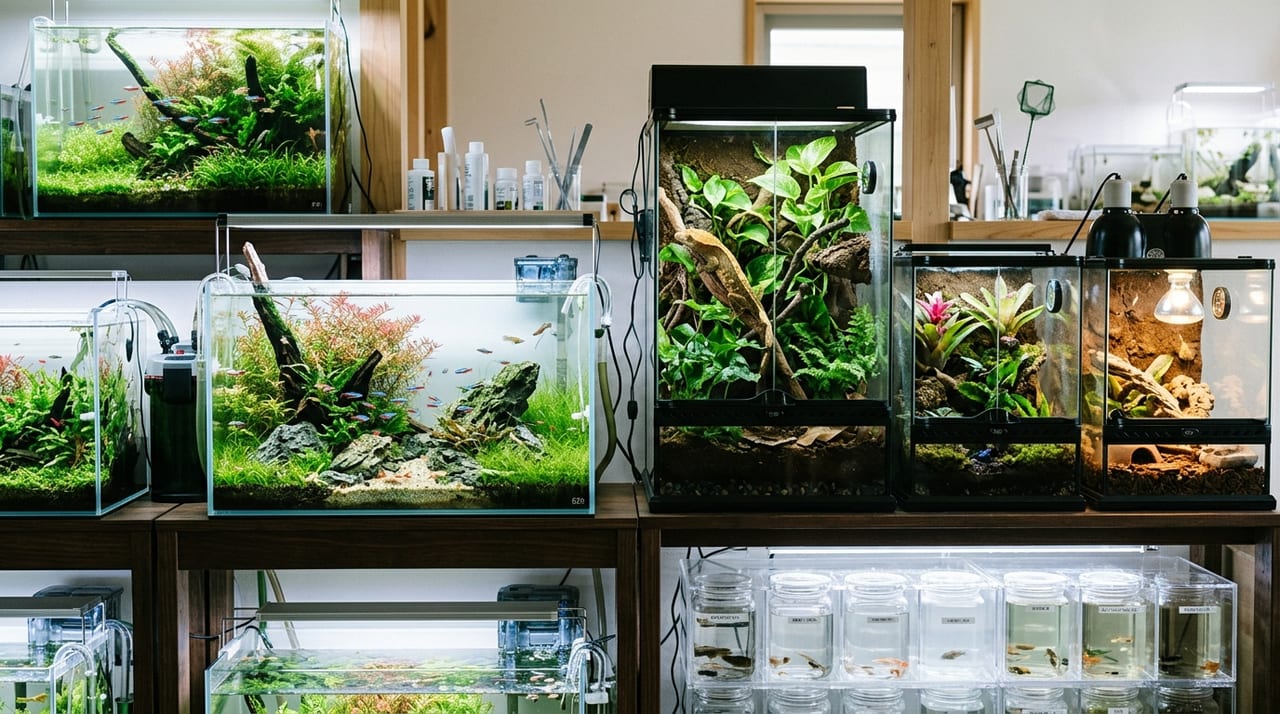
Ideally, the environment setup at your new residence should be completed before the animals arrive. Tanks or cages should be moved to the new location by the day before moving, with temperature and humidity stabilized. For aquariums, bring as much of the existing tank water as possible (at least half) to minimize bacterial loss. Transport filter media while keeping it submerged in water, then set it up quickly in the new location. If filter media dries out, beneficial bacteria die and rapid water quality changes occur—be careful about this. For reptile cages, confirm that heaters and UVB lights work before the animals arrive. Use a thermometer to verify that proper temperature gradients are established before introducing the animal. Newly relocated animals may stop eating due to stress, but remain quiet for 2–3 days and avoid forced feeding. Once they adjust to the environment, their appetite naturally returns.
Public Transportation Rules for Pet Travel
Rules for traveling with pets on public transportation vary by operator.
- JR: Dogs, cats, and small animals can be brought aboard as hand luggage in a pet case (maximum length 70 cm, weight 10 kg). A hand luggage fee of 290 yen is required. However, reptiles and insects have no clear regulations and may be subject to conductor discretion. Confirming in advance provides peace of mind.
- Private railways: Generally follow similar criteria, but policies vary by line—always check.
- Shinkansen: Place the case on your lap or at your feet. During busy periods, choosing off-peak times such as weekday daytime travel is preferable.
- Taxis: An increasing number of pet-friendly taxis are available, but inform the dispatcher of the pet's type and size when booking.
With all transportation methods, be considerate of other passengers by preventing excessive noise or odors. Placing a cover over the cage to darken it helps the animal remain calm.
International Travel — Quarantine Procedures
When taking a pet abroad, quarantine procedures are of paramount importance. Exporting from Japan requires inspection at the Animal Quarantine Service. For dogs, proof of rabies vaccination and a registration tag are required, and a health certificate from a veterinarian obtained within 7 days before departure is necessary. Depending on the destination country, microchip implantation, multiple preventive vaccinations, and serum antibody testing (titer testing) may be required, and preparation can take half a year or more. The EU, Australia, and New Zealand have particularly strict quarantine standards, making prior information gathering essential. Many reptile species for export are regulated under CITES (the Convention on International Trade in Endangered Species), requiring an export permit. Some species may be completely prohibited from export—verify using the Ministry of the Environment's CITES database. Quarantine is also required upon return; for dogs and cats, notification to the Animal Quarantine Service must be made at least 40 days before arrival. Delayed notification can result in quarantine inspection for up to 180 days.
International Travel — Pet Accompaniment Procedures
When taking a pet abroad, begin confirming the destination country's entry requirements six months or more in advance. Most countries require microchip implantation, rabies vaccination, and serum antibody testing. Particularly the EU and Australia have strict quarantine requirements, with preparation sometimes taking several months to half a year.
Relocation is significant stress for animals. Use several techniques to minimize this stress. First, accustom the animal to the carrier or case for several days before travel. Placing a familiar hiding place or cloth with familiar scent inside the case provides reassurance. Reptiles calm down when their vision is blocked, so covering the case with cloth and creating a dark environment reduces stress during travel. Temperature management is the most critical consideration. In summer, place an ice pack made by freezing water in a bottle; in winter, wrap a disposable hand warmer in a towel and place it inside the case. Position both so the animal does not directly contact them. For bagged fish transport, seal 2–3 times the water volume in oxygen and wrap the bag in newspaper or bubble wrap to cushion impact and temperature fluctuations. When collecting an animal purchased through BreederDirect, this knowledge proves useful. Confirm packing methods with the breeder in advance and prepare to introduce the animal to its living environment promptly upon receipt. With careful planning, pet relocation can be conducted safely.
Domestic Travel — Pet Accompaniment Guide
Key points for traveling domestically with pets follow. Travel by vehicle with the animal in a cage, ensuring safety in case of sudden braking. Take breaks every 2–3 hours to provide water and bathroom opportunities. Reserve pet-friendly accommodations in advance and confirm the facility's rules. When using public transportation (shinkansen, trains), the pet must be in a cage small enough to qualify as hand luggage.
Summary
Pet relocation changes difficulty based on procedures rather than distance. Domestic moves focus on transportation methods and setting up the new environment, but public transportation has operator-specific rules, and international travel requires quarantine procedures with months of preparation beforehand. In particular, rabies prevention procedures based on the rabies control law are time-sensitive, so confirming with the Animal Quarantine Service as soon as international travel is decided is the first step.