Eco-Friendly & Sustainable Pet Keeping Guide
Sustainable pet keeping: eco-friendly supplies, food sustainability, wild-caught vs captive-bred considerations.
Key Takeaways
Sustainable pet keeping: eco-friendly supplies, food sustainability, wild-caught vs captive-bred considerations.
Keeping pets enriches our lives, but the environmental impact cannot be ignored. From food production to product disposal and energy consumption, animal keeping carries various environmental costs. This article introduces specific ways to enjoy keeping animals while being mindful of the environment.
Choose Eco-Friendly Keeping Supplies
Simply reconsidering daily supplies can significantly reduce environmental impact.
- Choose natural or recycled materials: Instead of plastic dishes and toys, opt for bamboo, stainless steel, or recycled plastic products. They are also more durable
- Use biodegradable substrates: For reptiles and small animals, choose substrates like coconut coir, hardwood chips, or recycled newspaper that can be composted after use
- Choose refillable products: Buying refills for shampoos and deodorizing sprays reduces plastic waste
- Invest in durable, high-quality products: Choosing long-lasting items over cheap replacements saves both money and environmental impact in the long run
- Utilize secondhand items: Cages, tanks, and supplies often work perfectly well secondhand
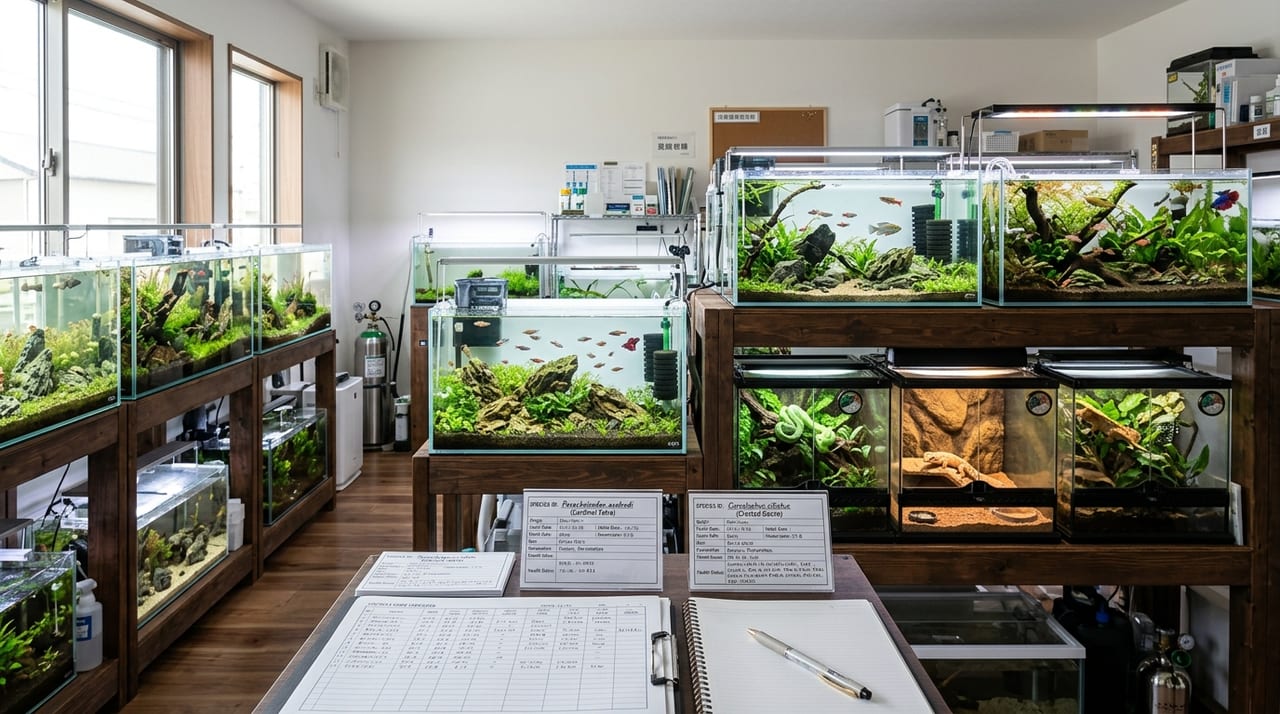
For aquariums, switching to LED lighting dramatically reduces power consumption — less than half the energy of fluorescent or metal halide lamps, with several times the lifespan.
Sustainable Food Choices
Pet food has a surprisingly large environmental footprint. Choose feeds made with MSC-certified seafood or free-range livestock. Insect protein feeds are gaining attention for their dramatically lower water, land, and greenhouse gas footprint. Buy in bulk to reduce packaging waste.
Wild-Caught vs. Captive-Bred (CB)
Choosing captive-bred animals is one of the most important environmental decisions when purchasing live animals. Wild-caught animals stress wild populations, suffer high transport mortality, and carry disease risks. Captive-bred animals don't impact wild populations, adapt better to captive environments, and have known health histories. For corals, choosing frags or aquacultured specimens reduces pressure on natural reefs.