Indoor Cat Environmental Enrichment Guide — Preventing Boredom & Stress with Space Design | ブリちょく
Cats| ✍️ BreederDirect Editorial
Indoor Cat Environmental Enrichment Guide — Preventing Boredom & Stress with Space Design
Complete indoor cat enrichment guide: vertical space design, window perches, foraging feeders, interactive play techniques, and multi-cat household harmony strategies.
Key Takeaways
Complete indoor cat enrichment guide: vertical space design, window perches, foraging feeders, interactive play techniques, and multi-cat household harmony strategies.
Problems with Completely Indoor Cats
Keeping cats completely indoors is an excellent choice for safety, but it is also an environment where "behavioral frustration" easily arises because cats' natural behavioral needs are not met. Wild cats spend hours each day hunting, patrolling their territory, and moving through terrain with varying elevations.
Indoor cats whose needs are not met may display:
- Over-grooming (hair loss and dermatitis)
- Aggression toward owners and furniture
- Sudden changes in appetite (stress eating or loss of appetite)
- Elimination problems (not using designated areas)
- Lethargy and excessive sleeping
✍️
BreederDirect Editorial
The BreederDirect editorial team specializes in care information for animals, covering veterinary care and breeding to deliver beginner-friendly guides.
Find Cats on BreederDirect
Buy directly from verified breeders
Browse Related Listings
Find Cats listings related to this article on BreederDirect. Buy directly from verified breeders.
Environmental enrichment refers to "environmental design that stimulates cats' minds and bodies" to prevent and improve these behavioral problems.
Designing Vertical Space
Cats naturally prefer high places. By providing vertical movement pathways, you can make limited indoor space feel "three-dimensionally spacious."
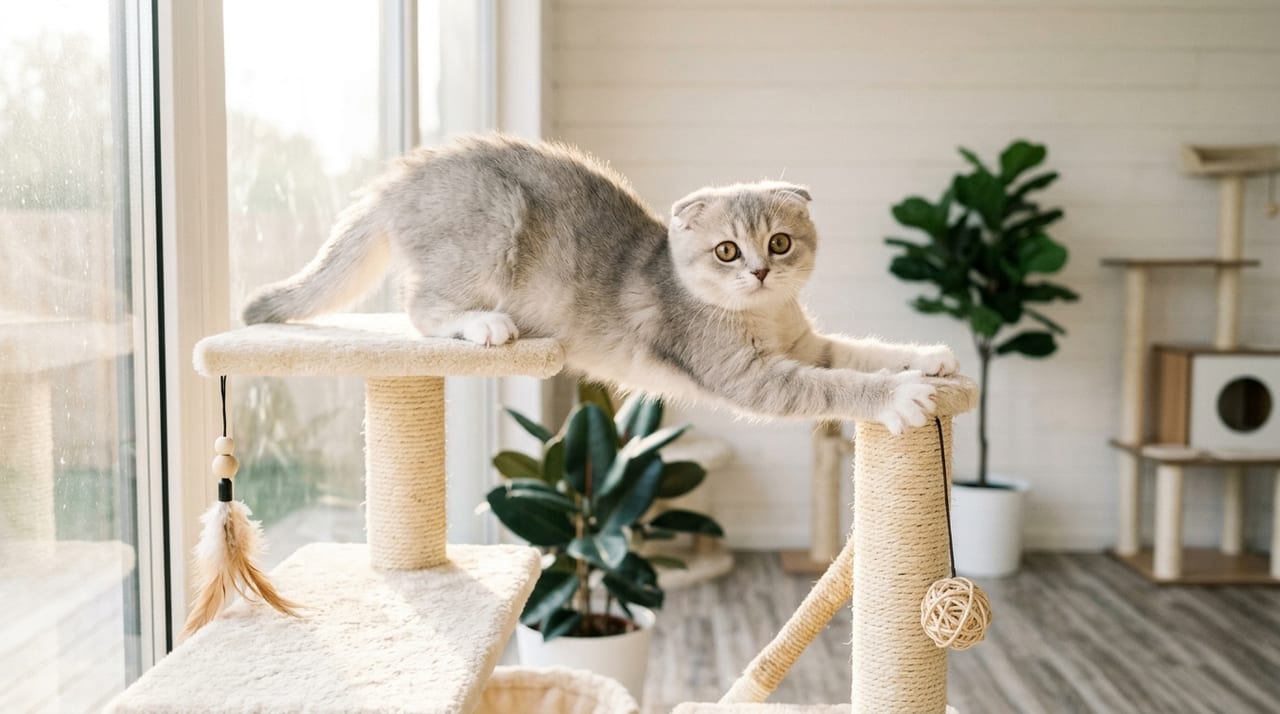
Cat Trees: The most basic form of vertical space. Ideally reaching from floor to near-ceiling height. Types that integrate scratching posts, perches, and enclosed houses are highly versatile.
Wall Shelves (Cat Steps): Install shelves on walls in a staggered pattern to create a "cat highway" that allows climbing up and down. Connecting them across rooms dramatically expands the cat's range of movement.
Window Perches (Cat Shelves): Placing a stable platform by the window provides endless entertainment as "cat TV" for viewing the outside. Placing a bird feeder outside increases stimulation.
Opening Closets: Simply opening one shelf of a closet as dedicated cat space increases hiding place options and provides a sense of security.
Foraging (Stimulating Feeding Behavior)
A cat's natural feeding behavior follows the sequence "search, chase, catch, eat." Simply placing food in a bowl and eating it provides minimal mental stimulation and can cause boredom.
Foraging Feeders (Puzzle Feeders): Devices that release food gradually as they're rolled. Allowing cats to "eat while playing" increases mental satisfaction.
Scatter Feeding: Scatter portions of daily meals on carpets or mats. Cats hunt for food with a natural hunting sense.
Hunting Feeders (Mouse-shaped, etc.): Place food inside mouse or ball-shaped devices and distribute them. Divide daily portions among multiple feeders and hide them throughout the house.
Creative Play Strategies
For cats, "play = hunting practice." The ideal is two sessions per day of focused playtime lasting 10-15 minutes.
Feather Wands and Fishing Toys: The most effective interactive toys where the owner operates them to simulate "fleeing prey." Focus on realistic movements such as "slow walking → quick jumping → stopping."
Laser Pointers: Effective for stimulation, but can cause stress due to lack of "catching satisfaction." Always end with a real toy or treat.
Autonomous Electronic Toys: Suitable for solo play while you're away. Examples include randomly moving mice or spinning feathers.
Considerations for Multi-Cat Households
In multi-cat households, the basic principle is to provide resources (litter boxes, water, resting high places, and food bowls) in a quantity of "number of cats plus one." This significantly reduces competition and stress.
Since each cat has different preferred spaces and behavioral patterns, it's important to consider enrichment design on an "individual basis."
Environmental enrichment directly impacts cats' lifespan and happiness. Start creating a space your cat will enjoy, one step at a time.