An Introduction to Breeding Genetics | Understanding the Basics of Selective Breeding
Explains the fundamentals of genetics necessary for breeding live animals. This guide covers dominant and recessive inheritance, codominant morphs, the concepts of heterozygous and homozygous, how to read Punnett squares, and the risks and countermeasures for inbreeding.
Key Takeaways
Explains the fundamentals of genetics necessary for breeding live animals. This guide covers dominant and recessive inheritance, codominant morphs, the concepts of heterozygous and homozygous, how to read Punnett squares, and the risks and countermeasures for inbreeding.
Related Species
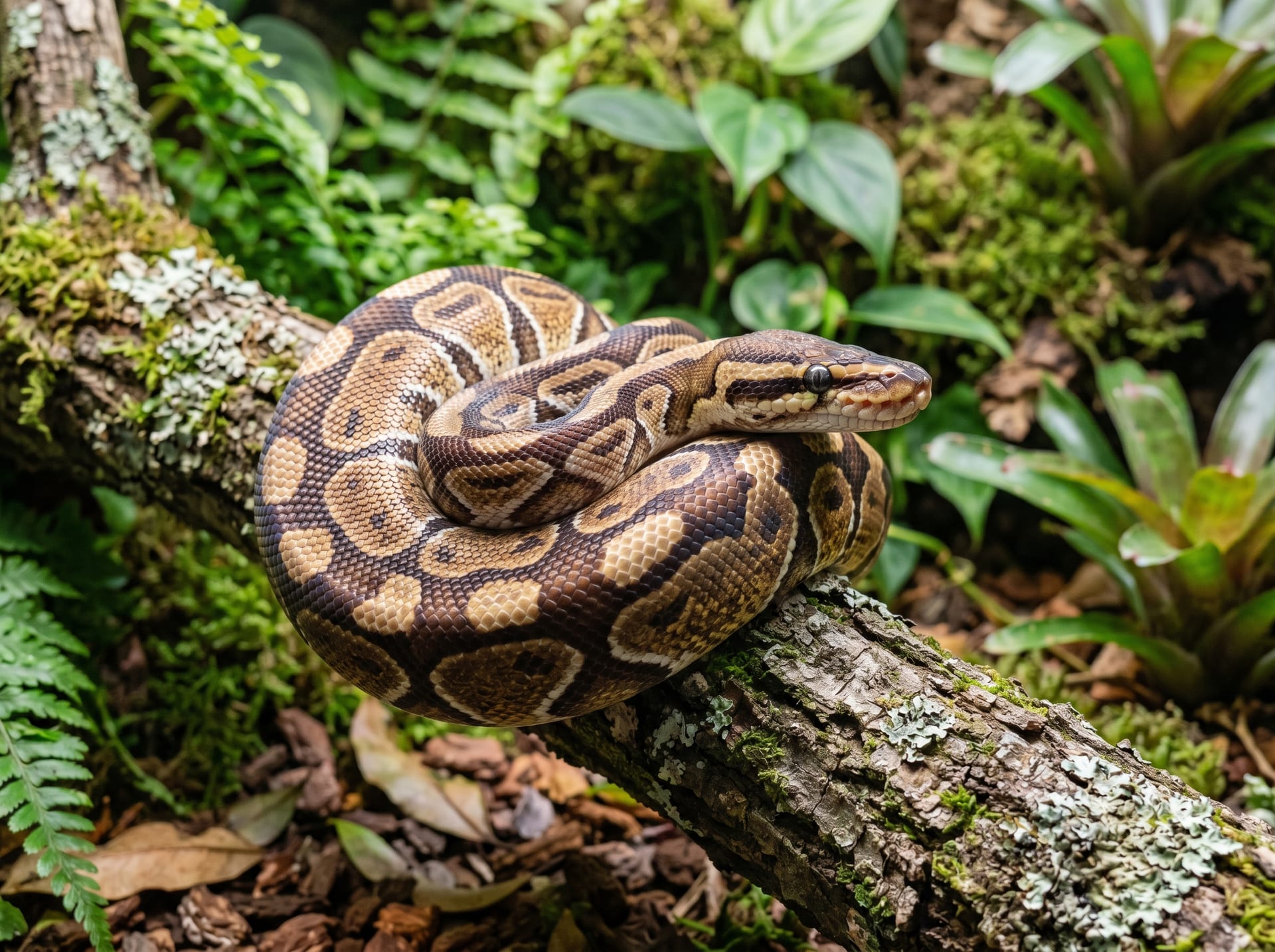
To enjoy breeding medaka fish or reptiles at a deeper level, understanding the basic principles of inheritance is helpful. It may sound difficult, but once you memorize the basic rules, you'll be able to predict "what percentage probability the desired individual will be born from this combination."
Mendel's Laws (Dominant and Recessive Inheritance)
This is the fundamental law of inheritance discovered by 19th-century botanist Gregor Mendel.
The Concept of Dominance and Recessiveness
Organisms inherit one gene from each parent and possess a pair of two genes (alleles).
- Dominant (Phenotypic) Allele: Appears as a trait (appearance, etc.) if even one copy is present
- Recessive (Latent) Allele: Appears only when two copies are present (hidden with one copy)
Notation of Inheritance
Genes are represented by uppercase letters (dominant) and lowercase letters (recessive).
- AA = Homozygous dominant (two copies of the dominant allele)
- Aa = Heterozygous (one dominant and one recessive copy) → appearance shows the dominant trait
- aa = Homozygous recessive (two copies of the recessive allele) → recessive trait is expressed
Codominant Morphs (Ball Python Pastel, etc.)
Among reptile morphs (color and pattern variations), some inherit in a "codominant" manner rather than dominant or recessive.
Characteristics of Codominance:
- Heterozygous (one copy): Intermediate appearance (slightly different from the original individual)
- Homozygous (two copies): Further emphasized appearance
Example: Ball Python Pastel
- Normal: Standard coloration and pattern
- Pastel (Heterozygous): Color becomes slightly lighter
- Super Pastel (Homozygous): Becomes an even brighter yellow
To create this "super" form, you must breed two pastels together.
The Concept of Heterozygous (het) and Homozygous (homo)
Heterozygous (Heterozygote)
A state where an individual carries one copy of a recessive allele but it is not visible in appearance is called "heterozygous (het)."
Example: The albino gene in ball pythons is recessive. Even if an individual carries one copy of the albino gene, its appearance looks normal. Such an individual is noted as "heterozygous albino (100% het albino)."
Since heterozygous individuals cannot be distinguished by appearance, breeding records (parental information) become crucial.
Homozygous (Homozygote)
This is a state where an individual carries two copies of the recessive allele and the trait is expressed. An albino individual is a homozygote for the albino gene.
How to Read Punnett Squares
A Punnett square is a diagram used to predict breeding outcomes.
Example: Breeding Two Heterozygous Albinos
When both parents are "Aa" (A is the normal allele, a is the albino allele):
| A (Parent 2) | a (Parent 2) | |
|---|---|---|
| A (Parent 1) | AA | Aa |
| a (Parent 1) | Aa | aa |
Result:
- AA (Normal Homozygous): 25%
- Aa (Heterozygous Albino): 50%
- aa (Albino): 25%
In other words, the probability of albino offspring from breeding two heterozygotes is 25%.
Risks of Inbreeding
Inbreeding (close relative breeding) is performed to fix and emphasize specific genes, but it carries risks.
Benefits:
- Specific traits (color, pattern, shape) can be fixed in a short period
- Gene purity can be increased
Risks:
- Recessive deleterious genes are more likely to be expressed (deformities, diseases)
- Reduced immune function
- Reduced breeding capacity
- Inbreeding depression (tendency for individuals to weaken with successive generations)
Practical Advice
- Avoid inbreeding for three or more generations
- Regularly introduce individuals from different bloodlines and perform outcrossing (distant relative breeding)
- Limit sibling breeding to one or two generations
Basic Genetic Terminology and Mechanisms
Understanding at least basic genetic terminology is advantageous for those involved in breeding. "Dominant (phenotypic)" is the property whereby a trait is expressed if even one of the alleles is present. "Recessive (latent)" is when the trait is expressed only if both alleles are present. "Heterozygous" is a state where an individual carries one dominant and one recessive allele; while appearance shows the dominant trait, there is the possibility of passing the recessive allele to the next generation. "Homozygous" is a state where an individual carries the same gene twice. With this knowledge, you can predict the phenotype resulting from breeding. For example, when breeding two heterozygotes, you can predict that 25% of offspring will be homozygous recessive (expressing that trait), 50% will be heterozygous, and 25% will be homozygous dominant. However, since inheritance is influenced not only by simple Mendelian inheritance but also by multiple gene interactions, epigenetics, and environmental factors, actual results may not match predictions. When breeding, pay attention to the risks of inbreeding and strive to maintain genetic diversity.
Ethical Considerations in Breeding
When breeding, also maintain genetic ethics. Breeding aimed solely at pursuing rare appearances while sacrificing health should be avoided. For example, breeding between breeds with extreme body shapes increases the risk of skeletal abnormalities and respiratory diseases. In selecting breeding stock, prioritize health as the primary criterion. Since inbreeding compromises genetic diversity and increases the risk of congenital diseases, it is recommended to maintain thorough pedigree records and avoid inbreeding within three generations. Plan in advance for the placement of surplus animals. Unplanned breeding leads to animal welfare issues.
Purchasing with Confidence on BreederDirect
Once you understand genetics and begin breeding, your approach to selecting parent stock will also change. Many breeders on BreederDirect clearly list genetic information (such as heterozygous status) when offering breeding stock, making it possible to purchase based on verified genetic information. If you want to enjoy working with genetic combinations while creating your target morph or breed, try acquiring parent stock from trusted breeders on BreederDirect.
Summary
Morph inheritance can be calculated for most combinations if you can distinguish between dominant, recessive, and codominant traits and read Punnett squares. The important point is that probability does not directly equal results—with small numbers of offspring, there will be significant deviation from theoretical values. Additionally, inbreeding to produce recessive traits narrows genetic diversity and affects breeding performance and health. Maintaining thorough pedigree records and preserving distinct bloodlines is essential for long-term breeding success.
Frequently Asked Questions (FAQ)
Q. Is there value in purchasing individuals marked as heterozygous (het)?
A. While the trait does not appear in the phenotype, the individual carries the gene to produce the recessive trait in the next generation. However, probability notations like "het 66%" indicate that it is uncertain whether the individual actually carries the gene. If you want certainty, choose individuals proven by breeding results (proven het).
Q. Why don't offspring match the Punnett square probabilities?
A. Probability represents the expected value over infinite trials. With only a few to several dozen offspring from a single breeding, significant deviation from theoretical values is normal. Consider that results approach theoretical values over multiple breedings and generations combined.
Q. How much inbreeding should be avoided?
A. While it may be used temporarily to fix specific traits, successive generations will show decreased hatchability and deformities. It is necessary to maintain thorough pedigree records, preserve multiple bloodlines, and plan from the start to regularly introduce fresh blood from external sources.