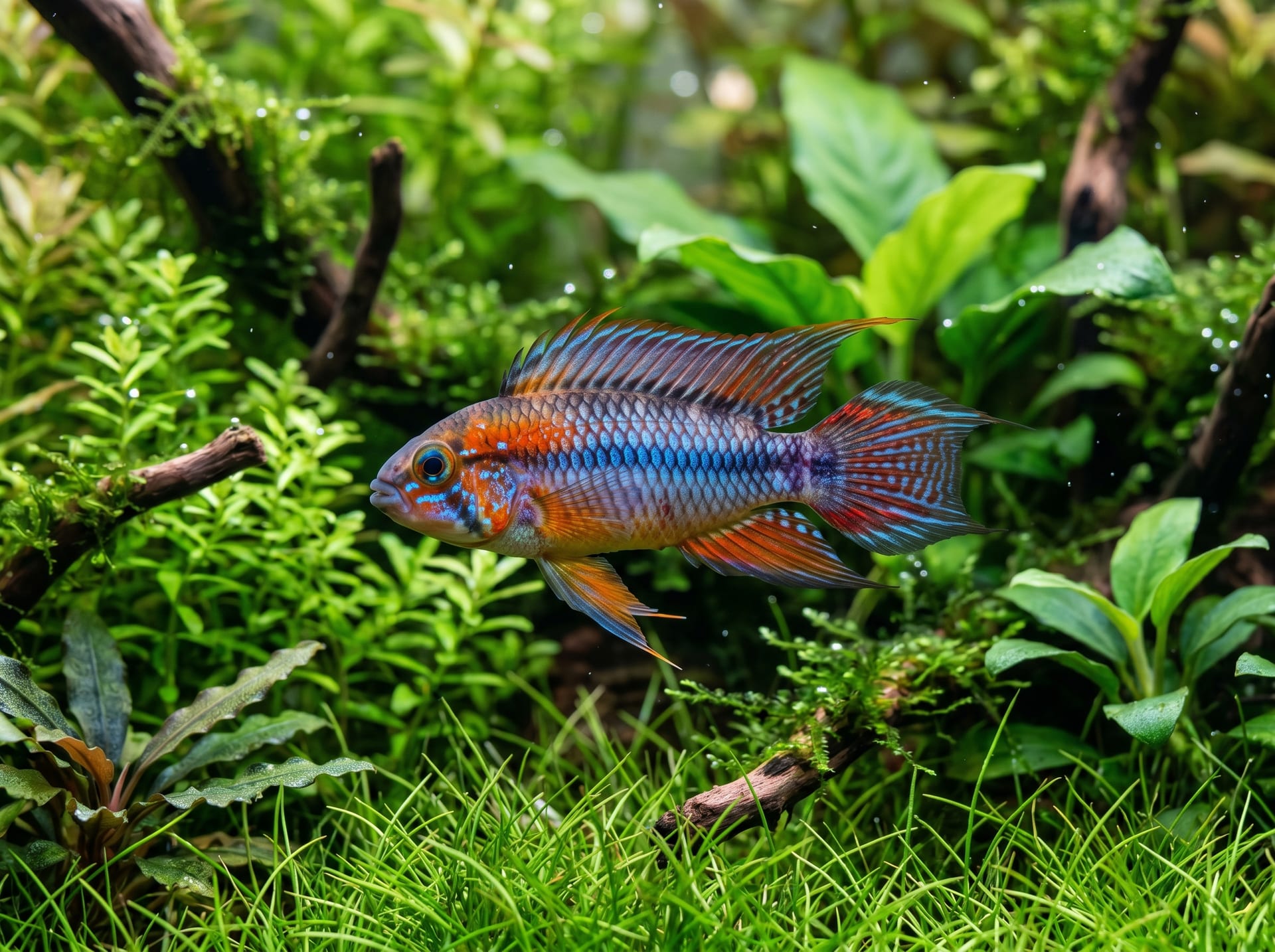
Apistogramma is a small South American cichlid prized for the male's vivid coloration and flowing fins. Their strong territorial instincts and accessible breeding behavior make them a rewarding species to keep.
前 3 筆銷售免佣金!於 2026 年 7 月 31 日前註冊成為繁殖者,前 3 筆銷售免收佣金!
繁殖者 招募中!
在 BreederDirect 上架,直接銷售給全國各地的客戶!
熱帶魚商品中,繁殖者會明確標示下列資訊。確保水質適性、性質、建議水槽尺寸的透明度。
價格區間
地區
屬性
想上架熱帶魚嗎?
註冊成為繁殖者,即可與買家直接聯繫。
Apistogramma is a large genus of dwarf cichlids distributed across small streams and wetlands throughout the Amazon basin and beyond in South America; the name refers to their "irregular lateral line." With over 200 described species, the genus has long been a staple of the aquarium hobby. Males display striking species-specific coloration — blends of red, yellow, and blue paired with elaborately extended fins — making them among the most visually impressive small fish available. Females are more subdued in color but reward keepers with fascinating fry-guarding behavior during breeding season. They prefer soft, slightly acidic water and will readily spawn in aquariums decorated with driftwood and caves when water parameters are well maintained. Compact in size (roughly 5–10 cm), yet full of personality and complex behavior, Apistogramma appeal to hobbyists at every level of experience.
1Water Quality Is Key
Apistogramma thrive in soft, slightly acidic water (pH 5.5–6.8, hardness below 5°dH) and are sensitive to fluctuations. Using RO water or peat filtration helps stabilize conditions, enhancing coloration and overall health.
2Male Territorial Aggression
Males are highly territorial and will fight aggressively with each other. A harem setup (one male, multiple females) in a tank of 60 cm or larger with plenty of hiding spots is the recommended approach.
3Caves and Driftwood Essential
Small caves (coconut shells, clay pots) and driftwood are essential for spawning and refuge. Providing multiple such structures encourages females to settle comfortably and begin breeding behavior.
4Traits Vary by Species
With over 200 described species, temperament and care difficulty vary widely — A. cacatuoides, A. agassizii, and A. borellii are among the most popular. Beginners often find A. borellii and A. cacatuoides more forgiving to keep.
5Choose Tankmates Carefully
Females become aggressive when guarding fry. Peaceful bottom and mid-water species like corydoras or small tetras make suitable tankmates; avoid larger fish or other cichlids of similar size.
6Supplement with Frozen Foods
While they accept dry foods, regularly supplementing with frozen bloodworms or brine shrimp enhances coloration and can trigger spawning. Offering a varied diet supports long-term health and vivid color.
7Prepare for Fry Care
Successful spawning results in active fry-guarding by the female. Prepare infusoria or baby brine shrimp in advance as first foods, as having them ready from day one significantly improves fry survival rates.