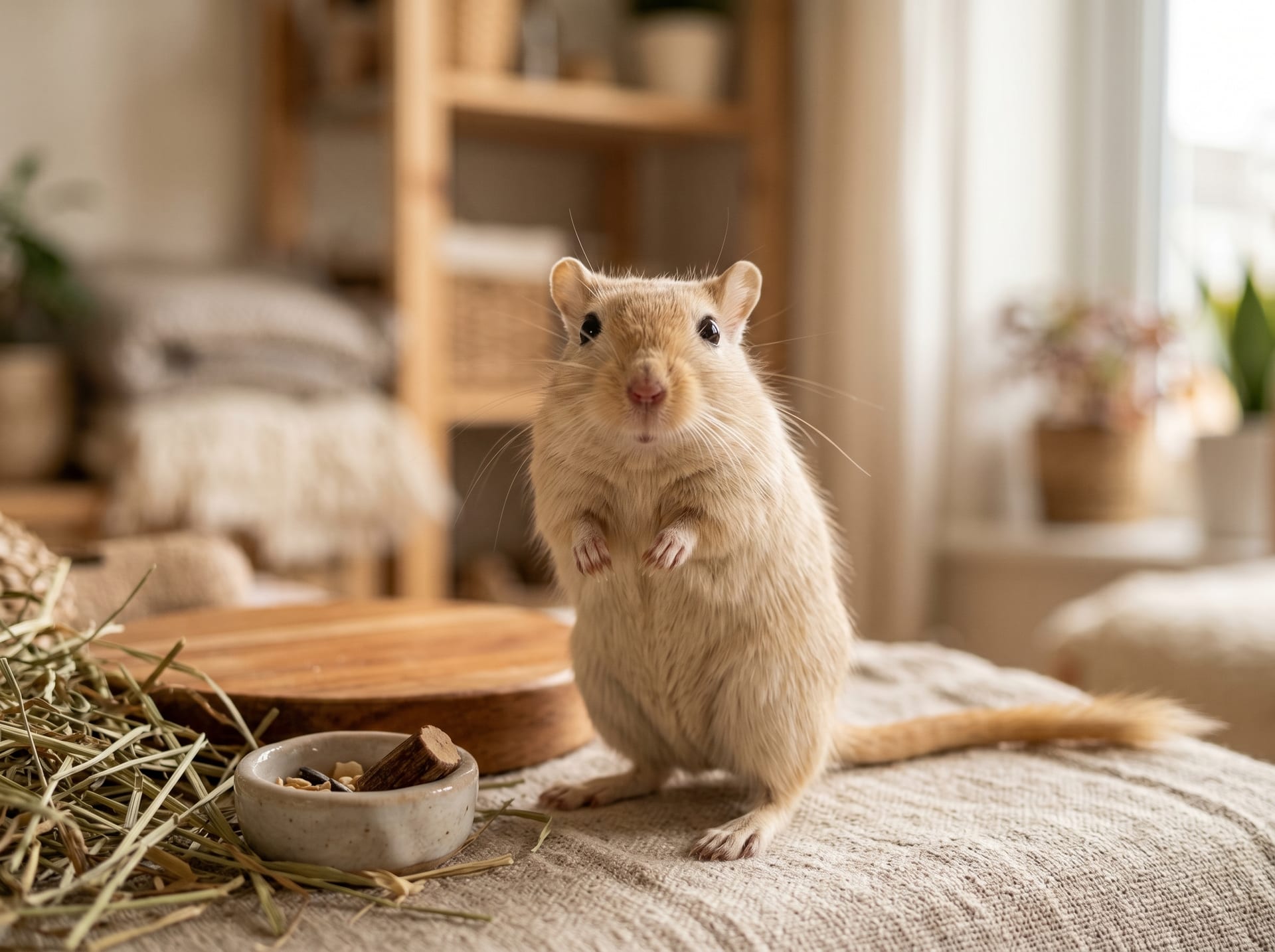
The gerbil is a small, lively animal native to the arid regions of Central Asia, known for its curious and energetic personality. Highly social by nature, gerbils thrive when kept in pairs or small groups. They are hardy and relatively low-maintenance, making them a good choice for first-time small-animal owners.
前 3 筆銷售免佣金!於 2026 年 7 月 31 日前註冊成為繁殖者,前 3 筆銷售免收佣金!
繁殖者 招募中!
在 BreederDirect 上架,直接銷售給全國各地的客戶!
小動物的上架商品中,繁殖者會公開下列資訊。確保健康檢查、疫苗、晶片等的透明度。
繁殖者正在陸續註冊,即將上架。設定上架通知,不錯過新商品。
「接收上架通知」需免費註冊會員即可設定。當有符合您儲存條件的新商品上架時,我們會以郵件和站內通知提醒您。
想上架小動物嗎?
註冊成為繁殖者,即可與買家直接聯繫。
價格區間
地區
屬性
Gerbils originate from the dry grasslands and deserts of Mongolia and northern China, where they live in family groups and dig extensive burrow systems. They were introduced to the United States in the 1950s as laboratory animals, and their hardiness and charm quickly made them popular as household pets worldwide. Excluding the tail, gerbils measure around 10–13 cm in body length; the tail is roughly equal in length and ends in a distinctive tufted tip. They come in a wide range of color varieties beyond the natural agouti, including white, black, and cinnamon. Curious and energetic, gerbils are active at various times throughout the day and night, making them entertaining to observe. They produce little odor and make minimal noise, making them a practical and appealing choice even in apartment living.
1Keep in Pairs or Groups
Gerbils are naturally social animals that live in colonies in the wild. Keeping a single gerbil can lead to stress and may negatively affect its health. Same-sex pairs or small groups are generally recommended for their wellbeing.
2Sand Bathing for Grooming
Gerbils keep themselves clean through sand bathing rather than water baths. Providing a container of fine sand (such as chinchilla sand) in the cage a few times a week helps maintain healthy, shiny fur. Avoid washing them with water, as it can cause stress and a dangerous drop in body temperature.
3Expect Digging and Chewing
Gerbils have a strong instinct to dig and chew. Provide a deep layer of bedding (5–10 cm or more) so they can burrow and tunnel naturally. Offer safe chewing materials such as untreated wooden chews or cardboard tubes regularly to satisfy this behavior and help keep their teeth worn down.
4Never Grab by the Tail
A gerbil's tail has delicate skin that can strip away if grabbed firmly, a condition known as degloving. Always handle gerbils by gently scooping the whole body with cupped hands, and never restrain them by the tail. Until they are tame, handle them close to a surface to minimize the risk of injury from a fall.
5Prefer Warm, Dry Conditions
Adapted to desert climates, gerbils are sensitive to high humidity. Aim for an ambient temperature of 20–26°C and relative humidity below 50%. During hot, humid summers, ensure good ventilation and place the cage away from direct sunlight and air-conditioning drafts.
6Prone to Epileptic Seizures
Gerbils are genetically predisposed to epileptic-like seizures, which can be triggered by sudden sounds, bright lights, or abrupt handling. If a seizure occurs, do not restrain the animal—keep the surroundings quiet and let it rest in a calm, dimly lit space afterward. Consult a veterinarian if seizures become frequent.
7Estimated Setup and Running Costs
Initial setup costs for a cage, wheel, sand bath container, bedding, and food dish typically run around ¥10,000–¥20,000. Ongoing monthly expenses for pellet food, bedding, and sand are roughly ¥1,000–¥2,000. Since a pair requires little additional space or equipment compared to a single gerbil, keeping two is considered cost-effective.