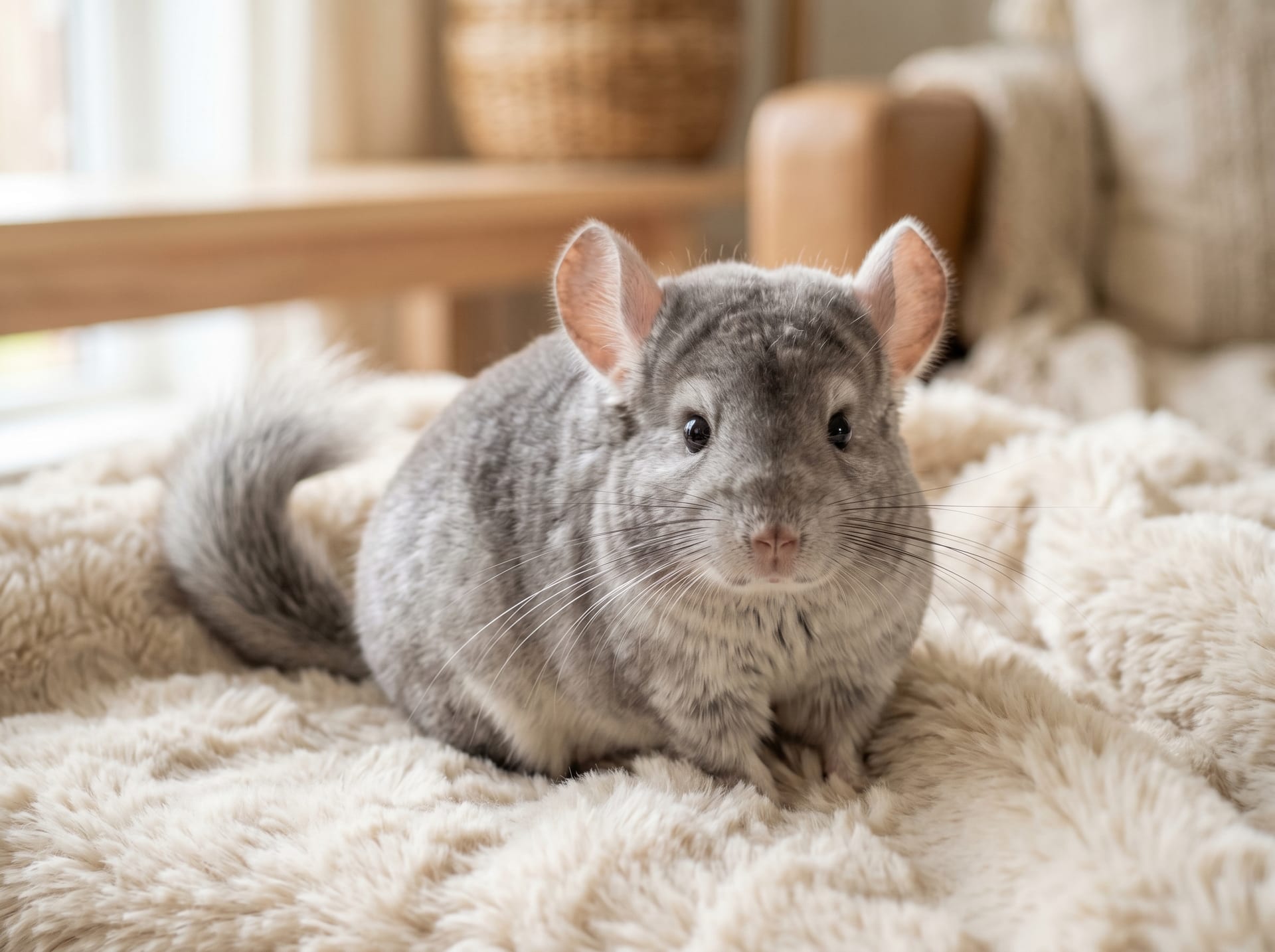
Famous for the softest fur in the animal kingdom. Exceptionally long-lived for a small animal at 15-20 years. Nocturnal and active. Daily dust baths keep them clean.
Verified 繁殖者s wanted for Chinchilla | Notify me on launch | BreederDirect
龍貓的基本資料
飼養難度
適合中級者
壽命
15-20 years
體型
25-35cm / 400-600g
適宜溫度
15〜22℃
適宜濕度
30〜50%
飲食
Timothy hay (staple), chinchilla pellets
Temperature
Extremely heat-sensitive. Must stay below 22°C. AC essential in summer
Dust Bath
Daily 15-30 min dust bath required. Use dedicated chinchilla sand
Cage
Tall multi-level cage with platforms and chew toys
Notes
Never get wet. Long lifespan requires long-term commitment
特徵IntermediateLong-livedSoftest furDust bath
關於龍貓
Chinchillas are native to the high Andes of South America, where they evolved at altitudes of 3,000–5,000 meters in cold, arid conditions. To survive these extremes, they developed an extraordinarily dense coat — up to 60 hairs per follicle — widely regarded as the softest fur of any land mammal. Historically prized for luxury fur, chinchillas were once hunted to near extinction in the wild, but today they thrive as popular pets in a range of color varieties beyond their natural gray, including white, ebony, and violet. In temperament, chinchillas are curious and intelligent but can be cautious with new people; patient, consistent handling gradually builds trust and often brings out a surprisingly affectionate side. Their long lifespan and specific care requirements — dust baths, strict temperature control, and a hay-based diet — make them a moderately demanding pet, but one that rewards committed owners with years of engaging companionship.
迎接龍貓前需要了解的7件事
115–20 Year Lifespan
Chinchillas can live 15–20 years with proper care, making them one of the longest-lived small animals. Welcoming one into your home is a long-term commitment that spans decades. Consider your future lifestyle and circumstances carefully before deciding to adopt.
2Heat and Humidity Sensitivity
Chinchillas evolved in the cool, dry Andes highlands and are highly sensitive to heat and humidity. Temperatures above 25°C or humidity over 60% can quickly become dangerous. Year-round climate control, ideally keeping the room at 20–23°C, is essential for their wellbeing.
3Daily Dust Baths Required
Chinchilla fur is so dense that it dries slowly when wet, making water baths a health risk. Instead, they require dust baths using fine chinchilla-specific powder 3–5 times per week to keep their coat clean and oils balanced. A dedicated dust bath container and proper chinchilla sand are essential supplies.
4Nocturnal by Nature
Chinchillas are nocturnal, spending most of the day sleeping and becoming active in the evening and overnight. Disturbing them during their rest period causes stress and can impact their health. If nighttime activity noise is a concern, consider where you place their cage carefully.
5Fragile Bones, Handle Gently
Chinchillas have delicate, easily fractured bones that require careful handling at all times. Dropping them from height or gripping their body too firmly can cause serious injury. Until they are fully tame, handle them close to the ground and avoid restraining them forcefully.
龍貓的常見問題
Q.Can I keep a chinchilla if I live alone?
A.Yes, single-person households can be well-suited to chinchillas, as these nocturnal animals are naturally more active in the evening when many owners are home. However, you should have a trusted person available to manage care and temperature control during extended absences.
Q.Do chinchillas bond with their owners and enjoy being held?
Chinchillas are highly active and love to climb, so a tall, multi-level cage is strongly recommended. Daily free-roaming time outside the cage helps reduce stress and keeps them mentally stimulated. Before allowing them to roam, secure electrical cords and block any gaps or hazards they could chew or get stuck in.
7Dental and Digestive Health
Chinchilla teeth grow continuously throughout their life and must be worn down naturally through constant access to timothy hay as their dietary staple. A lack of fiber can lead to digestive problems and dental malocclusion. Keep treats and grains to a minimum, and prioritize a simple hay-based diet for long-term health.
A.
Many chinchillas do become affectionate with patient, consistent handling, though individual personalities vary. Some dislike being restrained, so it is important to follow their cues rather than forcing interaction — earning their trust through calm, gradual contact is more effective.
Q.Can chinchillas be kept together?
A.Chinchillas can cohabit successfully when properly introduced, but compatibility is not guaranteed. Mixed-sex pairs will breed readily, so same-sex pairs are often recommended for beginners. Introduce new animals gradually in a neutral space to minimize territorial conflict.
Q.What should chinchillas eat?
A.Timothy hay should make up the majority of a chinchilla's diet and be available at all times. A small daily portion of chinchilla-specific pellets provides supplemental nutrition. Fruits, vegetables, and sweet treats should be kept to very small amounts, as chinchillas have sensitive digestive systems.
Q.Are chinchillas noisy?
A.Chinchillas are generally quiet animals but will vocalize — squeaking or chirping — when alarmed or unhappy. The noise to watch for is nighttime activity sounds: running wheels, jumping between platforms, and general movement can be quite audible, so placing the cage in a bedroom may disrupt sleep.