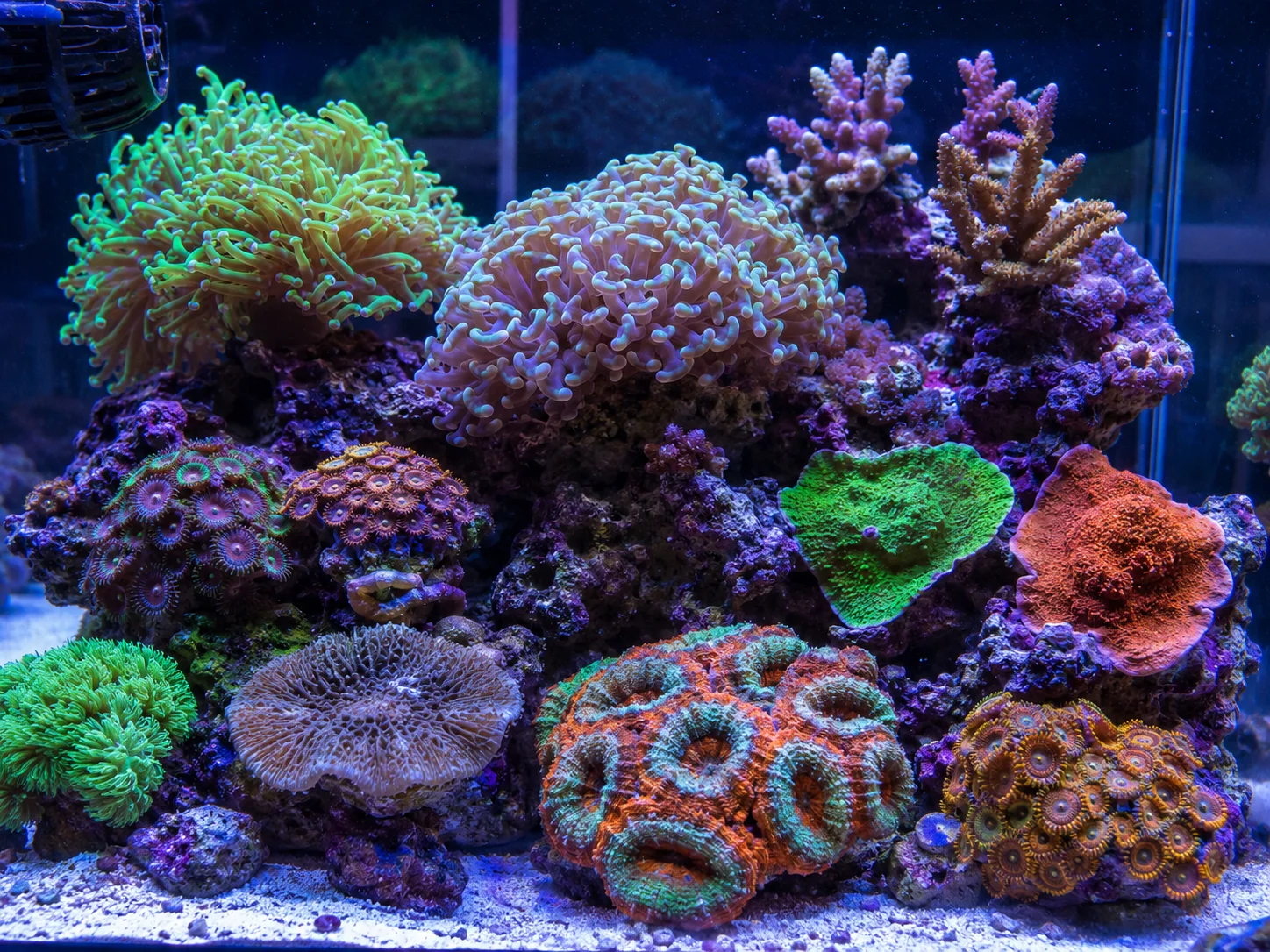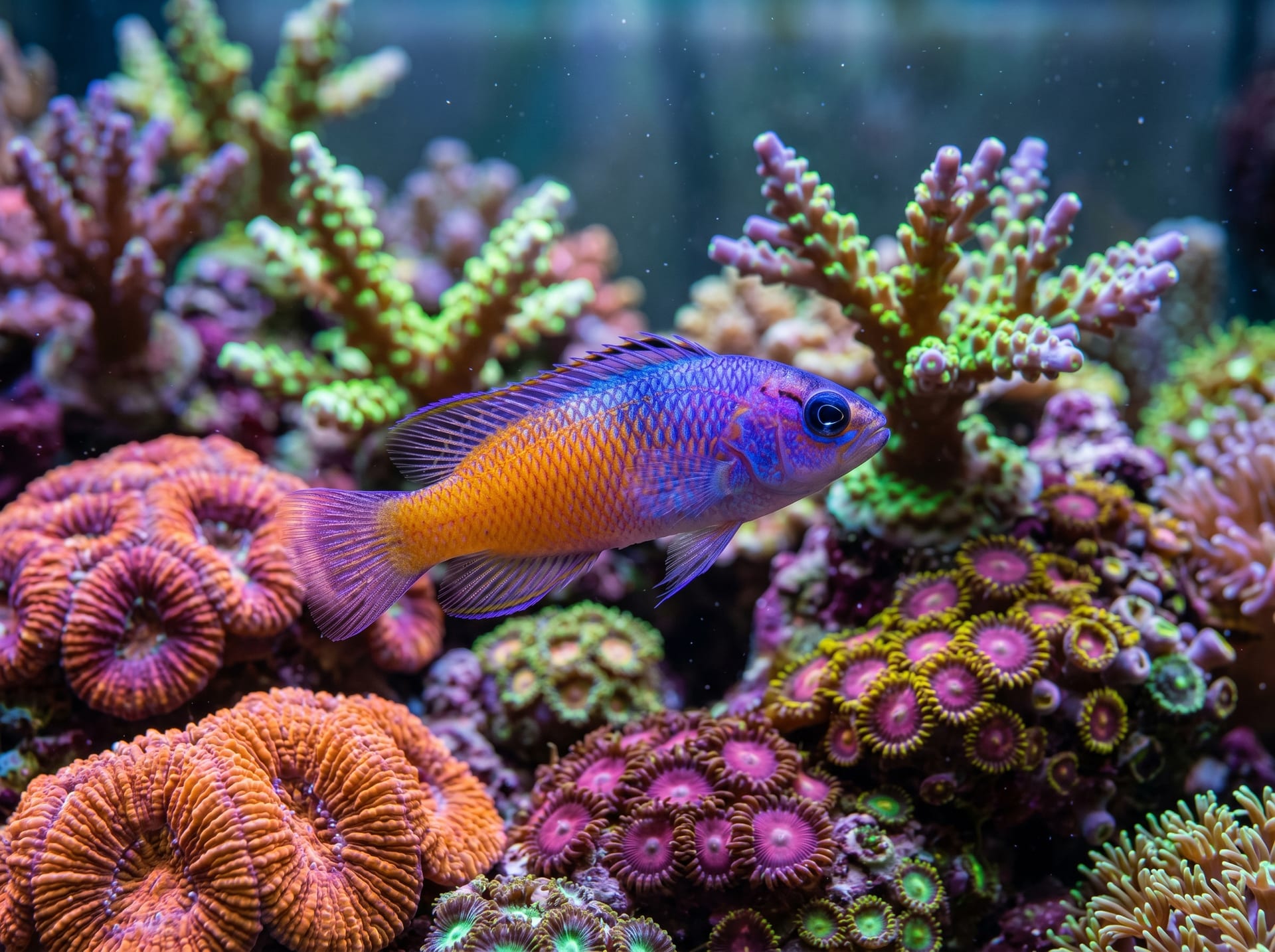
Small colorful marine fish. Royal Dottyback is popular. Feisty but small size limits damage potential.
View 擬雀鯛 encyclopedia →前 3 筆銷售免佣金!於 2026 年 7 月 31 日前註冊成為繁殖者,前 3 筆銷售免收佣金!
繁殖者 招募中!
在 BreederDirect 上架,直接銷售給全國各地的客戶!
於海水魚・珊瑚上架中,繁殖者明示以下資訊。避免野生濫捕個體,確保養殖CB為主、水族箱尺寸參考、性質資訊的透明度。
繁殖者正在陸續註冊,即將上架。設定上架通知,不錯過新商品。
「接收上架通知」需免費註冊會員即可設定。當有符合您儲存條件的新商品上架時,我們會以郵件和站內通知提醒您。
想上架海水魚・珊瑚嗎?
註冊成為繁殖者,即可與買家直接聯繫。
價格區間
地區
屬性
Dottybacks are a group of small marine fish widely distributed across the coral reefs of the Indian Ocean and Western Pacific. Despite their common Japanese name "Nise-Suzume" (false damselfish), they belong to the family Pseudochromidae rather than Pomacentridae, making them a distinct group. Adults typically reach 5–8 cm, yet they command attention in any aquarium through their vivid coloration—ranging from purple and yellow to red and pink depending on species. The Royal Dottyback (Pictichromis paccagnellae) remains the most iconic, celebrated for its bold purple-and-yellow two-tone pattern that has made it a staple in the hobby for decades. While their territorial and feisty temperament is well-documented, their small size keeps any aggression from causing serious harm to larger tankmates, striking a practical balance between personality and manageability. They accept prepared pellets and frozen foods readily, adapt well to captive life, and are considered hardy by marine fish standards. With proper care, dottybacks live approximately 3–6 years, offering hobbyists of all experience levels a rewarding long-term companion.
1Tank Size Requirements
Despite their small size, Dottybacks have strong territorial instincts, so a tank of at least 60 cm is recommended. Confined spaces tend to increase aggression toward tankmates. Providing multiple live rocks and hiding spots helps distribute territorial boundaries.
2Bold, Territorial Personality
Dottybacks are bold enough to challenge fish much larger than themselves. Keeping two of the same or closely related species in one tank usually leads to conflict, so one per tank is the general rule. If mixing with other species, choose peaceful fish that are notably larger to minimize aggression.
3Water Quality Basics
As with most marine fish, maintaining stable conditions — specific gravity 1.020–1.025, temperature 24–26°C, and pH 8.1–8.4 — is essential for their health. Sudden water parameter changes can trigger stress and disease, so perform small, regular water changes rather than large infrequent ones. A protein skimmer also helps keep water quality stable.
4Easy to Feed
Dottybacks readily accept prepared foods such as pellets and flakes, as well as frozen brine shrimp and mysis shrimp, making them easy to feed. Offer food twice daily in amounts they can consume within 2–3 minutes. Remove any uneaten food promptly to prevent water quality issues.
5Need for Hiding Spots
In the wild, Dottybacks hide among crevices and caves in reef structures, so providing multiple hiding spots — such as live rock overhangs or PVC tubes — is important in the aquarium. Adequate shelter reduces stress and often enhances their coloration. Newly introduced fish may hide for several days until they adjust to their new surroundings.
View 擬雀鯛 encyclopedia entry →
Care difficulty, lifespan, size and diet — all basics covered.
6Estimated Keeping Costs
Purchase prices vary by species: common Dottybacks typically cost around 1,000–3,000 yen, while popular varieties like the Royal Dottyback range from 3,000–8,000 yen. Initial setup costs for a marine-compatible tank, filtration system, and hydrometer often total 30,000–100,000 yen. Monthly running costs — food, electricity, and artificial sea salt — generally amount to a few thousand yen.