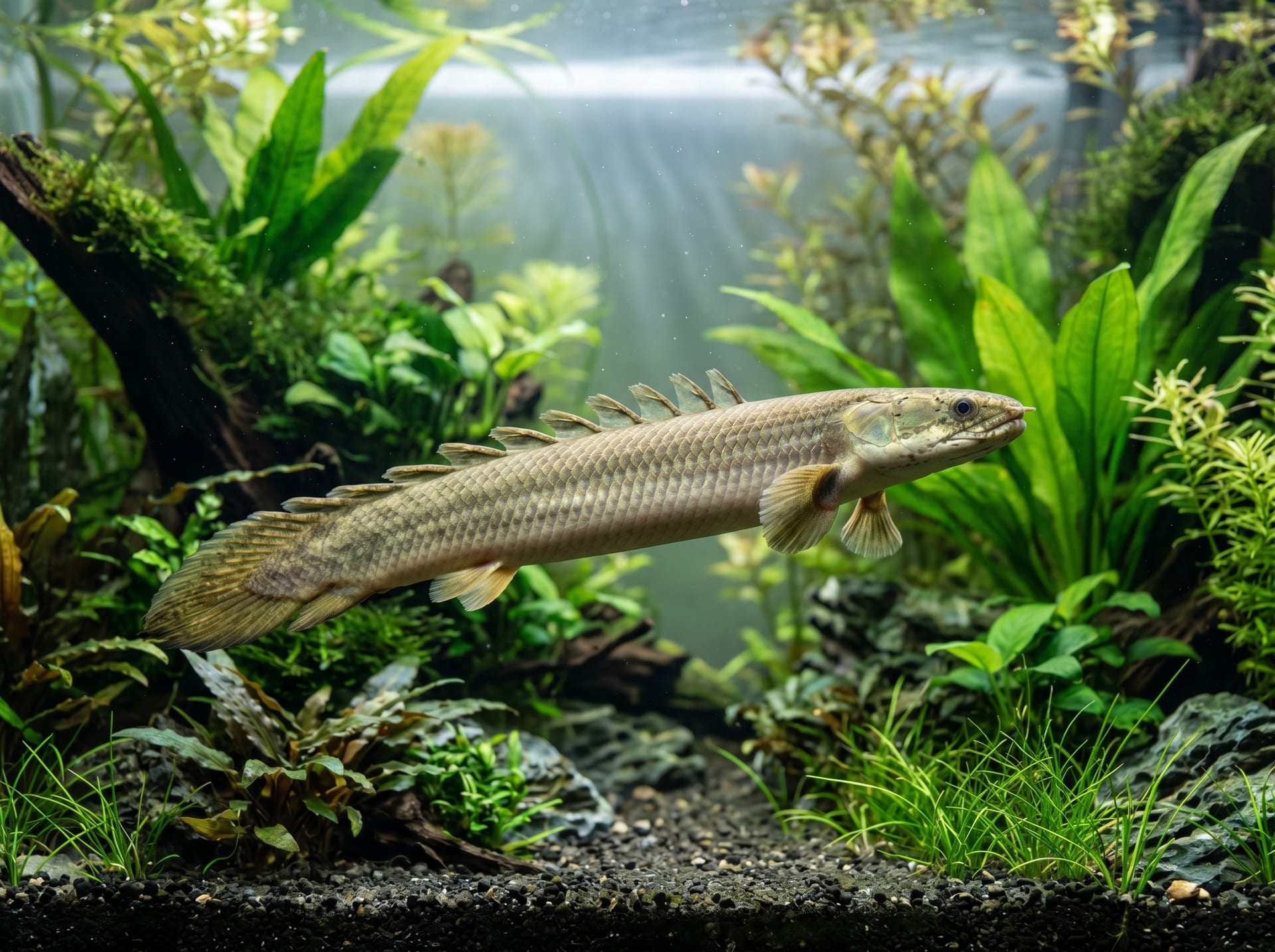
多鳍鱼
非洲原始鱼类。具有恐龙般的独特外观和空气呼吸能力。强健且长寿。夜行性。寿命为15~20年。成体体长为20~70cm(因种类而异)。食物为冷冻红虫、虾、小鱼、配合饲料。
View 多鳍鱼 encyclopedia →成交手续费0%!2026年9月30日前注册,前 2 笔成交免佣金!
繁殖者 招募中!
在BreederDirect发布商品,直接销售给全国客户!
我们承诺的 6 个透明度保证
在热带鱼上架商品中,繁殖者明示以下信息。确保水质适应性、气质、推荐水槽尺寸的透明度。
- 产地明示
- 实物照片
- 水质明示
- 推荐水槽
- 气质明示
- 血统明示
查看全部27个品种
热带鱼分类正在招募认证繁殖者
繁殖者正在陆续注册,即将上架。设置上架通知,不错过新商品。
「接收上架通知」需免费注册会员即可设置。当有符合您保存条件的新商品上架时,我们会通过邮件和站内通知提醒您。
已注册的繁殖者(抢先看)
多鳍鱼的基本数据
- 饲养难度
- 适合中级者
- 寿命
- 15-20 years
- 体型
- 20-70cm (varies by species)
- 适宜温度
- 25〜28℃
- 饮食
- Frozen bloodworms, shrimp, small fish, pellets
- Tank
- Size depends on species — 60-120cm
- Temperature
- 25-28°C
- Escaping
- Comes to surface for air — seal all gaps
- Diet
- Carnivorous — sinking food at night
- Notes
- Poor vision, finds food by smell — feed at night
关于多鳍鱼
多鳍鱼是起源于约3亿6000万年前泥盆纪的非洲原始鱼类,广泛分布于尼罗河流域至中非和西非的热带河流与湿地。其名意为"多个鳍",背部排列众多独立棘条是其最显著特征。体表被坚硬菱形的盾鳞所覆盖,外观如同穿着铠甲,散发着古代的神秘气韵。它们拥有原始肺鰾,能够直接呼吸空气,这在生物学上极为罕见,使其即使在水中氧气缺乏的环境中也能存活。性格相对温和,同种间领地争斗不激烈,但由于夜行习性而白天多数时间躲藏,因此需要耐心的观察。根据种类不同,从小型到大型有多种多样的变异,具有较高的收集价值。多鳍鱼因其强健易养、寿命长的特点,以及无与伦比的太古风韵,持续吸引着众多水族爱好者。
迎接多鳍鱼前需要了解的7件事
1体型因种类差异很大
Polypterus因种类不同,成体体型差异很大,从20厘米左右的小型种到70厘米以上的大型种不等。购买前务必确认所饲养种类的最大体型,并规划好将来所需的水槽大小。小型种至少需要60厘米水槽,大型种则以120厘米以上为目安。
2防止脱逃
Polypterus能用胸鳍爬行,即使很小的缝隙也可能脱逃出水槽。虽然具有空气呼吸能力,短时间内可在陆地生存,但干燥会很危险。因此必须准备一个能够完全密闭的水槽。
3夜行性,白天会躲藏
Polypterus是夜行性的,日中大多在流木、石头缝隙等可躲藏的地方度过。在关灯后进行喂食会获得更好的进食反应。准备多个躲藏处可以减轻压力。
4视力弱,靠嗅觉捕食
多鳍鱼视力几乎为零,主要依靠嗅觉寻找食物。因此对冷冻红虫、虾等有气味的饵料反应良好。水流过强会导致饵料气味扩散、食欲下降,应保持温和的水流。
5如何选择混泳鱼的搭档
多鳍鱼会捕食口腔能容纳的鱼类和虾。同种个体之间通常较为温和,但体型差异过大时,较小的个体可能遭到攻击。混养时选择体型略大于多鳍鱼且性情温和的底栖鱼类能相对确保稳定。
6水质管理与换水频率
多鳍鱼对水质的适应能力相对较强,但对氨和亚硝酸敏感。由于是肉食鱼,排泄物较多,水容易变脏,建议每周换水1/3左右。水温保持在24〜28℃,弱酸性至中性的水质最为合适。
7长寿命与养护费用的准备
如果饲养环境适当,Polypterus可以生活15〜20年。大型品种需要120厘米以上的水族箱和大型过滤器,因此初期投入可能较高。由于要进行长期饲养,建议提前充分考虑饲养空间和持续的维护费用。
多鳍鱼的常见问题
- Q.Polypterus可以多条一起饲养吗?
- A.体型大小相近的情况下,可以进行多条饲养。但如果个体差异太大,较小的个体可能会被捕食,因此建议体长差异控制在1/3以内。为每条鱼准备避难所可以减少领地冲突。
- Q.水族箱没有盖子可以吗?
- A.没有盖子的饲养非常危险。Polypterus具有用胸鳍逃出水族箱的能力,夜间会悄悄逃脱而不被察觉,导致死亡的情况已被广泛报道。安装密闭无缝的盖子是必不可少的措施。
- Q.它们会适应人工饲料吗?
- A.许多个体能通过逐步训练适应沉性人工饲料(如肉食性颗粒等)。初期可将人工饲料混入冷冻血虫等饵料,逐渐增加人工饲料的比例效果最佳。但个体差异较大,有些个体可能无法完全转换。
- Q.小型种和大型种的主要区别是什么?
- A.像Polypterus senegalus这样的小型种,成体一般在30cm左右,可在60〜90cm的水族箱中进行终身饲养。而Polypterus endlicheri和Polypterus bichir等大型种,成体可长到60cm以上,需要120〜180cm的水族箱和强大的过滤系统。请根据饲养空间和预算进行选择。
- Q.肺鱼的寿命是多久?
- A.在恰当的饲养环境下,这类生物活15~20年以上并非罕见。如果计划长期饲养,必须妥善配置水族箱大小、过滤系统和投喂管理,这样才能保证其健康长寿。在开始饲养前,请意识到这是一项长期的承诺。
适合饲养多鳍鱼的实用工具
在图鉴中详细了解多鳍鱼
查看多鳍鱼的图鉴条目 →
收录饲养难度、寿命、体长、食性等基础数据。