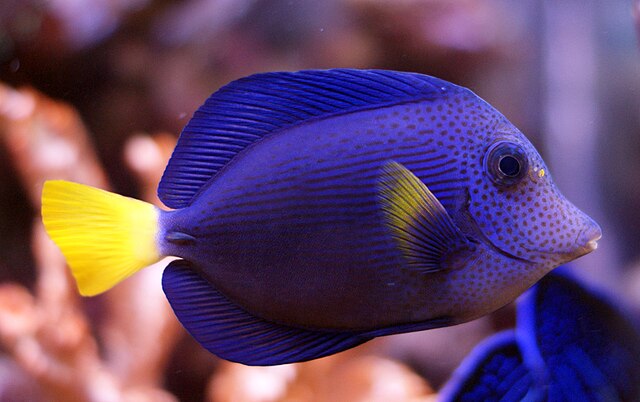
 © Alexander Vasenin / CC BY-SA 3.0
紫高鳍刺尾鱼
The Purple Tang is a striking surgeonfish found only in the Red Sea, prized for its deep violet body and contrasting yellow tail. It has a bold, territorial personality, so it tends to do best as the sole tang in a spacious tank rather than alongside close relatives. It grazes readily on marine algae and adapts well to prepared foods, though it can be prone to ich and is somewhat sensitive to water quality swings, making it a fish best suited to keepers with prior saltwater experience. With its vivid color and confident presence, it easily becomes the centerpiece of a reef or fish-only display.
View 紫高鳍刺尾鱼 encyclopedia →成交手续费0%!2026年9月30日前注册,前 2 笔成交免佣金!
繁殖者 招募中!
在BreederDirect发布商品,直接销售给全国客户!
我们承诺的6大透明化亮点
繁殖者在海水鱼出品中公开以下信息。避免过度捕捞的野生个体,确保养殖CB为主、推荐水箱尺寸、气质信息的透明化。
- 养殖CB
- 实物照片
- Reef-safe
- 含饲育信息
- 产地明示
- 气质明示
查看全部175个品种
已注册的繁殖者(抢先看)
关于紫高鳍刺尾鱼
The Purple Tang is a striking Red Sea surgeonfish known for its deep violet color and territorial nature. An advanced-level saltwater fish — see care basics and key facts.
迎接紫高鳍刺尾鱼前需要了解的7件事
1Provide a Spacious Tank
Adults reach 15–25 cm, so they need plenty of open swimming space as they mature. A cramped setup can cause stress, and plenty of live rock for hiding spots helps them feel secure.
2Avoid Housing With Similar Tangs
Purple Tangs are highly territorial and often clash with their own kind or similarly shaped tangs. If combining with other fish, ensure ample space and layout, and introduce new tankmates gradually while watching for aggression.
3Watch for White Spot Disease
Tangs as a group are known to be susceptible to ich (white spot disease), which can be triggered by shipping stress or water quality changes. After introduction, observe the fish closely for any changes on the skin or fins.
4Maintain Stable Water Quality
They are sensitive to sudden shifts in water parameters, so regular water changes and consistent monitoring are essential. Take extra time and care when acclimating a new specimen to its tank.
5Offer an Algae-Based Diet
In the wild they feed primarily on marine algae, so a diet centered on seaweed-based foods is the foundation in captivity. They typically adapt to prepared foods over time, so offering a varied menu works well.
6Be Careful of the Caudal Spine
Like other tangs, it has a sharp spine near the base of the tail that can cause injury during netting or tank maintenance. Handle the fish calmly and avoid chasing it around the tank.
7Plan for Long-Term Care
With a lifespan of around 10–15 years, this is a long-term companion. Before bringing one home, think ahead about tank size and whether you can sustain its care for years to come.
紫高鳍刺尾鱼的常见问题
- Q.Is the Purple Tang suitable for beginners?
- A.The Purple Tang is generally considered a fish for experienced keepers. Its sensitivity to water quality and territorial behavior make it best suited to those with prior saltwater aquarium experience.
- Q.Can it be kept with other fish?
- A.Because it is bold and territorial, keeping it with its own kind or similarly shaped tangs often leads to conflict. Careful attention to tank size and introduction order is needed for any tankmates.
- Q.What should I feed it?
- A.In nature it feeds mainly on marine algae, so seaweed-based foods should form the core of its diet in captivity. It typically adapts to prepared foods as well, so a mixed feeding approach works well.
- Q.How large does it grow?
- A.Adults typically reach 15–25 cm in length. It's important to plan for a tank with enough swimming space to accommodate this eventual size.
- Q.Is the Purple Tang listed under CITES?
- A.The Purple Tang is not listed under CITES, so it is not subject to regulation under that convention for trade or keeping.
适合饲养紫高鳍刺尾鱼的实用工具
在图鉴中详细了解紫高鳍刺尾鱼
查看紫高鳍刺尾鱼的图鉴条目 →
收录饲养难度、寿命、体长、食性等基础数据。