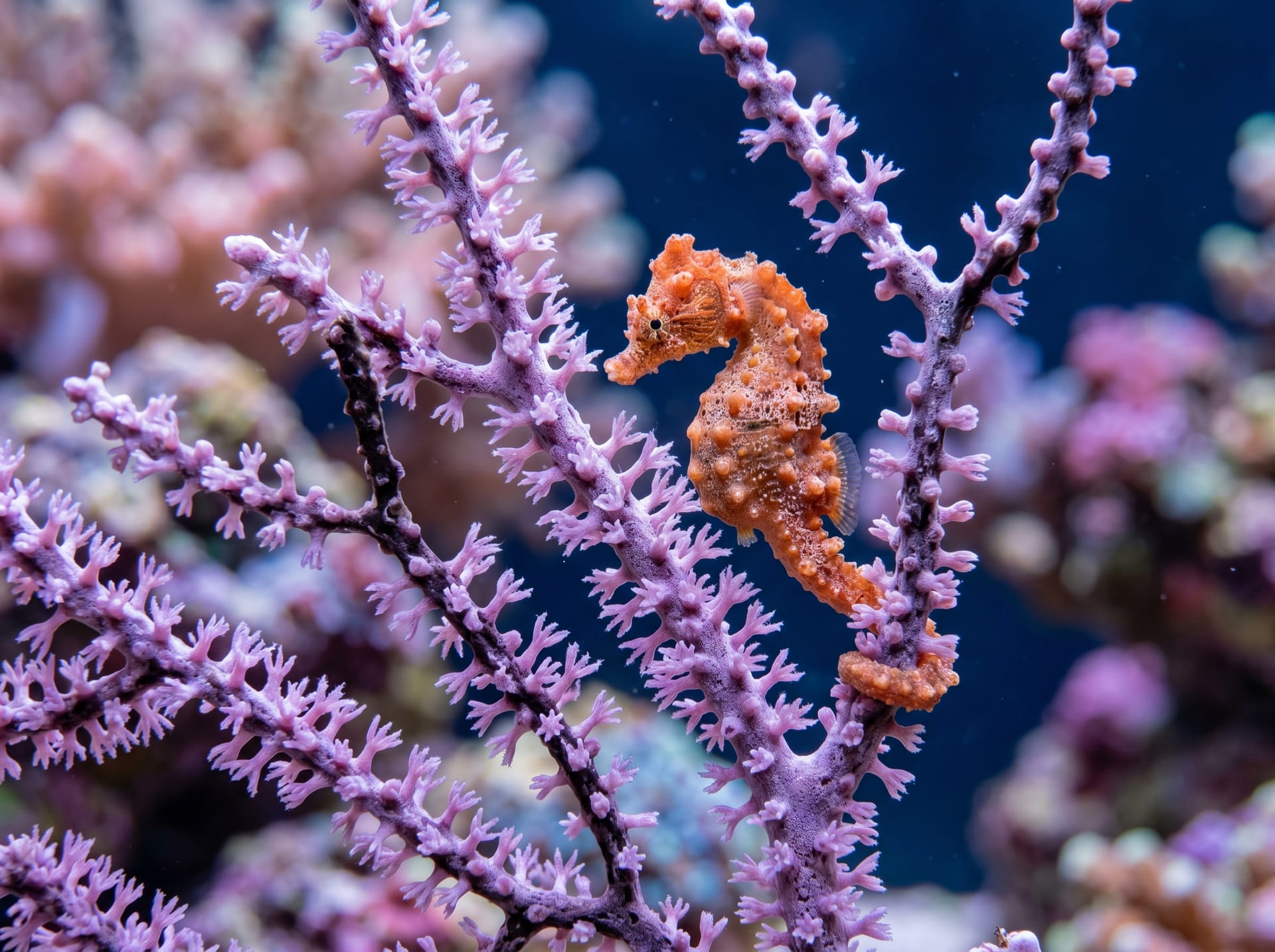
Mysterious upright posture and unique body. Males brood young in pouch — rare reproductive strategy. Requires dedicated tank.
View 海马/海龙 encyclopedia →前3笔销售免佣金!在2026年7月31日前注册为繁殖者,前3笔销售免佣金!
繁殖者 招募中!
在BreederDirect发布商品,直接销售给全国客户!
繁殖者在海水鱼・珊瑚出品中公开以下信息。避免过度捕捞的野生个体,确保养殖CB为主、推荐水箱尺寸、气质信息的透明化。
价格区间
地区
属性
繁殖者正在陆续注册,即将上架。设置上架通知,不错过新商品。
「接收上架通知」需免费注册会员即可设置。当有符合您保存条件的新商品上架时,我们会通过邮件和站内通知提醒您。
想上架海水鱼・珊瑚吗?
注册成为繁殖者,即可与买家直接联系。
Seahorses belong to the family Syngnathidae within the order Gasterosteiformes, with roughly 50 species distributed across shallow coastal waters worldwide. Their Japanese name—"child of the dragon"—reflects the awe their appearance has long inspired: a horse-like head, bony armor-plated body, and a prehensile tail used to anchor to corals and seagrass. Their most celebrated trait is a reversed pregnancy: females deposit eggs into the male's specialized brood pouch, where he fertilizes, nourishes, and ultimately births the young. Despite their slow, drifting movement, seahorses are ambush predators of remarkable precision, vacuuming up tiny crustaceans with a rapid snap of the snout. In captivity, they reward attentive keepers with deeply engaging behavior, visible bonding between pairs, and—for the experienced hobbyist—the unforgettable sight of a male in labor releasing dozens of miniature juveniles into the water.
1Dedicated Tank Required
Seahorses are poor swimmers and suffer greatly from strong currents or tank mates that are fast or aggressive. Use a tall tank of at least 60 cm height, dedicated to seahorses alone or conspecifics, and provide hitching posts such as coral branches or artificial perches for them to grip.
2Live Foods Are Essential
The staple diet is frozen mysis or brine shrimp, but wild-caught individuals often refuse frozen food initially. Start with live brine shrimp and gradually transition to frozen over weeks. This process requires patience and consistent feeding schedules two to three times daily.
3Sensitive to Water Quality
Seahorses are more sensitive to water quality fluctuations than many other marine fish, and are particularly vulnerable to nitrate buildup and bacterial infections. A protein skimmer is strongly recommended alongside weekly partial water changes to maintain stable salinity, pH, and temperature.
4Prefer Cooler Temperatures
Most species thrive between 22–26°C, and elevated temperatures accelerate bacterial growth, increasing disease risk. A dedicated aquarium chiller or cooling fan is advisable in warmer months to keep the water below 28°C consistently.
5Males Give Birth
In seahorses, the male receives eggs in his brood pouch and carries the developing young for 2–4 weeks before giving birth. If you plan to breed them, establish a stable pair and prepare a separate rearing tank stocked with live brine shrimp nauplii for the tiny fry.
View 海马/海龙 encyclopedia entry →
Care difficulty, lifespan, size and diet — all basics covered.
6Choose Tank Mates Carefully
Seahorses lose out to fast-feeding fish and can be harassed by shrimp or hermit crabs that nip at their fins. Suitable companions include pygmy gobies and other small, peaceful fish. Predatory invertebrates such as octopus or nudibranchs must be avoided entirely.
7Higher Setup and Ongoing Costs
Initial costs include a dedicated tall tank, protein skimmer, and temperature control equipment, while individual seahorses range from a few thousand to tens of thousands of yen depending on species. Ongoing expenses include regular purchases of frozen mysis and live brine shrimp. Estimating monthly maintenance costs before committing is strongly advisable.