成交手续费0%!2026年9月30日前注册,前 2 笔成交免佣金!
繁殖者 招募中!
在BreederDirect发布商品,直接销售给全国客户!
我们承诺的6大透明化亮点
繁殖者在海水鱼・珊瑚出品中公开以下信息。避免过度捕捞的野生个体,确保养殖CB为主、推荐水箱尺寸、气质信息的透明化。
- 养殖CB
- 实物照片
- Reef-safe
- 含饲育信息
- 产地明示
- 气质明示
查看全部42个品种
海水鱼・珊瑚分类正在招募认证繁殖者
繁殖者正在陆续注册,即将上架。设置上架通知,不错过新商品。
「接收上架通知」需免费注册会员即可设置。当有符合您保存条件的新商品上架时,我们会通过邮件和站内通知提醒您。
已注册的繁殖者(抢先看)
拟雀鲷的基本数据
- 饲养难度
- 适合新手
- 寿命
- 3〜6年
- 体型
- 5〜8cm
- 饮食
- 人工配合饲料、冷冻饵料
- 水槽
- 60升以上
- 性格
- 性格凶悍。可能会欺负小型鱼
- 色彩
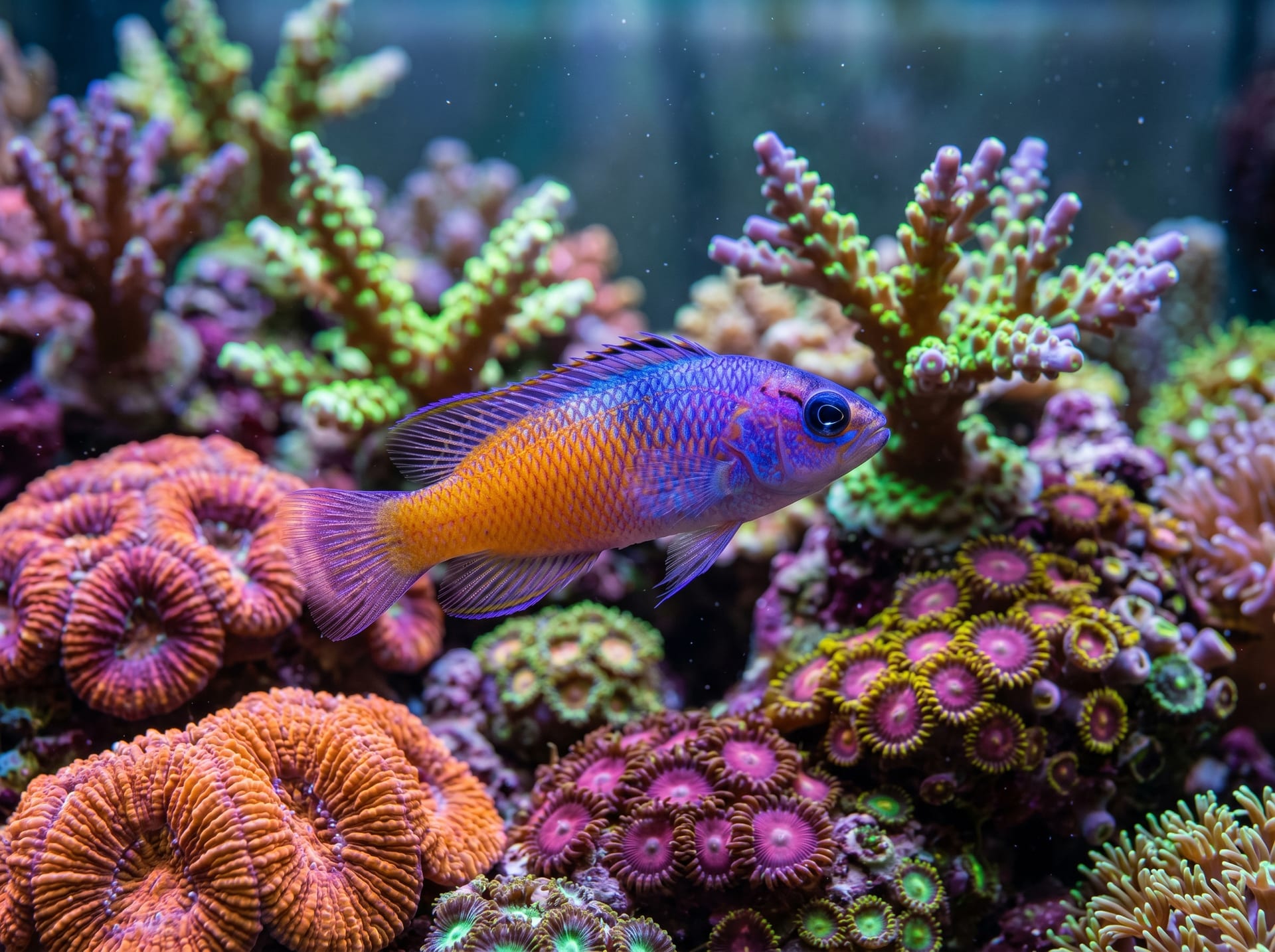
- 紫色、黄色、洋红等鲜艳的色彩
- 混养
- 最后导入的话问题较少
- 注意事项
- 珊瑚礁安全。可能捕食小型虾
关于拟雀鲷
点背隆头鱼(伪雀鲷)是广泛分布在印度洋至西太平洋珊瑚礁中的一类小型海水鱼。虽然通称为"伪雀鲷",但它们属于点背隆头鱼科而非雀鲷科,分类上是不同的群体。体长仅为5〜8cm但体型紧凑,不同种类拥有紫色、黄色、红色、粉红色等多种艳丽体色,在水槽中显得引人注目。其中尤为著名的是皇家点背隆头鱼,其鲜艳的紫黄双色搭配十分美观,一直作为标准品种保持人气。性格凶悍且领地意识旺盛,但由于体型小,对大型混养鱼的实际伤害有限,易饲养性与其性格的平衡恰到好处。它们对人工配方饲料和冷冻饲料适应性强,易于开食,相对皮实耐养,因此在海水鱼饲养初学者中广受欢迎。在适当管理下寿命约为3〜6年,无论初学者还是有经验的饲养者都能长期享受饲养的乐趣。
迎接拟雀鲷前需要了解的6件事
1适当的水槽大小
虽然体型小,但由于领地意识强,建议使用60cm以上的水槽。空间狭窄时容易对其他鱼类的骚扰增加。准备多个珊瑚石和躲藏处可以帮助分散领地。
2要注意其凶悍的性格
点背隆头鱼性格大胆,甚至会向比自己更大的鱼进攻。特别是与同种或近缘种混养容易产生争执,基本上建议1个水槽养1条鱼。若要混养,选择体格差异大且温和的种类可以相对减少问题。
3水质管理基础
与海水鱼一样,稳定比重1.020〜1.025、水温24〜26℃、pH8.1〜8.4是维持健康的基本。由于水质的急变会引起压力和疾病,建议定期少量换水。蛋白质分离器的安装对水质稳定也很有效。
4饵料投喂容易程度
配合饵料(颗粒饵、片状饵)、冷冻丰年虫、冷冻糠虾等容易被接受,属于不容易挑食的品种。建议1天2次,按照2〜3分钟内能吃完的量投喂。食物残渣会导致水质恶化,需要及时清除。
5隐藏处的必要性
由于鱼在自然界中有躲在岩礁缝隙和洞穴中的习性,在水槽中设置多个隐藏处(如活石或陶土管)很重要。有隐藏处时,鱼感到压力较小,发色也会更好。刚放入新水槽时可能会隐藏数天不出现,但适应环境后会活跃地游动。
6饲养成本目安
美妮鱼、假小丑鱼等品种的购买价格因类型而异,一般品种约为1,000〜3,000円左右,皇帝绒毛鱼等热门品种则约为3,000〜8,000円左右。初期投资需要海水鱼用水槽套装、过滤装置、比重计等,总投资通常约为3〜10万円。运营成本包括饵料费、电费、人工海水等,通常每月数千円左右。
拟雀鲷的常见问题
- Q.初学者也能饲养吗?
- A.在海水鱼中相对强健,饵料驯养也容易,适合初学者。不过需要事先掌握海水鱼全般的基础知识(水质管理、比重调整等)。
- Q.可以在同一个水槽里养多条鱼吗?
- A.同种鱼的多尾饲养容易引发领地争执,基本上被认为是困难的。如果非要多尾饲养,建议准备足够宽敞的水槽(60L以上)和众多的躲藏处,并同时导入。
- Q.可以和公子小丑鱼混养吗?
- A.由于体格差异,与公子小丑鱼的混养相对容易成功。但是根据个体性格差异和水槽大小的不同,可能会产生冲突,所以导入后请观察一段时间。
- Q.应该喂什么?
- A.一般来说,以高品质海水鱼用混合饵料(颗粒、片状)作为主食,冷冻丰年虫或桡足类作为副食。每天2次,以2〜3分钟内能吃完的量为目安。
- Q.可以放入珊瑚缸吗?
- A.梅吉鱼和拟雀鲷都不具有啄食珊瑚的习性,一般被认为是礁缸安全的。不过由于它们可能捕食非常小的甲壳类(如小型虾类等),需要注意共养虾类的选择。
适合饲养拟雀鲷的实用工具
Learn more about 拟雀鲷 in the encyclopedia
查看拟雀鲷的图鉴条目 →
收录饲养难度、寿命、体长、食性等基础数据。