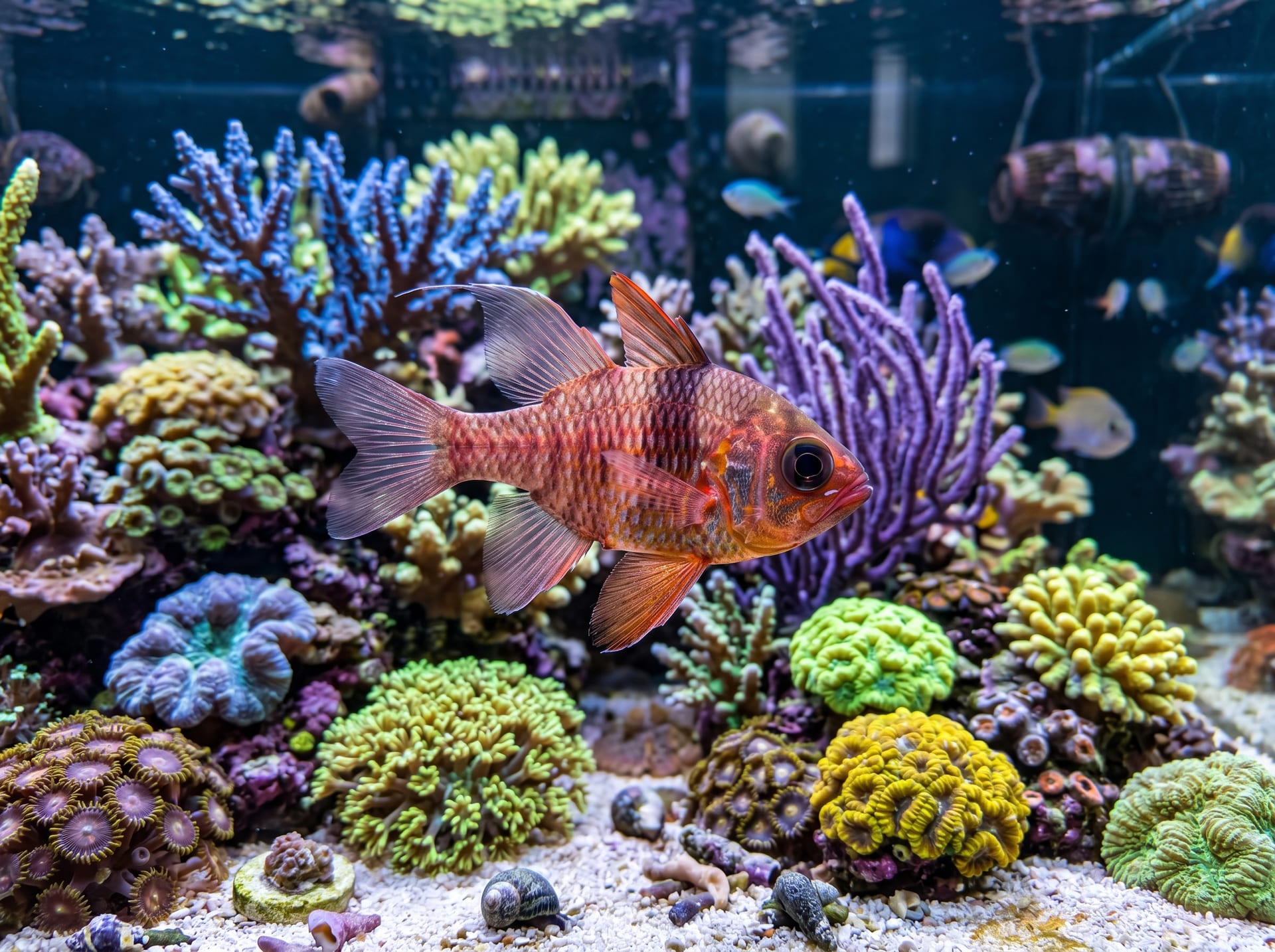
天竺鲷
红衣鱼是体长5~10cm左右的小型海水鱼,喜欢躲在珊瑚礁的缝隙中,性格温和是其特点。它们会作为"口孵鱼"守护卵直到孵化,在人工饲养下也容易成功繁殖,因此很受欢迎。它们相对耐养,对水质的适应能力也很强,是海水鱼饲养的良好入门鱼种。
View 天竺鲷 encyclopedia →成交手续费0%!2026年9月30日前注册,前 2 笔成交免佣金!
繁殖者 招募中!
在BreederDirect发布商品,直接销售给全国客户!
我们承诺的6大透明化亮点
繁殖者在海水鱼・珊瑚出品中公开以下信息。避免过度捕捞的野生个体,确保养殖CB为主、推荐水箱尺寸、气质信息的透明化。
- 养殖CB
- 实物照片
- Reef-safe
- 含饲育信息
- 产地明示
- 气质明示
查看全部42个品种
海水鱼・珊瑚分类正在招募认证繁殖者
繁殖者正在陆续注册,即将上架。设置上架通知,不错过新商品。
「接收上架通知」需免费注册会员即可设置。当有符合您保存条件的新商品上架时,我们会通过邮件和站内通知提醒您。
已注册的繁殖者(抢先看)
天竺鲷的基本数据
- 饲养难度
- 适合新手
- 寿命
- 3-5 years
- 体型
- 6-8cm
- 适宜温度
- 24〜26℃
- 饮食
- Frozen food, Pellets
- Water
- Specific gravity 1.023-1.025
- Temperature
- Maintain 24-26°C
- Tankmates
- Peaceful but may fight with same species
- Notes
- Pair keeping enables breeding
关于天竺鲷
红衣鱼科(Apogonidae)是分布在印度洋和太平洋珊瑚礁域中心的一个大族群,拥有200种以上的物种,日本近海也发现了许多种类。它们的身体呈纺锤形且略扁,许多种类具有鲜艳的红色或橙色和条纹图案,在水族箱内也散发出独特的存在感。它们的大眼睛是适应在昏暗珊瑚隙间生活的遗迹,有些种类具有较强的夜行性倾向。最大的吸引力是雄鱼在口内保护卵的口孵行为,这种能被观察到的繁殖行为使其成为少数几种海水鱼之一,因此受到爱好者的高度评价。由于性格温和且健壮,它们容易适应混养水族箱,从初学者到经验丰富的养鱼爱好者都能广泛享受这种海水鱼。
迎接天竺鲷前需要了解的7件事
1鱼缸尺寸指南
红衣鱼如果单独饲养可以从45cm水槽(约40L)开始,但如果考虑多尾鱼或与其他鱼混养的话,60cm以上会更安心。多放置一些活石或珊瑚岩作为隐蔽处,可以减轻压力。
2口孵鱼的习性
在繁殖期,雄鱼会将受精卵含在口中并守护到孵化为止,这就是"口孵鱼"的行为。抱卵中的雄鱼几乎不进食,因此身体可能会变得细长。此时需要特别注意不要给予刺激,保持安静的环境。
3混养相性的注意事项
由于性格温和,易于与眼斑海葵鱼、小型虾虎鱼、黄药等鱼类混养。但同种个体间可能产生领地意识,因此应准备多个躲藏处或成对饲养。应避免与大型肉食鱼混养。
4适正水质与水温管理
适宜水温为24〜27℃,比重为1.023〜1.025,pH值为8.1〜8.4。该鱼对水质急变敏感,每次换水应控制在全水量的10〜15%左右,缓慢稳定为佳。需注意硝酸盐的积累,定期进行水质检测是重要习惯。
5饵料选择与投喂技巧
喜食冷冻丰年虫、桡足类、小型冷冻糠虾等。也能适应人工饲料,理想的做法是选用粒径较小的颗粒饲料或片状饲料,每天分两次少量投喂。野生个体可先用活饵慢慢驯化,这样更容易顺利转换到人工饲料。
6夜行性的行为特征
该鱼有较强的夜行性倾向,白天常躲在活石或类似洞穴的隙间中。熄灯后可观察到活跃游动的样子。照明的开关操作不宜过快,否则易惊吓鱼只引起惊慌。理想的做法是使用可逐渐改变亮度的定时器。
7导入前的隔离检疫
迎接新鱼时,强烈建议进行2-4周的隔离处理(在隔离水槽中观察)。使用点滴法缓慢进行水质适应,观察是否有白点病或虫体病的症状。海水鱼对水质变化的反应比淡水鱼更迅速,因此精心的导入是长期饲养的关键。
天竺鲷的常见问题
- Q.天竺鲷可以和珊瑚一起饲养吗?
- A.基本上天竺鲷没有啄食珊瑚的习性,与珊瑚缸的相容性良好。但是,在非常小的软珊瑚上长时间停留可能会对其造成伤害,因此建议继续观察。
- Q.怎样才能看出繁殖迹象?
- A.产卵后,如果看到雄鱼的嘴部呈圆形膨胀状,这表明它正在口腔内保护卵。在这个阶段,雄鱼几乎停止进食,活动也会减少。约7-10天后,可以观察到鱼苗从嘴里游出。
- Q.单独饲养还是群养哪个更好?
- A.天竺鲷可以单独或群养,但如果饲养数匹同种鱼,可以欣赏到它们群泳的景象。进行群养时,需要提供充足的躲藏处,并根据饲养数量调整水槽大小以避免过度拥挤。
- Q.为什么它们在夜间会变得更加活跃?
- A.天竺鲷是一种夜行性倾向很强的鱼类,即使在自然环境中也多在夜间采食。白天常躲在岩石阴影处保持安静,关灯后活动增加是正常行为。
- Q.如何进行水质适应?
- A.建议采用滴流法进行水质适应。将新水槽的水缓慢滴入购买时的袋子,1小时以上内逐渐混合,以防止水质和水温的急剧变化。水质适应后,尽量避免将袋中的水倒入水槽。
适合饲养天竺鲷的实用工具
在图鉴中详细了解天竺鲷
查看天竺鲷的图鉴条目 →
收录饲养难度、寿命、体长、食性等基础数据。