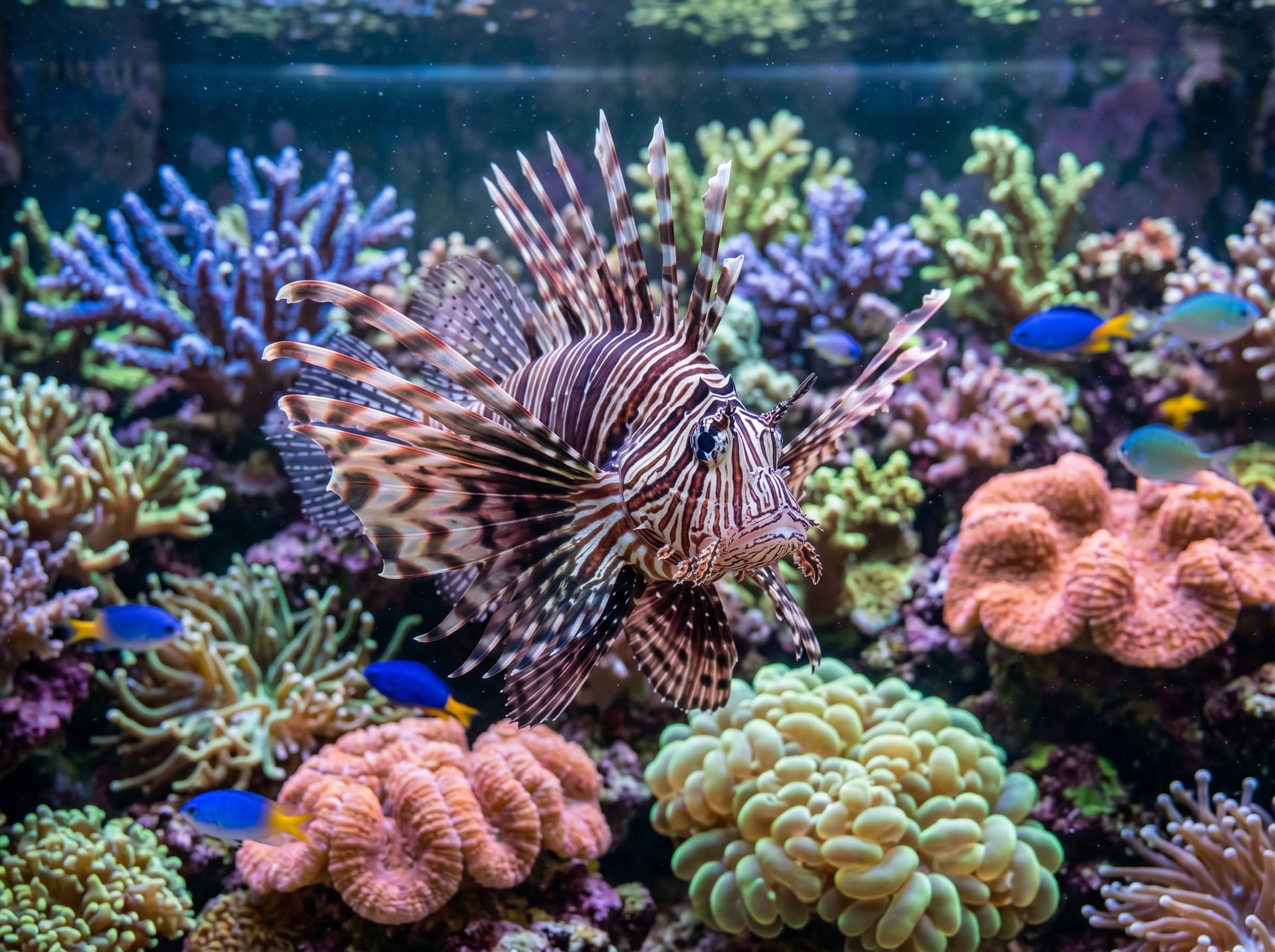
狮子鱼/石头鱼
狮子鱼以其优雅张开的鱼鳍和鲜艳的条纹图案给人深刻印象,作为观赏鱼享有很高的人气。虽然许多种类相对皮实、容易饲养,但由于鱼鳍上具有毒棘,操作时需要谨慎。因其舒缓优雅的动作和引人注目的外形,在海水缸中被众多水族爱好者视为主角而备受喜爱。
View 狮子鱼/石头鱼 encyclopedia →- 价格范围
- ¥1,500〜¥1,500
成交手续费0%!2026年9月30日前注册,前 2 笔成交免佣金!
繁殖者 招募中!
在BreederDirect发布商品,直接销售给全国客户!
我们承诺的6大透明化亮点
繁殖者在海水鱼・珊瑚出品中公开以下信息。避免过度捕捞的野生个体,确保养殖CB为主、推荐水箱尺寸、气质信息的透明化。
- 养殖CB
- 实物照片
- Reef-safe
- 含饲育信息
- 产地明示
- 气质明示
查看全部42个品种
没有符合条件的商品
请调整筛选条件,或在有新商品时接收通知。
「接收上架通知」需免费注册会员即可设置。当有符合您保存条件的新商品上架时,我们会通过邮件和站内通知提醒您。
已注册的繁殖者(抢先看)
关于狮子鱼/石头鱼
狮子鱼(蓑笠鮋科)广泛分布于以印度洋和太平洋为中心的热带和亚热带岩礁区。其最大的特点是展开呈扇形的美丽胸鳍与红、白、褐等颜色对比鲜明的条纹图案,英文称为"Lionfish"。代表性的狮子鱼体长可达25~35cm,背鳍、腹鳍和臀鳍均持有毒棘,因此在自然界中几乎没有天敌。其动作缓慢而优雅,白天潜藏于岩石阴影或悬岩下,夜间采用伏击战术捕食小鱼和虾,是典型的埋伏型猎手。在水族箱中,其存在感突出,从初学者到资深玩家,众多水族爱好者都将其视为海水缸的主角而倍加推崇。饲养虽然需要大型水族箱和稳定的水质管理,但一旦适应环境,也能接受人工饵料,是一种能让人长期享受其壮观身姿的魅力十足的种类。
迎接狮子鱼/石头鱼前需要了解的7件事
1要注意毒棘
背鳍、腹鳍和臀鳍具有毒棘,被刺伤会伴随剧烈疼痛。水族箱维护时请避免赤手操作,请穿戴厚手套。万一被刺伤,建议立即就医。
2需要大型水槽
蓑笠鱼成体通常为20〜35厘米左右,建议配置150〜200升以上的水缸。水缸过小容易导致鱼只因压力而拒食。需充分提供活动空间和躲藏处(如活石等)。
3混养需谨慎
口径足以吞入的鱼类和虾类会被捕食,无法进行混养。可与同等大小或更大的相对温和海水鱼共存,但也存在风险。若在同一水缸中饲养多条笠鱼,可能因领地争夺而产生冲突。
4从活食向人工饲料过渡
野生捕获的个体通常初期只进食活的小鱼和虾。长期饲养需要逐步尝试冷冻磷虾和人工饲料,这一过程需要耐心和时间。一旦开食成功,日常管理会变得容易许多。
5水质与水温稳定是关键
稳定维持比重1.020〜1.025、水温24〜27℃、pH8.1〜8.3是健康管理的基础。急剧的水质波动容易引发拒食和疾病。建议考虑引入蛋白质除沫机等高性能过滤设备。
6留意拒食迹象
石狮鱼类因环境变化和压力容易出现拒食现象。如果一周以上不进食,应检查水质并确认隐蔽处所。及时排除原因有利于其恢复。
7初期费用较高
除了鱼的价格外,还需要投资大型水族箱、蛋白分离器、活石、人工海水等设备,初期投入成本可能需要数万到十几万。维护费用包括每月的电费、人工海水和饲料费用。建议在制定长期费用计划后再购买。
狮子鱼/石头鱼的常见问题
- Q.初学者也可以饲养虎纹狮吗?
- A.如果掌握了海水鱼饲养的基础知识可以尝试,但由于毒棘的危险性和需要大型水族箱,更适合有一定经验的饲养者。建议初学者先用骆驼鱼等小型耐养的海水鱼积累经验。
- Q.被毒棘刺伤了怎么办?
- A.将刺伤部位浸入45〜50℃左右的热水中,毒蛋白会变性,疼痛会缓解。但不要自行判断,务必就医。由于存在发生过敏性休克的可能性,症状严重时请毫不犹豫地拨打急救电话。
- Q.应该给它们喂什么?
- A.冷冻磷虾和冷冻小鱼是标准食物,使用专用镊子或棍棒在水中轻轻晃动可促进进食。在依赖活饵阶段需要进行冷冻饲料转换训练,但一旦适应人工饲料,管理就会变得容易。
- Q.大概能活多少年?
- A.在适当的饲养环境下,有些个体能活10〜15年。为了长寿,稳定的水质和营养均衡的饲料很重要。开始饲养前务必做好长期承诺的思想准备。
- Q.水槽至少需要多大的尺寸?
- A.成年蓑笠鎐一般建议在150〜200L或更大的水槽中饲养。小型品种(如矮狮子鱼等)在某些情况下可以从80〜100L左右开始饲养。根据鱼类成体后的体型来选择水槽大小是很重要的。
适合饲养狮子鱼/石头鱼的实用工具
Learn more about 狮子鱼/石头鱼 in the encyclopedia
查看狮子鱼/石头鱼的图鉴条目 →
收录饲养难度、寿命、体长、食性等基础数据。