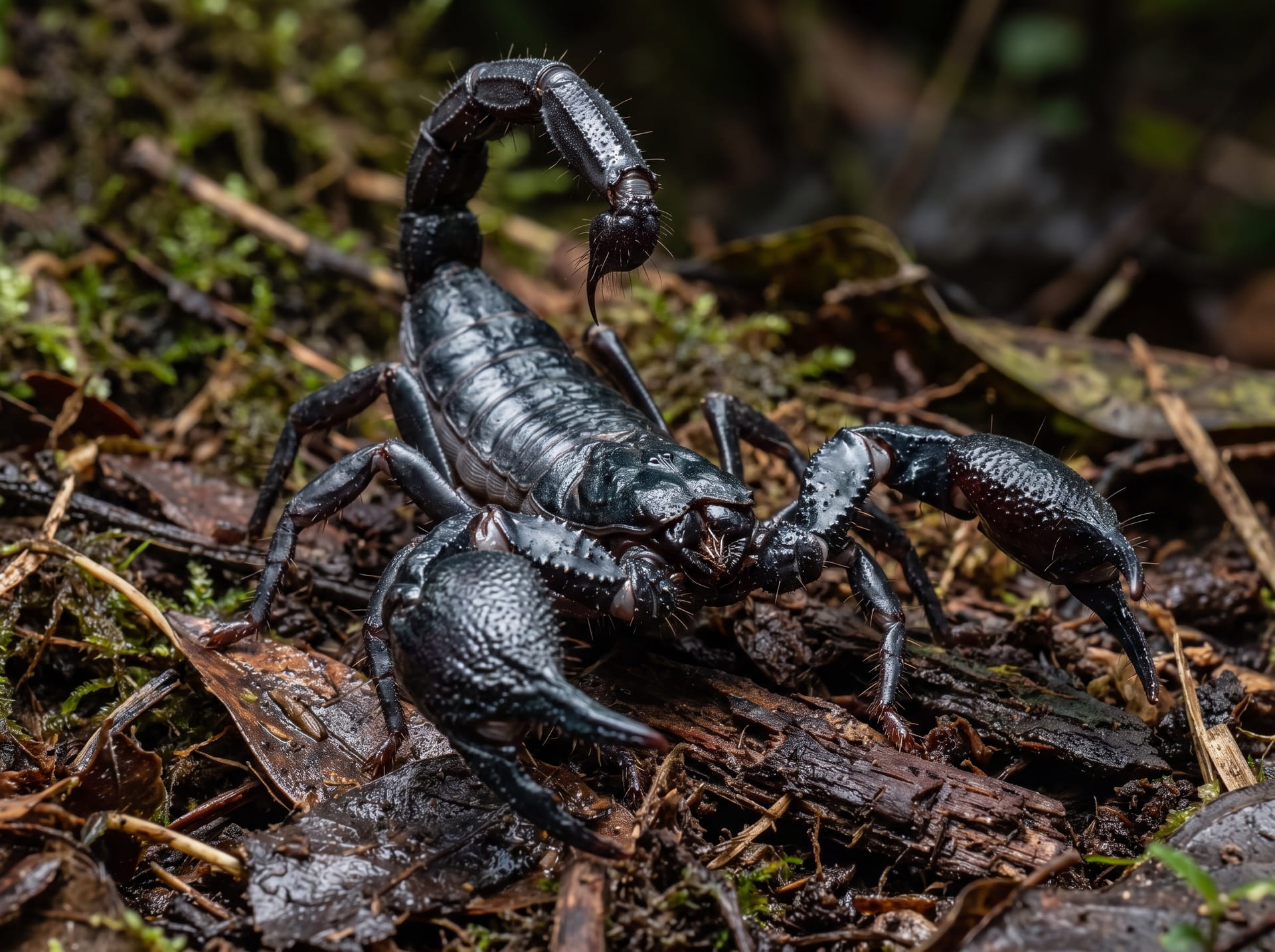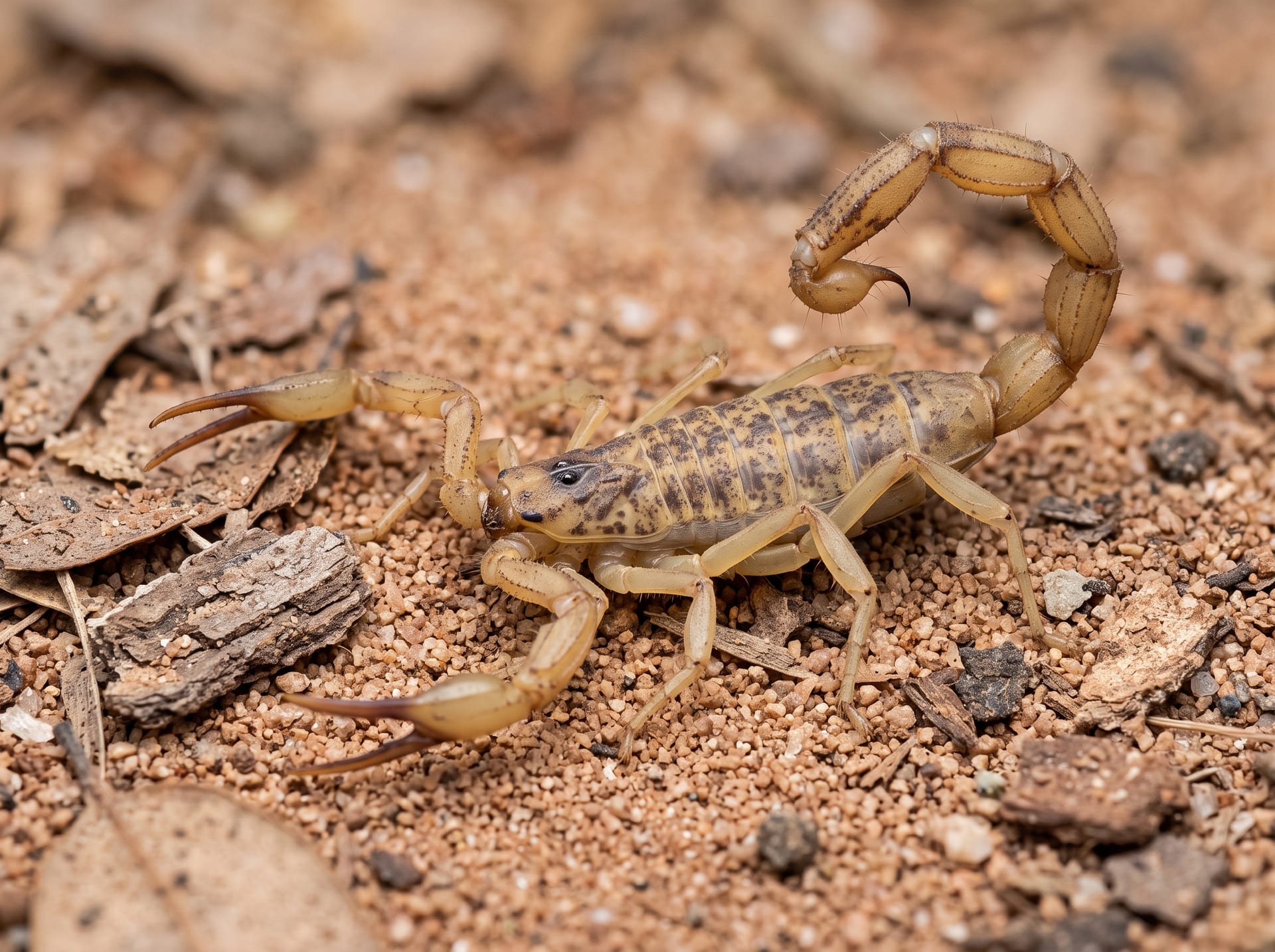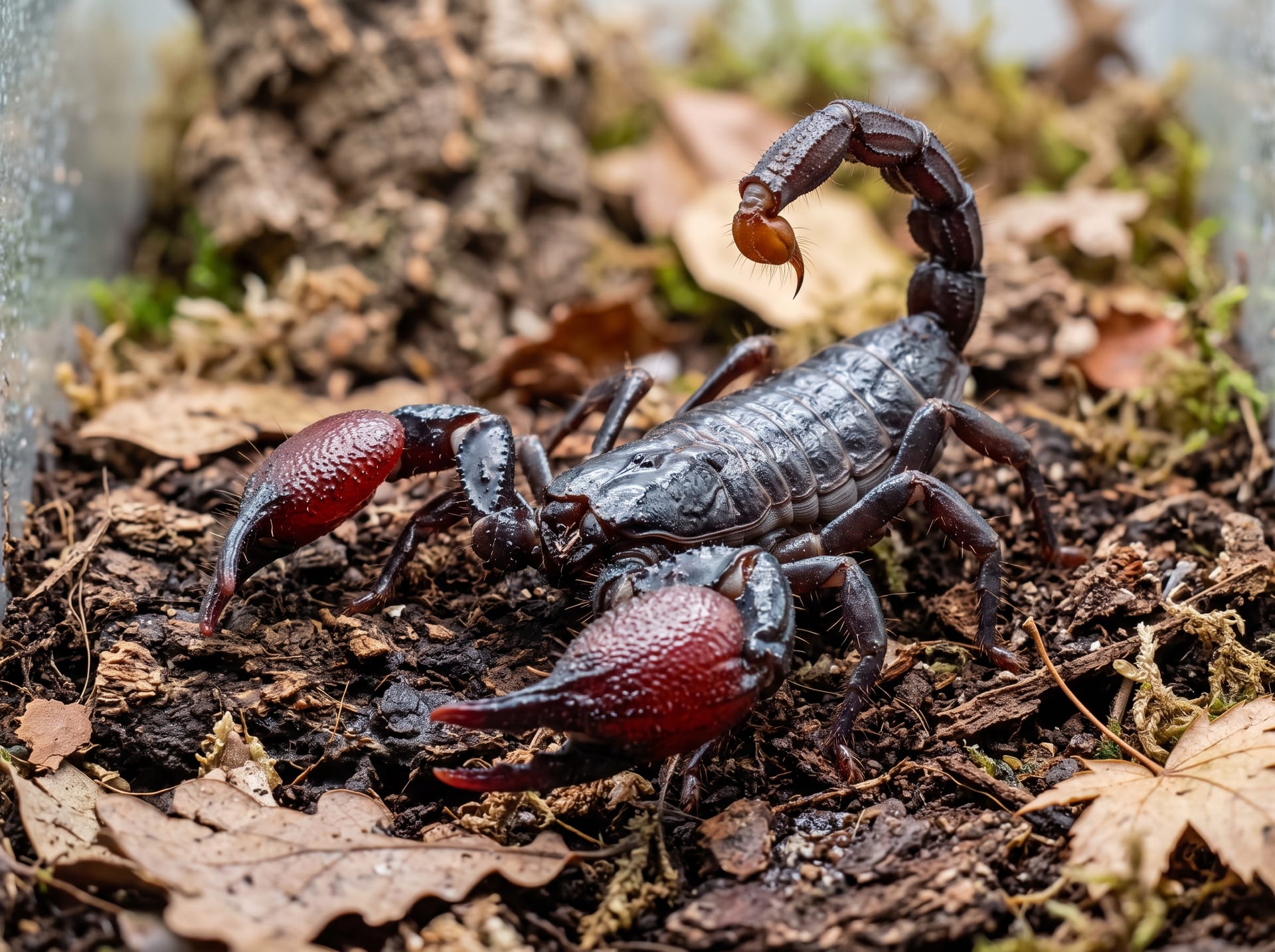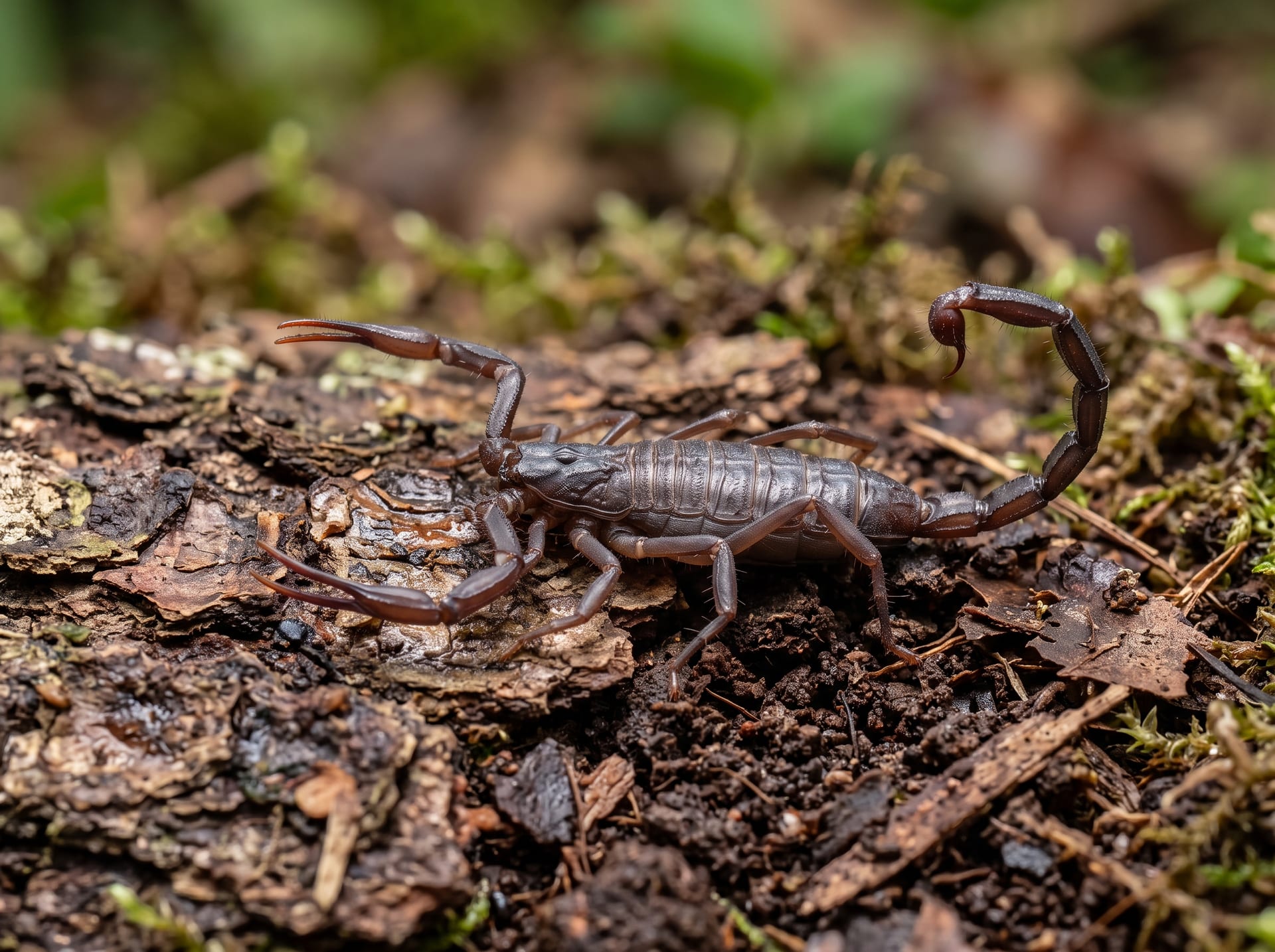
AI-generated image
Yaeyama Scorpion
BeginnerLiocheles australasiae
A small scorpion native to Japan's Yaeyama Islands and across the tropics. Its venom is very mild, and it reproduces parthenogenetically while hiding under bark and stones.
Difficulty
Beginner
Temperature
22〜28℃
Lifespan
About 3-5 years
Size
3-4 cm in length
Humidity
65〜80%
Diet
Small live insects such as crickets and springtails
About
The Yaeyama Scorpion (Liocheles australasiae) is a small 3–4cm scorpion native to Japan's Yaeyama Islands and ranging across tropical Asia and the Pacific. Its venom is very mild, weaker than a bee sting, and it shelters under bark and stones. Notably it reproduces parthenogenetically, so colonies can grow without males, making it an easy and rewarding beginner species in a humid 22–28°C setup with small live insects.
Basic Info
Origin
Japan's Yaeyama Islands and across tropical Asia and Pacific islands
Lifespan
About 3-5 years
Size
3-4 cm in length
Temperature
22〜28℃
Humidity
65〜80%
Diet
Small live insects such as crickets and springtails
Care Guide
Habitat
Provide bark and rotten wood over moist substrate with plenty of hides.
Temp & Humidity
Keep 22-28°C and 65-80% humidity, slightly moist.
Feeding
References & Sources
Edited & verified by: br-choku editorial team
The taxonomic, regulatory, and husbandry data on this page are compiled and verified against the authoritative primary sources below.
Yaeyama Scorpion Listings
Loading latest listingsFind listings for this species