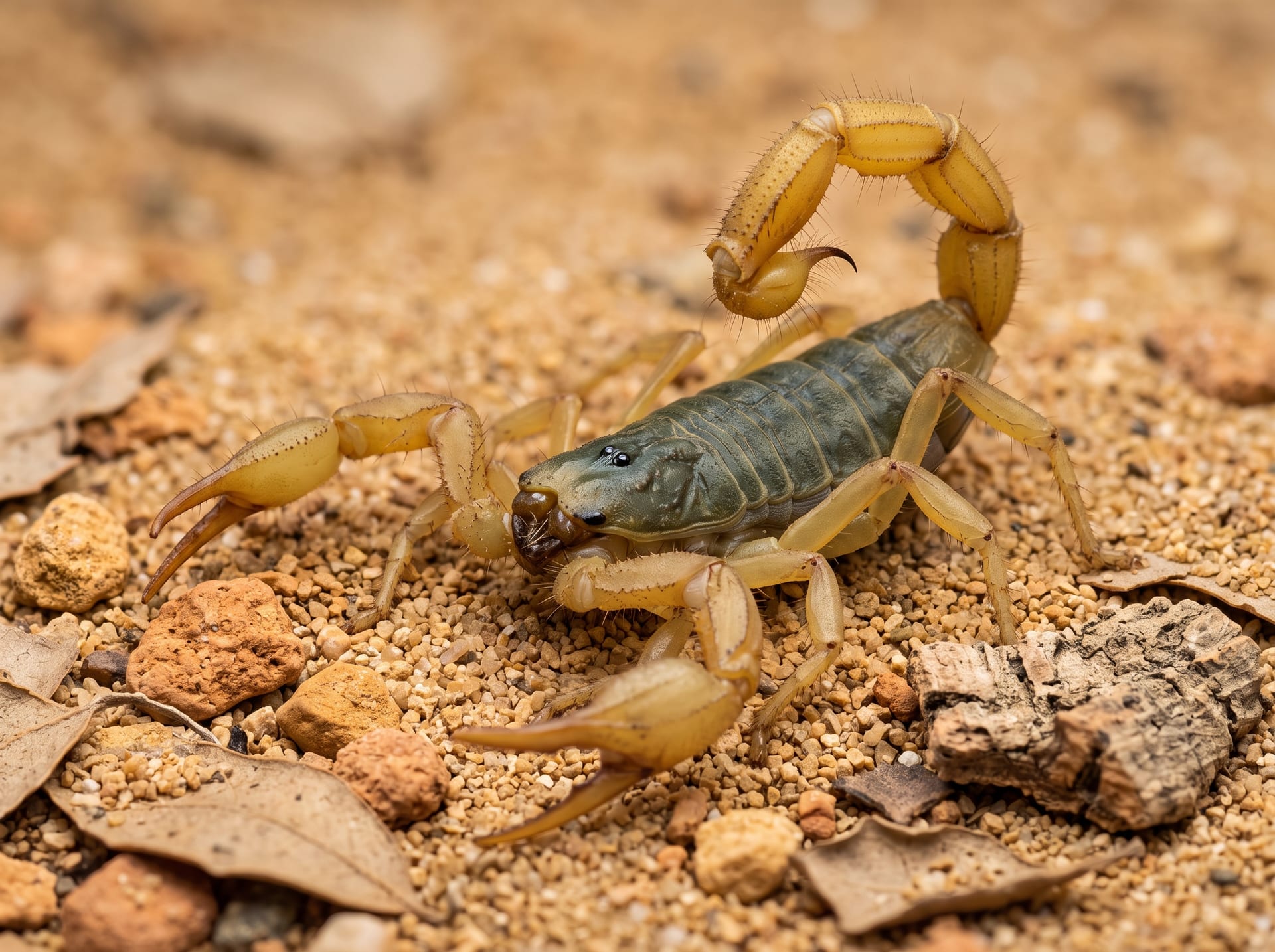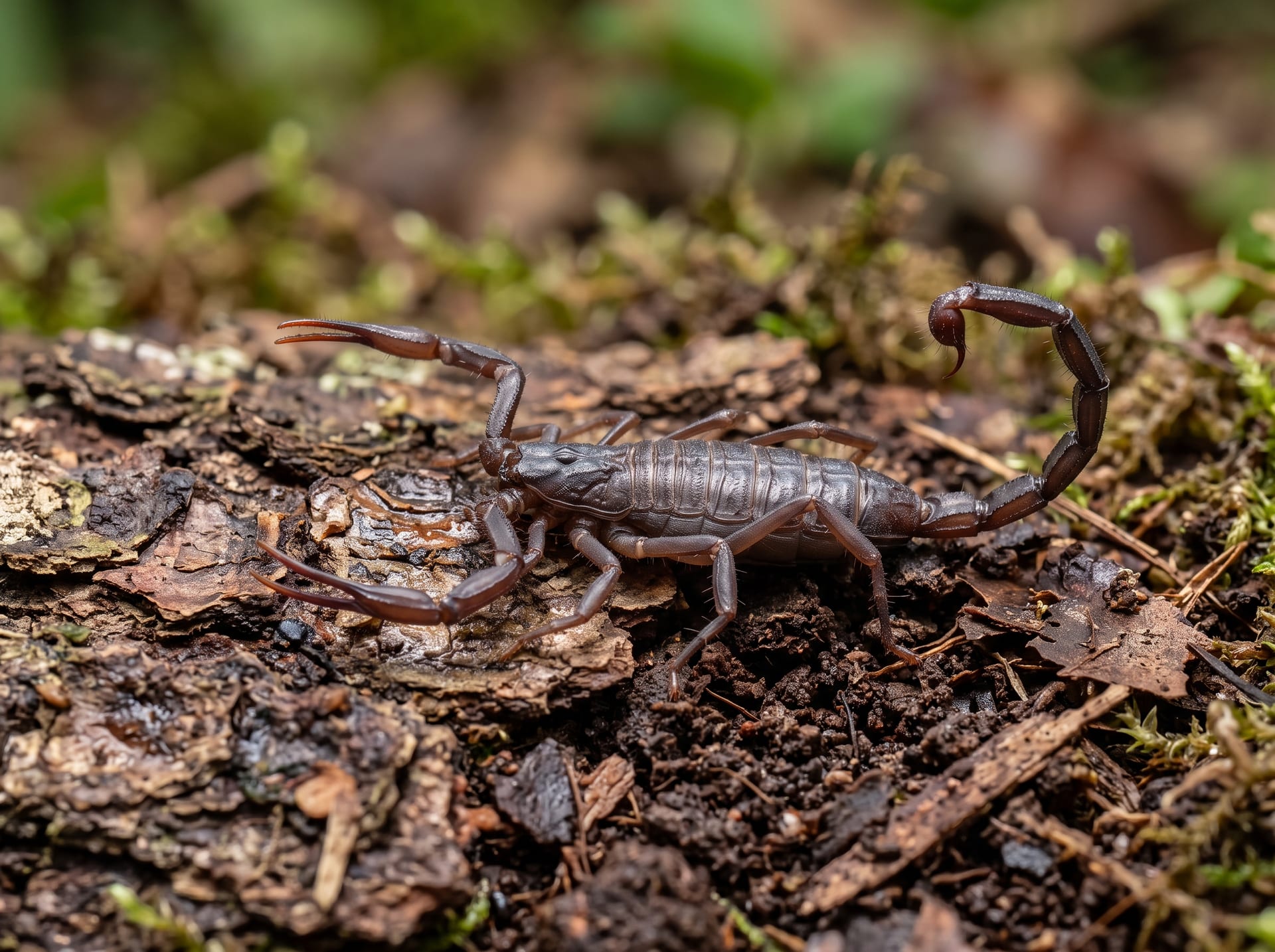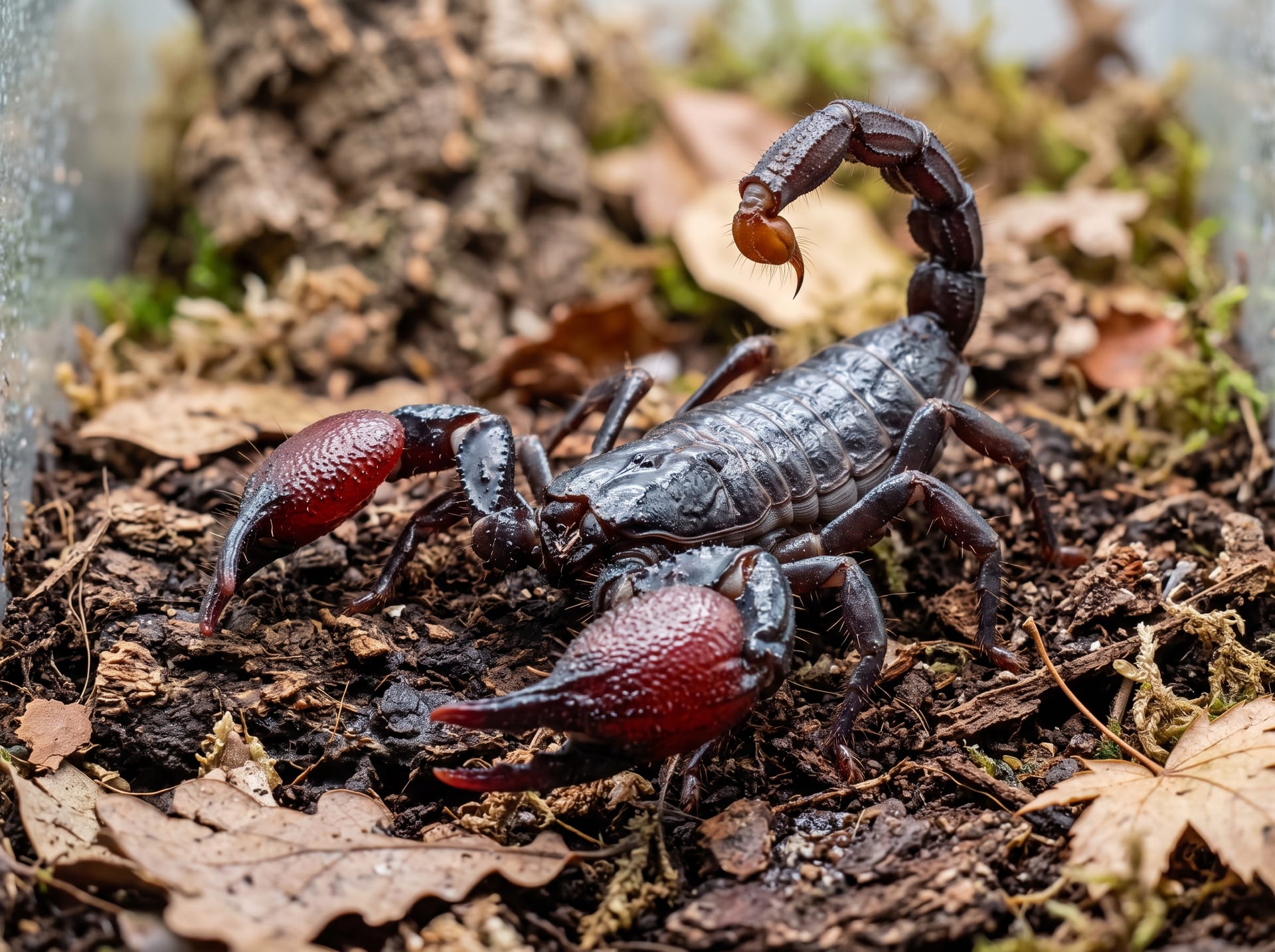
AI-generated image
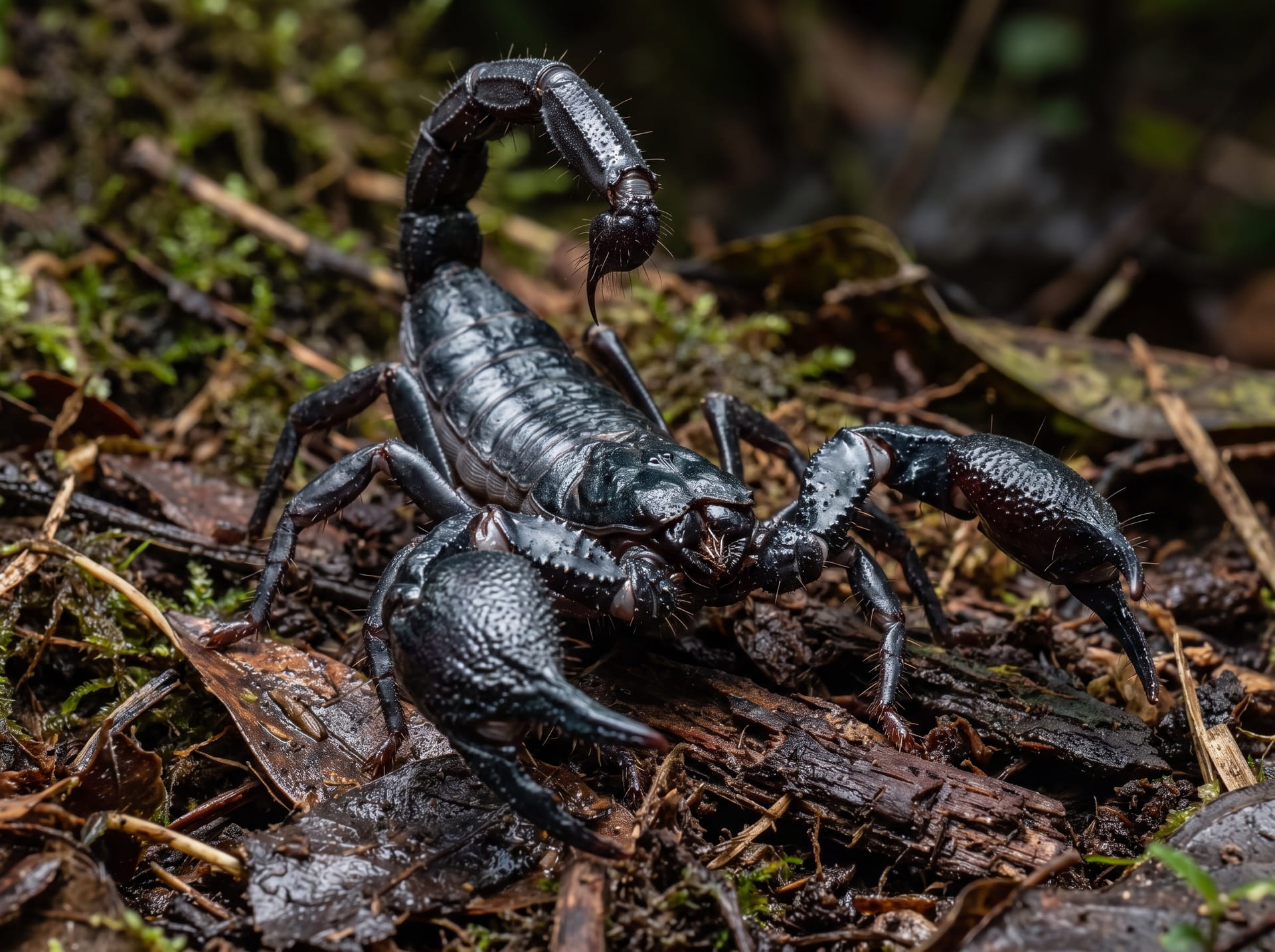
Red Claw Scorpion
BeginnerPandinoides cavimanus
A large scorpion from East African rainforests with reddish pincers. Its venom is mild (bee-sting-like); it can be feisty with strong pincers but is hardy in high humidity.
Difficulty
Beginner
Temperature
24〜30℃
Lifespan
About 5-8 years
Size
10-13 cm in length
Humidity
70〜85%
Diet
Live insects such as crickets and dubia roaches
About
The Red Claw Scorpion (Pandinoides cavimanus) is a large 10–13cm scorpion from the rainforests of East Africa, named for its reddish-brown pincers. Its venom is mild and bee-sting-like; while it can be feisty and pinches hard, it is hardy and beginner-friendly.
Lifespan of the Red Claw Scorpion
The Red Claw Scorpion lives About 5-8 years.
Size of the Red Claw Scorpion
The Red Claw Scorpion grows to 10-13 cm in length.
Temperature & humidity for the Red Claw Scorpion
The ideal temperature for the Red Claw Scorpion is 24〜30℃. Ideal humidity is 70〜85%.
Kept in a humid 24–30°C enclosure at 70–85% humidity on crickets and roaches, it lives 5–8 years and pairs an impressive look with easy care.
Basic Info
Origin
Rainforests of East Africa (Tanzania and surrounds)
Lifespan
About 5-8 years
Size
10-13 cm in length
Temperature
24〜30℃
Humidity
70〜85%
References & Sources
Edited & verified by: BreederDirect editorial team
The taxonomic, regulatory, and husbandry data on this page are compiled and verified against the authoritative primary sources below.
Red Claw Scorpion Listings
Loading latest listingsFind listings for this species