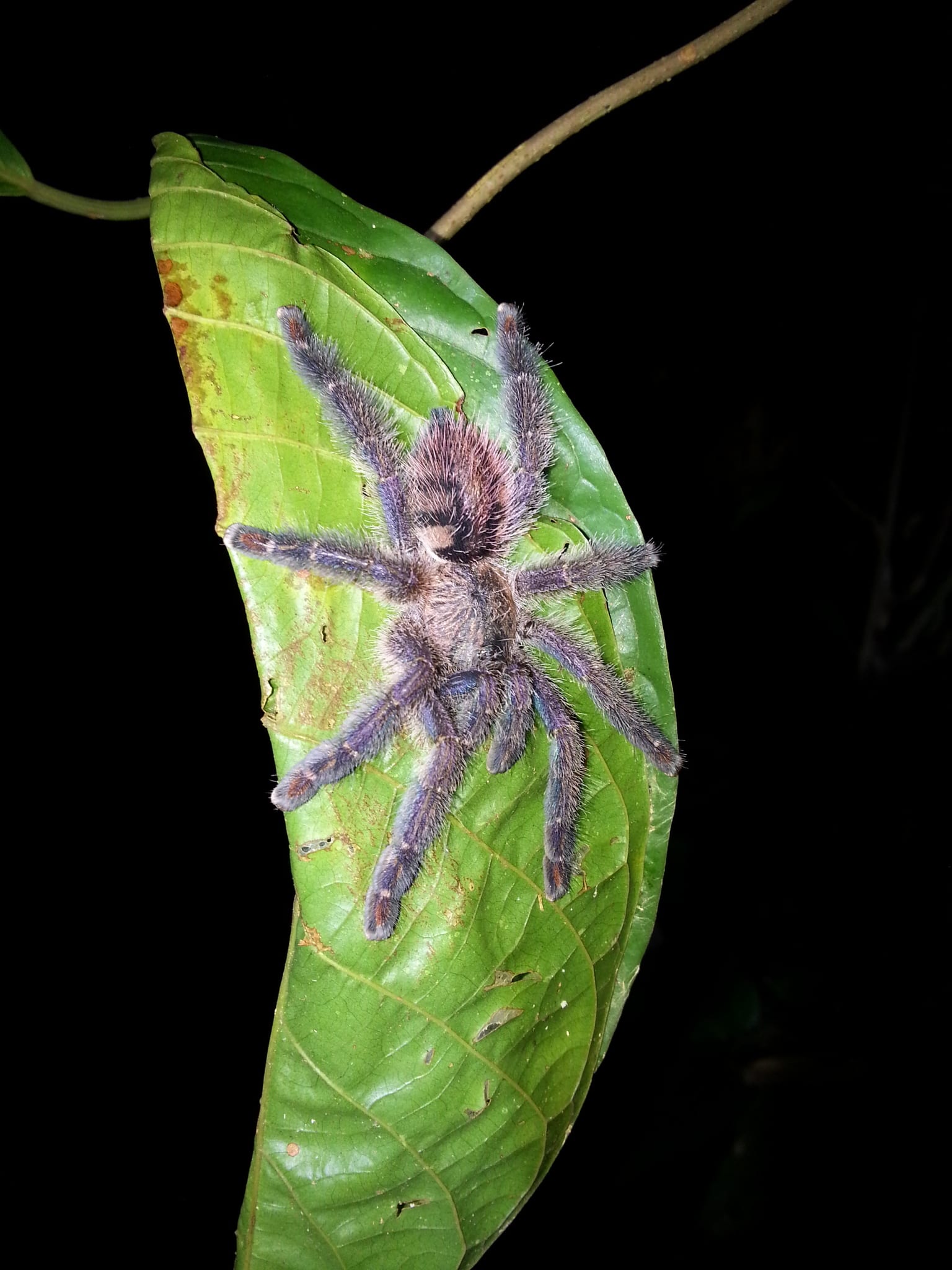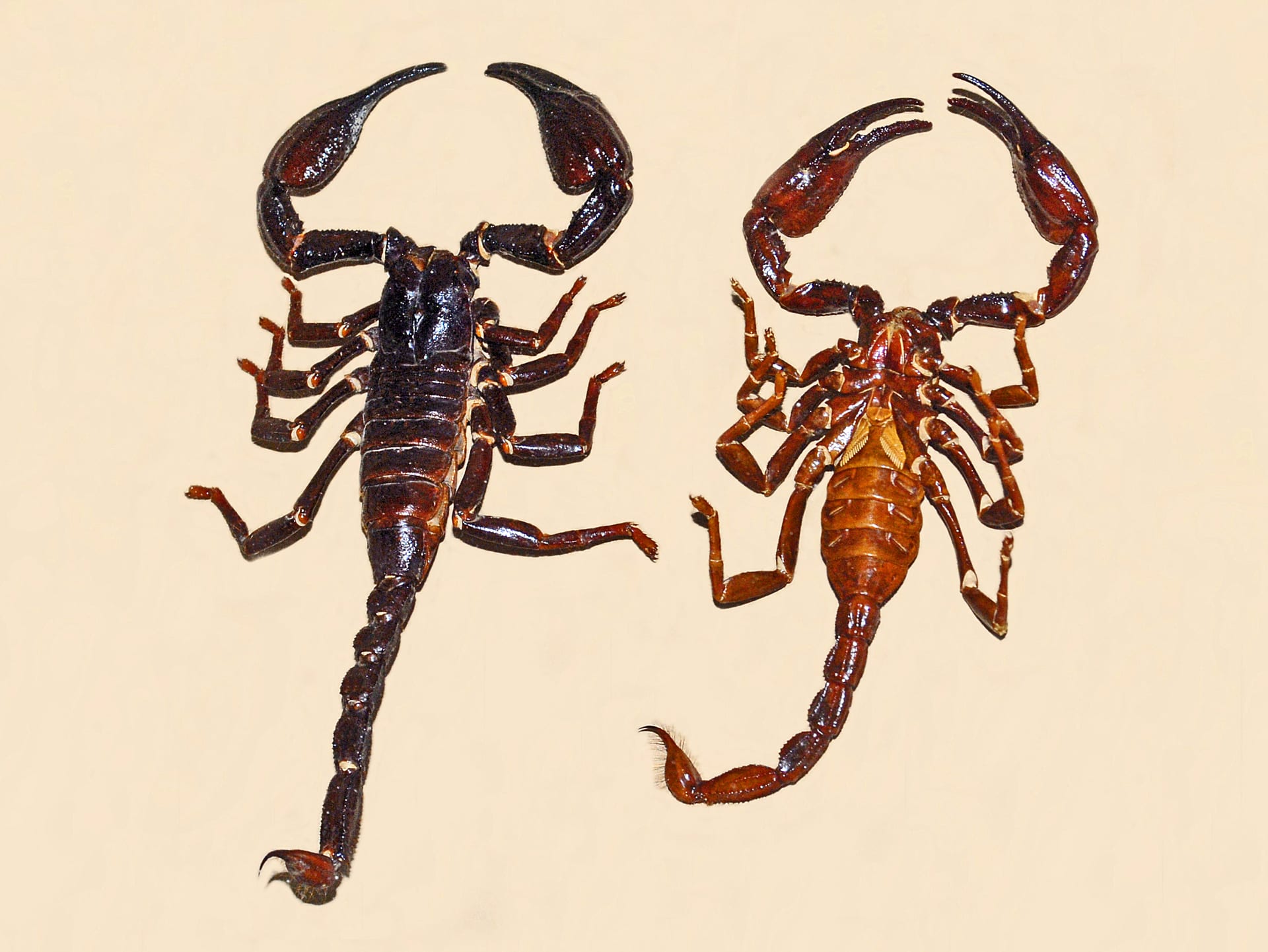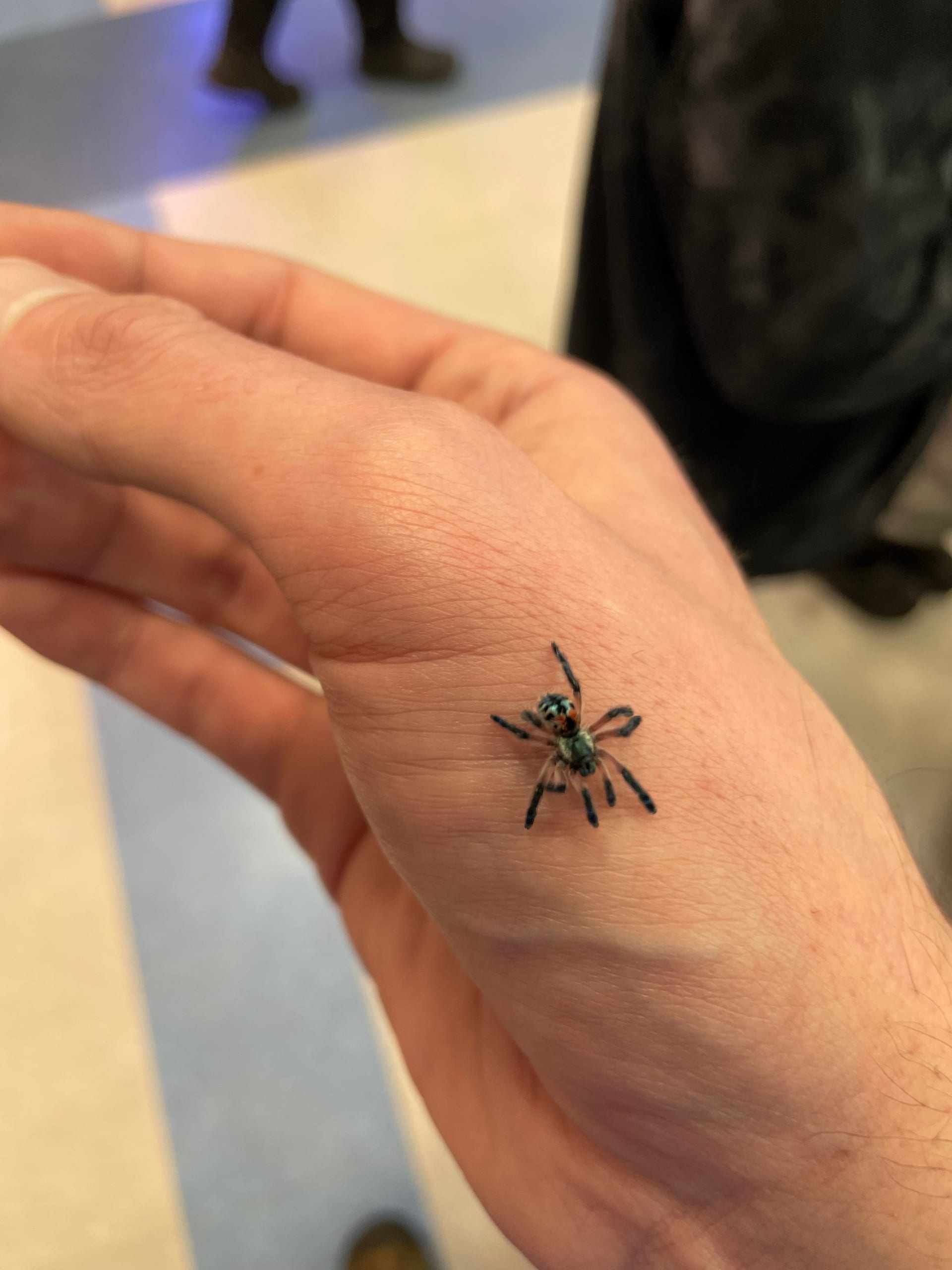
Source: Wikimedia Commons
Pink Dragon Millipede
AdvancedDesmoxytes planata
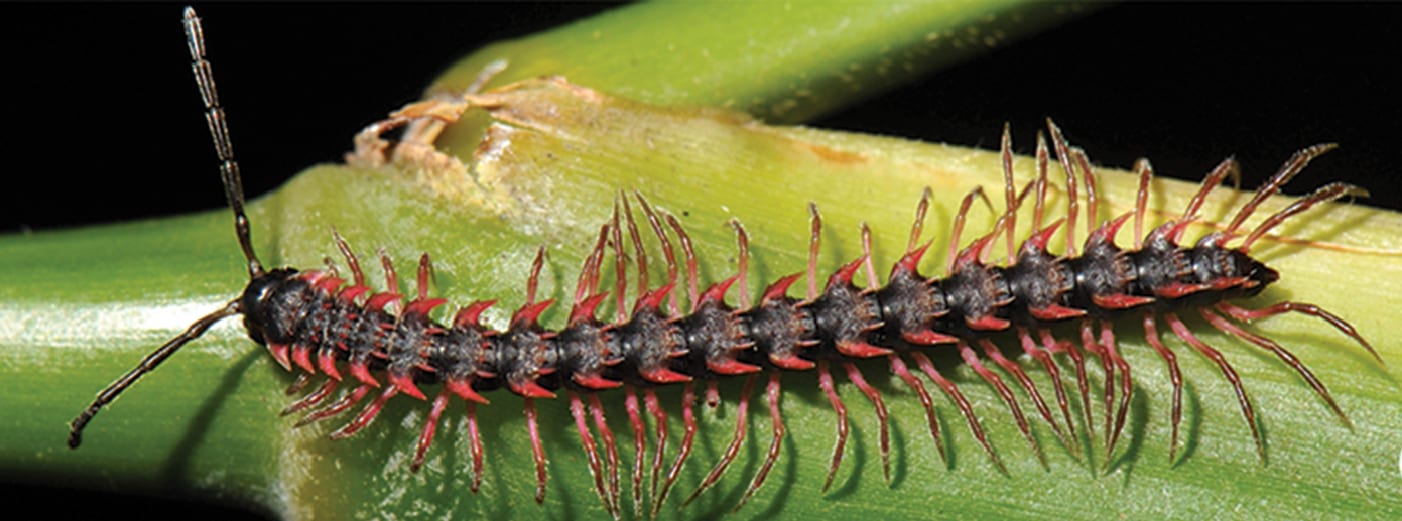
A small millipede whose paranota flare out from each segment and sweep up into pink to red spines, giving it a dragon-like outline. Like all Polydesmida it produces hydrogen cyanide. Some populations have a much darker body.
Difficulty
Advanced
Temperature
24〜26℃
Lifespan
1-2 years
Size
3-4cm
Humidity
75〜85%
Diet
Decaying hardwood and leaf litter as the staple, consumed fast, with vegetables, fish flake or dried herbs as extras; cuttlebone stays in permanently
About
Desmoxytes planata, described by Pocock in 1895 as Pratinus planatus, is a polydesmid millipede whose winged lateral extensions flare from each segment and sweep up into pink to red spines, which makes it look like a miniature dragon; the body is often pale pink but some populations are much darker. Native to the Andaman Islands, it has been carried by people to Thailand, the Seychelles, Java, Sri Lanka and Fiji among others, making it a pantropical tramp species, unlike its congeners which are confined to one or two localities. Adults reach only 3-4cm and live one to two years, growing fast to compensate, so keeping them long term means breeding them rather than maintaining the animals you bought; start with a group. Like all Polydesmida it produces hydrogen cyanide in paired defensive glands, but the quantities are tiny and the usual sign is a faint almond smell if a group is disturbed. Keep handling to a minimum, never seal them in an unventilated container, and do not house them with animals that might eat them. The limiting factor in captivity is the supply of decaying hardwood, and colonies that run out collapse.
Source: Wikipedia (CC BY-SA 4.0)
Lifespan of the Pink Dragon Millipede
The Pink Dragon Millipede lives 1-2 years.
Size of the Pink Dragon Millipede
The Pink Dragon Millipede grows to 3-4cm.
Temperature & humidity for the Pink Dragon Millipede
The ideal temperature for the Pink Dragon Millipede is 24〜26℃. Ideal humidity is 75〜85%.
Use 8-10cm of substrate at 24-26C and 75-85% humidity.
Basic Info
Care Specifications
References & Sources
Edited & verified by: BreederDirect editorial team
The taxonomic, regulatory, and husbandry data on this page are compiled and verified against the authoritative primary sources below.
Taxonomy & Authority
Accepted name: Desmoxytes planata (Pocock, 1895)
Synonyms: Pratinus planatus
Authority databases: GBIF
Nomenclature follows global taxonomic authority databases.
Regulations & Conservation Status
Not CITES-listed
Sources: CITES Appendices (species not listed)
Regulations may change. Always verify the latest information with the relevant authorities.
Pink Dragon Millipede Listings
Loading latest listingsFind listings for this species