Source: Wikimedia Commons
Java Sparrow (White)
BeginnerLonchura oryzivora
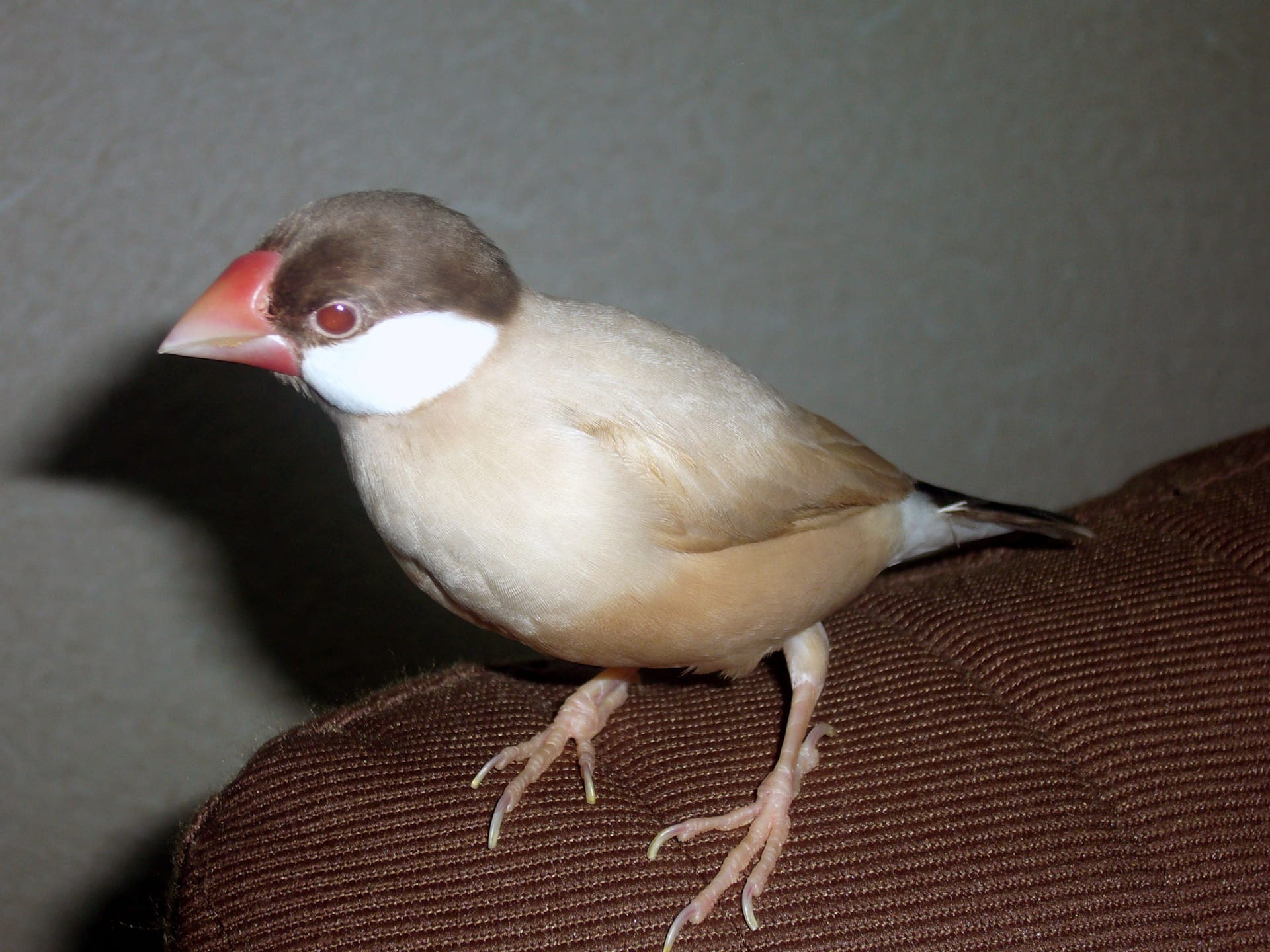
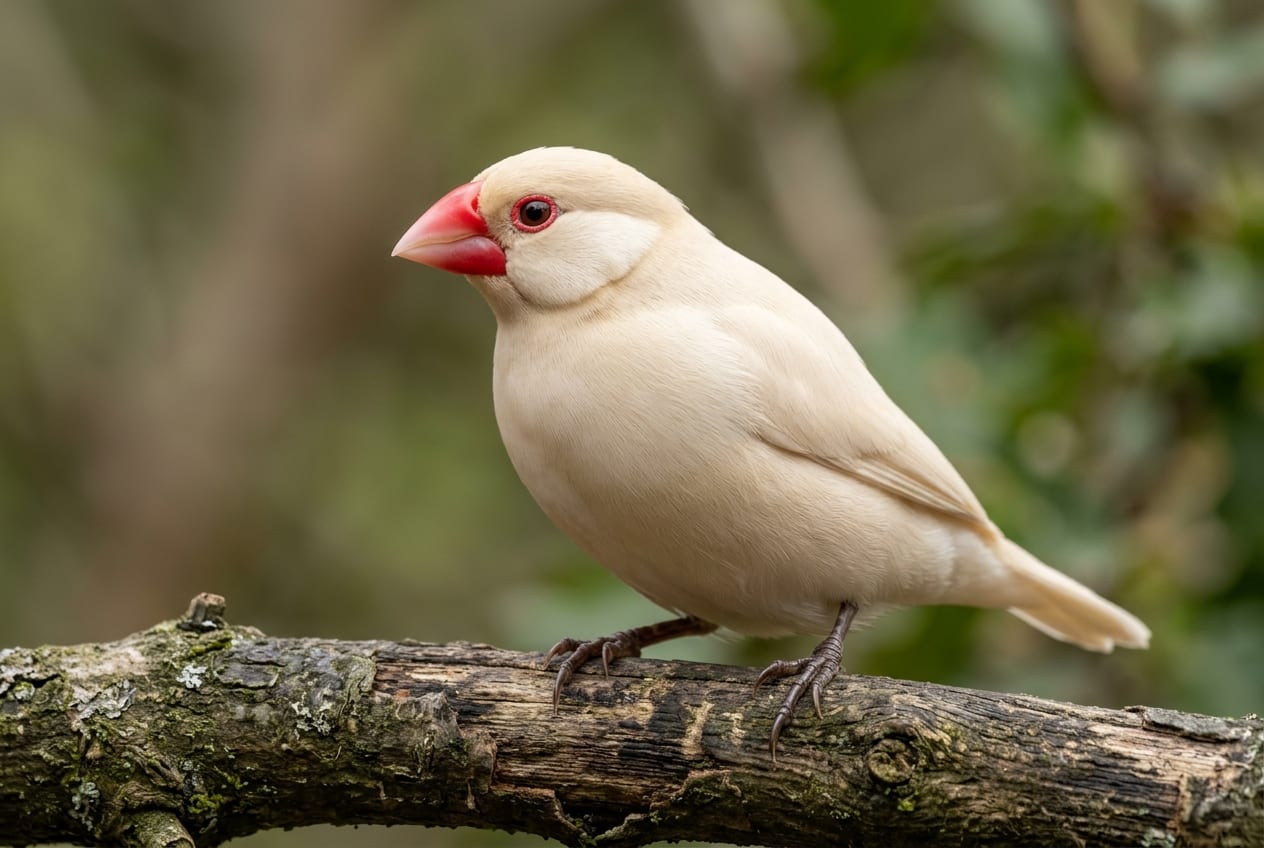
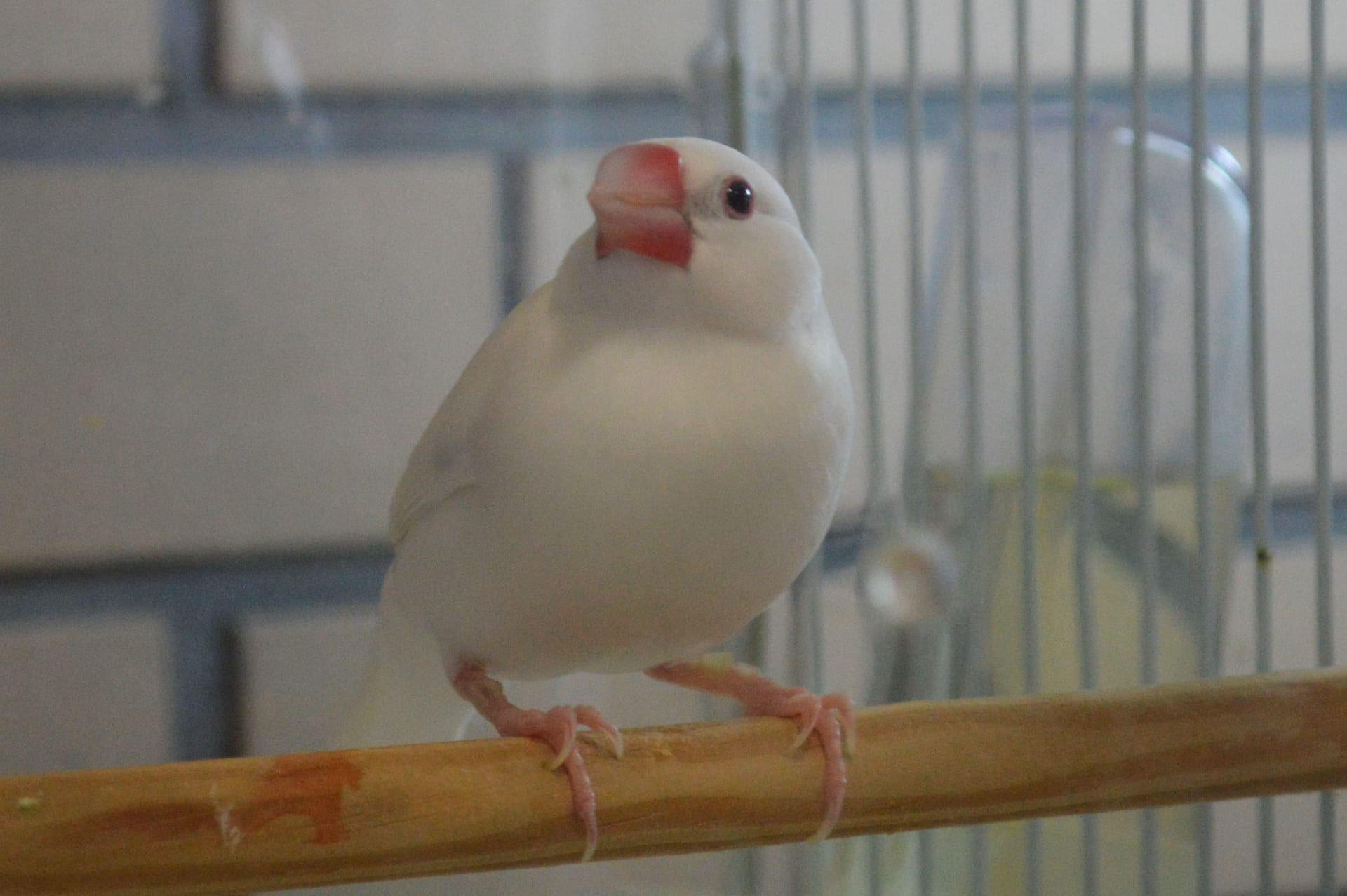
A pure white variety of the Java sparrow in which only the red bill, red eye-ring and pink feet break the white plumage. It was fixed from a mutation at Yatomi in Aichi Prefecture and is known abroad as the Japanese.
Difficulty
Beginner
Temperature
15〜30℃
Lifespan
7-10 years
Size
15-17cm
Humidity
40〜60%
Diet
Mixed millet-based seed, spray millet, greens, and a calcium grit such as oyster shell
About
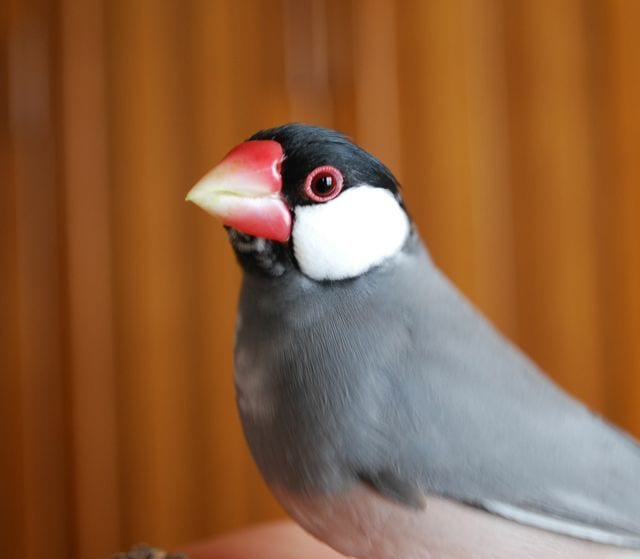
The white Java sparrow is a variety of the Java sparrow (Lonchura oryzivora), a species native to Java, Bali and Bawean in Indonesia. Where the wild form has grey upperparts and breast, a pink belly and a black head with white cheeks, this variety is white throughout, with only the thick red bill, the bare red eye-ring and the pink feet keeping their colour. The Java sparrow has been a cherished cage bird in Japan since the 17th century and appears often in paintings and prints. Keeping at Yatomi is said to have begun with a bird brought from a samurai residence of the Owari domain in 1865, and a white mutation appeared there in 1876 and was fixed as a variety. It later spread worldwide and is known abroad as the Japanese. In Asia birds are usually raised by hand almost from birth, become very tame, and can be kept in relatively small cages and let out indoors without trying to escape.
Source: Wikipedia (CC BY-SA 4.0)
Lifespan of the Java Sparrow (White)
The Java Sparrow (White) lives 7-10 years.
Size of the Java Sparrow (White)
The Java Sparrow (White) grows to 15-17cm.
The wild bird is 15 to 17 cm long with a mean body weight of 24.5 g, and may be the largest species in the estrildid family.
Basic Info
Origin
The wild species is native to Java, Bali and Bawean in Indonesia; the variety was established at Yatomi in Aichi Prefecture, Japan
Lifespan
7-10 years
Size
Care Specifications
References & Sources
Edited & verified by: BreederDirect editorial team
The taxonomic, regulatory, and husbandry data on this page are compiled and verified against the authoritative primary sources below.
Taxonomy & Authority
Accepted name: Lonchura oryzivora (Linnaeus, 1758)
Synonyms: Padda oryzivora, Loxia oryzivora
Authority databases: GBIF
Nomenclature follows global taxonomic authority databases.
Regulations & Conservation Status
CITES Appendix IIIUCN EN · Endangered
Lonchura oryzivora (Padda oryzivora). This variety is taxonomically part of the species and is therefore covered by CITES Appendix II. International trade in an Appendix II species requires an export permit from the exporting state; it is not among the Appendix I derived species that require registration under Japanese law. The wild population is put at under ten thousand birds through habitat loss, hunting and trapping as a pest, and the IUCN assesses the species as Endangered.
Sources: CITES Appendices (Lonchura oryzivora listed in Appendix II) / Annex to Council Regulation (EC) No 338/97 as amended by Commission Regulation (EU) 2026/1383 (post-CoP20) / IUCN Red List
Regulations may change. Always verify the latest information with the relevant authorities.
Java Sparrow (White) Listings
Loading latest listingsFind listings for this species