10 Points to Confirm Before Purchasing Live Animals
10 essential items to check before purchasing live animals online. A confirmation checklist to avoid failure, covering husbandry environment, legal requirements, breeder reliability, and shipping conditions.
Key Takeaways
10 essential items to check before purchasing live animals online. A confirmation checklist to avoid failure, covering husbandry environment, legal requirements, breeder reliability, and shipping conditions.
Introduction: Before Purchasing Live Animals Online
We now live in an era where purchasing live animals through the internet has become possible, making it easier to acquire rare individuals from breeders across the country. However, online purchases—where you cannot directly see the actual organism—come with considerations not present in face-to-face transactions. Failures such as "the condition was different from what I expected when it arrived" or "I wasn't prepared to receive it" often stem from insufficient prior verification.
Here, we provide a detailed explanation of 10 key points you must confirm before purchasing live animals online.
Points 1–3: Basic Husbandry Environment and Legal Verification
Point 1: Is Your Husbandry Space Adequately Prepared?
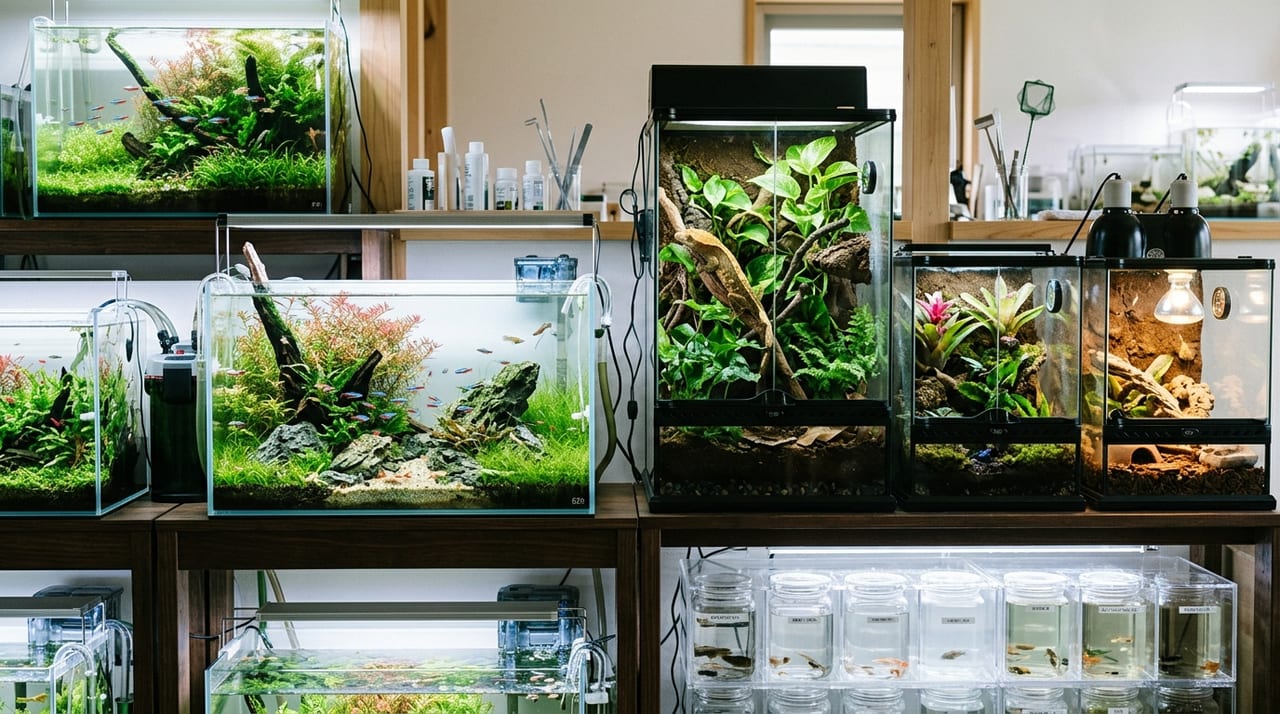
Waiting to set up your environment after the animal arrives is a major mistake. All necessary equipment—aquariums, cages, temperature control devices, filters—must be prepared and fully operational before the animal arrives.
In particular, with aquariums, a minimum of 2–4 weeks of "cycling period" is necessary for beneficial bacteria to establish and water quality to stabilize. Introducing the animal without allowing this period risks rapid spikes in ammonia and nitrites that can be fatal. Once you begin considering a purchase, start by preparing your environment first.
Point 2: Is Raising This Species Legally Permissible?
Animal husbandry is deeply regulated by law. This is an easily overlooked point but must be verified before purchase.
- Designated Animals: Some reptiles (crocodilians, large snakes, etc.) require permission from the prefectural governor to keep
- Invasive Species Law: Certain species such as red-eared sliders and bullfrogs are prohibited from ownership, sale, and transfer
- CITES (Convention on International Trade in Endangered Species): Corals and certain reptiles and birds are subject to international trade restrictions, sometimes requiring certificates
Even if kept unknowingly, you may face legal liability. Always research any species you are interested in before purchase.
Point 3: Assessing Breeder Reliability
While BreederDirect only allows screened breeders to list items, further verification through the following perspectives provides additional peace of mind:
- Is the profile and breeding history detailed?
- Are past transaction ratings positive with sufficient volume?
- Are responses to messages courteous and prompt?
- Are the listing photos of the actual individual (not stock images)?
Quality breeders will genuinely address buyer concerns and questions. Communicating via messages before purchase allows you to assess the breeder's character and integrity.
Points 4–6: Examining Listing Details and Shipping Conditions
Point 4: Are the Listing Details Comprehensive?
Conscientious breeders openly share detailed information about their animals. Verify that the following items are clearly stated:
- Species and variety name (scientific name if possible)
- Size information such as body length and weight
- Age or acquisition/hatching date
- Type of food being provided and feeding response
- Current health status (mention of recent veterinary visits or medication history if applicable)
- Shipping method and regions served
For listings with insufficient information, we recommend asking the breeder additional questions. Exercise caution if responses are vague or unreturned.
Point 5: Do You Fully Understand the Shipping Conditions?
Live animal transport is delicate, with various constraints depending on season and region. Essential items to verify before purchase include:
- Shipping Coverage Areas: Remote islands and mountainous regions may not be serviceable
- Seasonal Restrictions: Many breeders suspend shipments in midsummer (temps above 30°C) and midwinter (near 0°C)
- Shipping Cost: Live animal shipping typically costs more than standard delivery; buyer payment is standard
- DOA (Dead on Arrival) Guarantee: Verify whether a guarantee exists and its conditions (photo evidence submission deadline, etc.)
Even with DOA guarantees, inspect the animal immediately upon receipt and contact the breeder promptly if any issues are found.
Point 6: Have You Researched Compatibility for Tank Mates or Multiple Specimens?
If you already keep other animals, compatibility with the new individual is extremely important.
- Saltwater Fish: Territorial species may engage in fierce aggression
- Reptiles: Some species risk cannibalism or cause severe stress
- Goldfish and Tropical Fish: Mixing species with different temperature and water quality preferences may cause weakening
When in doubt, consult the breeder before purchase. Experienced breeders can provide appropriate advice.
Points 7–10: Confirming Long-Term Husbandry Feasibility
Point 7: Can Appropriate Feed Be Continuously Obtained?
The ability to consistently secure feed for the animal you're purchasing is an easily overlooked point. For species requiring specialized live food (crickets, frozen mice, etc.), research in advance whether nearby pet shops carry them or if they're available through mail order subscription. Without reliable feed access, you cannot maintain the animal's health.
Point 8: Do You Understand the Adult Size?
Juveniles appear compact and cute, but many species grow far larger than expected as adults. "I didn't realize it would get this big" is one of the most common reasons for animal abandonment.
Before purchase, always research adult size and plan ahead for future space availability and equipment upscaling.
Point 9: Do You Accurately Understand the Species' Lifespan?
Animal lifespans vary significantly by species.
| Category | Approximate Lifespan |
|---|---|
| Reptiles (Large Species) | 20–50+ years |
| Goldfish | 10–15 years |
| Saltwater Fish | 5–20+ years |
| Tropical Fish | 3–10 years |
| Coral | Decades (environment-dependent) |
Some reptiles live as long as humans. Seriously consider whether you can fulfill long-term care responsibilities, accounting for life changes such as relocations, job changes, and family composition shifts.
Point 10: Have You Secured Your Schedule for the Arrival Day?
When the animal arrives, sufficient time is needed from receipt through acclimation. Water and temperature acclimation can take 1–2 hours, and the animal requires constant attention immediately after arrival.
Arrange delivery for a day when work ends early or the evening before a free day. During busy periods and holiday deliveries, transit times may be extended, so aim for a schedule with adequate flexibility.
BreederDirect's Safety and Trust Measures
BreederDirect implements several safety measures to ensure buyers can confidently welcome their animals:
- Certified Breeder System: Only breeders who have passed screening are permitted to list. This eliminates the risk of purchasing from unknown dealers
- Messaging Function: You can ask breeders questions directly before purchase. Feel free to consult about any concerns
- Rating System: Past transaction ratings help you identify trustworthy breeders more easily
- Support Team: In case of problems, you can consult with our operations support
By carefully verifying all 10 points and utilizing BreederDirect's system, you can safely find your ideal animal even through online purchase. Proceed thoughtfully and carefully in preparing to welcome a precious life.