Multiple Pet Care Guide | Important Considerations for Living with Dogs and Cats, Fish and Reptiles
Explains important considerations for keeping multiple types of pets at the same time. Introduces cohabitation with dogs and cats, keeping other pets in rooms with aquariums, safe coexistence methods for reptiles and small animals, and space and time management.
Key Takeaways
Explains important considerations for keeping multiple types of pets at the same time. Introduces cohabitation with dogs and cats, keeping other pets in rooms with aquariums, safe coexistence methods for reptiles and small animals, and space and time management.
Related Species

The Joy and Challenges of Multi-Pet Ownership
For animal lovers, keeping multiple types of pets is a great joy. Living with different animals—a dog and a cat, fish in a tank and a small bird, a reptile and a hamster—creates a lively and fulfilling household.
However, "multi-species keeping," where different types of pets are raised in the same space, presents unique challenges that single-species households do not face. Predator-prey relationships between animal combinations, differences in environmental conditions such as temperature, humidity, and noise levels, infection risks, and managing the owner's time and budget—approaching multi-pet ownership with sufficient knowledge beforehand is the first step in protecting the safety and well-being of your animals.
Achieving Successful Cohabitation Between Dogs and Cats
This is the most popular multi-species combination. Common perception suggests they are natural enemies, but with proper introduction, dogs and cats often live peacefully together and may even become playmates.
Steps for Introduction
- Introduction at a young age: Bringing home a puppy and kitten at the same time, or introducing one while the other is still young, makes adaptation easier
- Gradual face-to-face process: For the first one to two weeks, keep them in separate rooms so they can become accustomed to each other's scent. Next, allow visual contact through a gate or closed door, and if there are no issues, progress to short periods in the same room
- Ensuring a safe retreat space for the cat: Always provide a high place where the cat can escape from the dog, such as the upper level of a cat tower or a room the dog cannot enter. A cornered cat may panic and injure the dog with scratches or bites
- Separating feeding areas: Dog and cat food differ significantly in nutritional composition. The ratio of taurine and animal-based protein that cats require differs from dogs, so if they consume each other's food regularly, health problems will develop. Feed them in separate rooms or at different heights
Dog Breeds That Require Attention
Terrier breeds such as Jack Russell Terriers and hunting dog breeds such as Beagles and Dachshunds retain strong predatory instincts toward small animals. Even if these breeds grow up with a cat from puppyhood, chasing behavior may still emerge, requiring constant supervision and patient training.
Coexisting with Aquariums and Other Pets
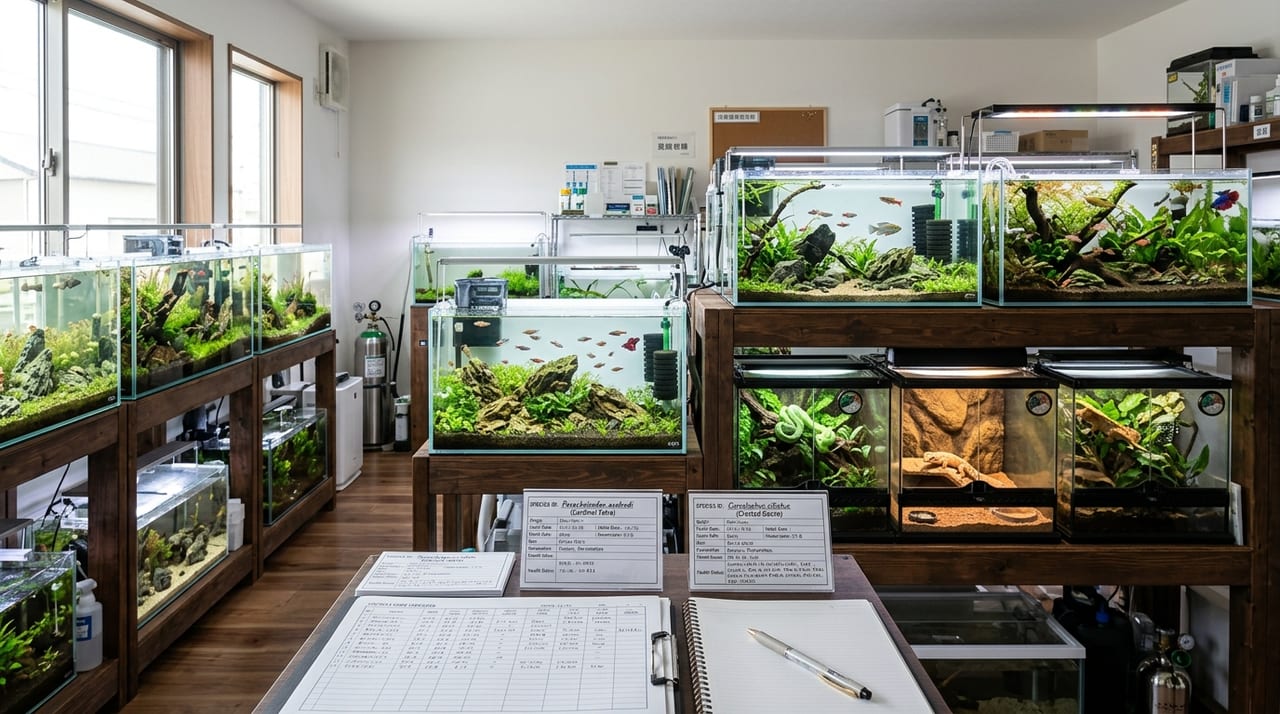
An aquarium creates a peaceful, calming space, but homes with other pets must take precautions against accident risks.
Cats and Aquariums
Cats show strong hunting instincts toward moving fish. Without a tank lid, accidents can occur—a cat may stick its paw into the tank to harm the fish or even knock over the entire stand.
- Always cover the tank with a lid (a framed glass cover is the safest option)
- Choose a sturdy tank stand with sufficient weight and width that will not tip over even if a cat jumps on it
- Protect electrical cords and external filter hoses with cable covers to prevent the cat from chewing on them
Placement of Aquariums with Dogs and Reptiles
In homes with large dogs, there is a risk that the dog's tail or body may knock over the tank. Place the aquarium against a wall in a dedicated space away from foot traffic. If heating lamps or UVB lights used in reptile care have power cords near the tank, there is a risk of electrical hazard from water exposure. Always check the position of power outlets and routing of cables.
Safe Cohabitation of Reptiles with Small Animals and Birds
When keeping reptiles such as snakes, lizards, and turtles in the same home as small animals such as hamsters, rabbits, and birds, special attention must be paid to predator-prey relationships between species.
- Never allow free roaming in the same room: For snakes and large lizards, small animals and birds are "prey" in their natural world. Allowing them to roam freely together could be fatal for one of them
- Lock enclosures thoroughly: Snakes have enough muscular strength to push open lids and may unexpectedly escape from unintended directions. Use metal clips or specialized locks to ensure secure closure
- Prevent scent cross-contamination: If you touch a small animal and then put your hand directly into a reptile enclosure, the reptile may mistake the prey scent and bite your hand. Make hand washing a habit between interactions
- Manage stress: The scent of a predator causes significant stress in prey animals. Even if housed in the same room, place the small animal enclosure and the reptile enclosure in separate, distant locations, and arrange them so they cannot see each other
Cross-Species Infection and Parasite Risks and Prevention
Disease transmission between different species of pets is uncommon, but the following risks have been documented.
- Fleas and ticks: These move between dogs and cats in either direction. In multi-species households, consult with your veterinarian about administering preventive medications regularly to all animals
- Fungal infections (dermatophytosis): Reptiles and small animals may carry fungi, which can spread to other pets through human skin contact. Be thorough about hand washing after touching any animal suspected of infection
- Salmonella: Reptiles, especially turtles and lizards, often carry this bacteria without showing symptoms. Make hand washing with soap a habit after handling reptiles, and take special precautions if children or immunocompromised individuals handle them
- Viral infections: Canine parvovirus and feline panleukopenia virus do not cross-infect between species, but maintain regular vaccination schedules to prevent within-species transmission
Practical Management of Time, Budget, and Space
Time Estimate for Daily Care
While caring for multiple pets does not simply double the time required for single-pet ownership, it certainly increases. The following are rough estimates.
- Dog walks and playtime: 30–60 minutes per day
- Cat litter cleaning, grooming, and playtime: 20–30 minutes per day
- Aquarium water changes and maintenance: 30–60 minutes per week
- Reptile feeding and enclosure cleaning: 15–30 minutes per session (feeding frequency varies by species)
- Small animal enclosure cleaning and interaction: 15–30 minutes per day
In total, 1–2 hours per day is the standard care time for multi-species households. Setting a reasonable limit on the number of pets to match your work and family schedule is also a responsibility to your animals.
Budget Planning Considerations
Each pet requires costs for food, veterinary care, and supplies. Particularly when multiple animals fall ill at the same time, veterinary expenses can exceed expectations. Pet insurance must be purchased separately for each species and individual, so plan for this as a monthly fixed cost. Do not overlook the cost of pet hotels and sitters for travel or hospitalization, which will multiply with each additional pet.
The Right Mindset for Successful Multi-Species Keeping
Living with multiple types of pets is also an opportunity to deepen your understanding of each animal's instincts, communication, and needs. A dog's instinct to chase and a cat's instinct to seek high places are both normal animal behaviors. Rather than viewing these as "problem behaviors," the role of the owner is to design an environment where each animal feels safe and secure.
By taking your time with a gradual introduction process, providing appropriate space for each species, and maintaining regular health checks, you can achieve a rich life together with a diverse range of pets.