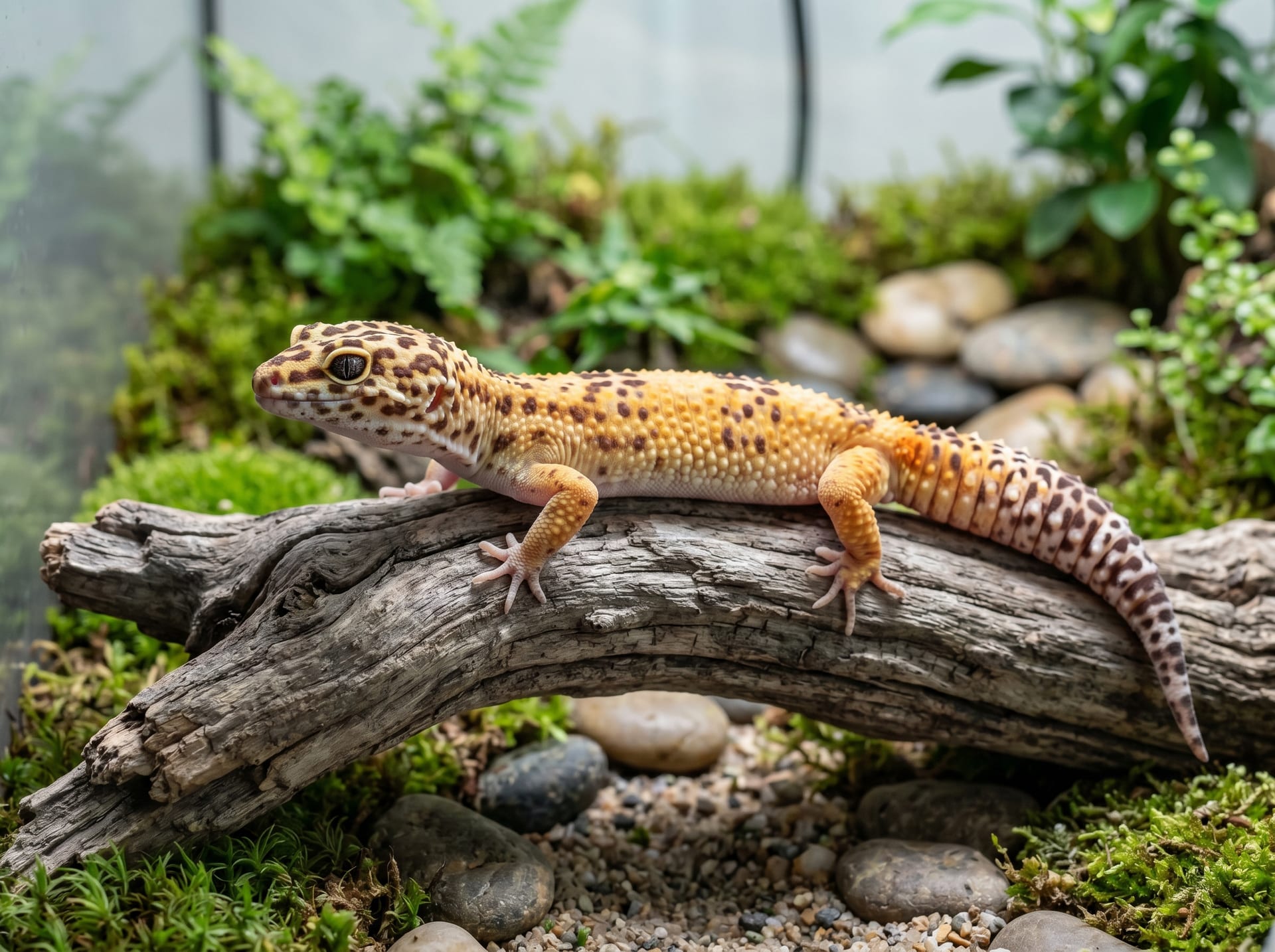
Watch for stuck shed. Humidity and calcium supplementation are key
特徵Beginner-friendlySmallMany morphsHandleable
關於豹紋守宮
The Leopard Gecko (Eublepharis macularius) originates from the arid, rocky terrain of Pakistan, Afghanistan, and northwestern India. Captive breeding began in earnest during the 1970s, and today it is one of the most widely kept reptiles in the world. Adults typically reach 20–25 cm in length — a manageable size — and uniquely among geckos, they lack the adhesive toe pads needed to climb smooth surfaces. The wild-type pattern features yellow or white scales with black spotting, but selective breeding has produced hundreds of morphs, including albinos, blizzards, and bold-striped varieties. Temperamentally, leopard geckos are among the calmer lizards; they tend to tolerate handling well once acclimated and rarely bite unprovoked. With proper husbandry, they commonly live 10–15 years, making them a long-term companion rather than a short-lived novelty.
迎接豹紋守宮前需要了解的7件事
1Proper Enclosure Size
An enclosure at least 45 cm wide is recommended for one adult. Since leopard geckos are terrestrial, floor space matters more than height. Always provide at least one hide shelter, and avoid housing two males together to prevent aggression.
2Temperature Is Critical
As ectotherms, they rely on external heat sources to regulate body temperature. Provide a thermal gradient with a warm side of 32–35 °C and a cool side of 24–28 °C. An under-tank heat mat covering half the floor is the most common approach; maintain at least 24 °C at night.
3Strong UV Light Not Needed
Leopard geckos are crepuscular/nocturnal and do not require high-intensity UVB lighting. However, low-level UVB and a natural light–dark cycle can support vitamin D3 synthesis and overall health. Ambient room lighting often suffices, though a dedicated low-output UV lamp is a beneficial addition.
4Calcium Supplementation Is Essential
Since their diet consists primarily of insects, dusting feeder insects with calcium (with vitamin D3) at each feeding is essential. Deficiency can lead to metabolic bone disease. Placing a small dish of plain calcium powder inside the enclosure allows the gecko to self-supplement as needed.
5Price Varies by Morph
Normal (wild-type) individuals are relatively affordable, while rare morphs such as albino strains, Eclipse, or Blizzard can cost tens of thousands of yen or more. Initial setup costs for enclosure, heater, thermometer, and hides typically range from ¥10,000–¥30,000, with monthly ongoing costs around ¥1,000–¥3,000 for feeder insects and supplements.
豹紋守宮的常見問題
Q.Do leopard geckos need daily care?
A.Fresh water should be checked and replaced daily, but adult geckos only need to be fed every 2–3 days. Juveniles benefit from daily feeding. Overall, the daily time commitment is relatively low, making leopard geckos well-suited for people with busy schedules.
Leopard geckos are among the more handleable reptiles, but allow a newly acquired gecko 1–2 weeks to settle before attempting handling. Never grab or pull the tail, as it can autotomize (self-detach) as a defense response. The safest approach is to let the gecko walk across your open hand at a low height.
7Support During Shedding
Leopard geckos shed regularly, and incomplete sheds (retained skin) can restrict circulation and cause necrosis in the toes or tail tip. Providing a moist hide with humidity of 60–80% greatly aids shedding. Avoid handling during the process, and afterward check that the eyes and toe tips are completely clear of retained shed.
A.
Basic setup equipment — enclosure, heating pad, hides, and thermometer — typically costs around 10,000–20,000 yen. The gecko itself can range from a few thousand yen for common morphs to well over 30,000 yen for rare ones. Ongoing monthly costs for feeders and supplements are relatively modest.
Q.Can leopard geckos be handled?
A.Yes, leopard geckos can become comfortable with handling once they have settled into their new home. Start with short sessions and gradually increase the duration as the gecko acclimates. Avoid grabbing the tail, as they can autotomize it — dropping it as a defense mechanism — though it does regrow over time.
Q.Can I feed frozen or dried insects?
A.Live prey is generally recommended, but some individuals will accept frozen-thawed or dried insects. That said, geckos raised exclusively on live feeders can be reluctant to switch to alternatives. Starting with live prey and experimenting with other options once the gecko is settled is a sensible approach.
Q.How long do leopard geckos live?
A.Under proper care, leopard geckos commonly live 10–15 years, with some individuals reported to exceed 20 years. They are genuinely long-lived animals, so prospective owners should consider the multi-decade commitment involved before bringing one home.