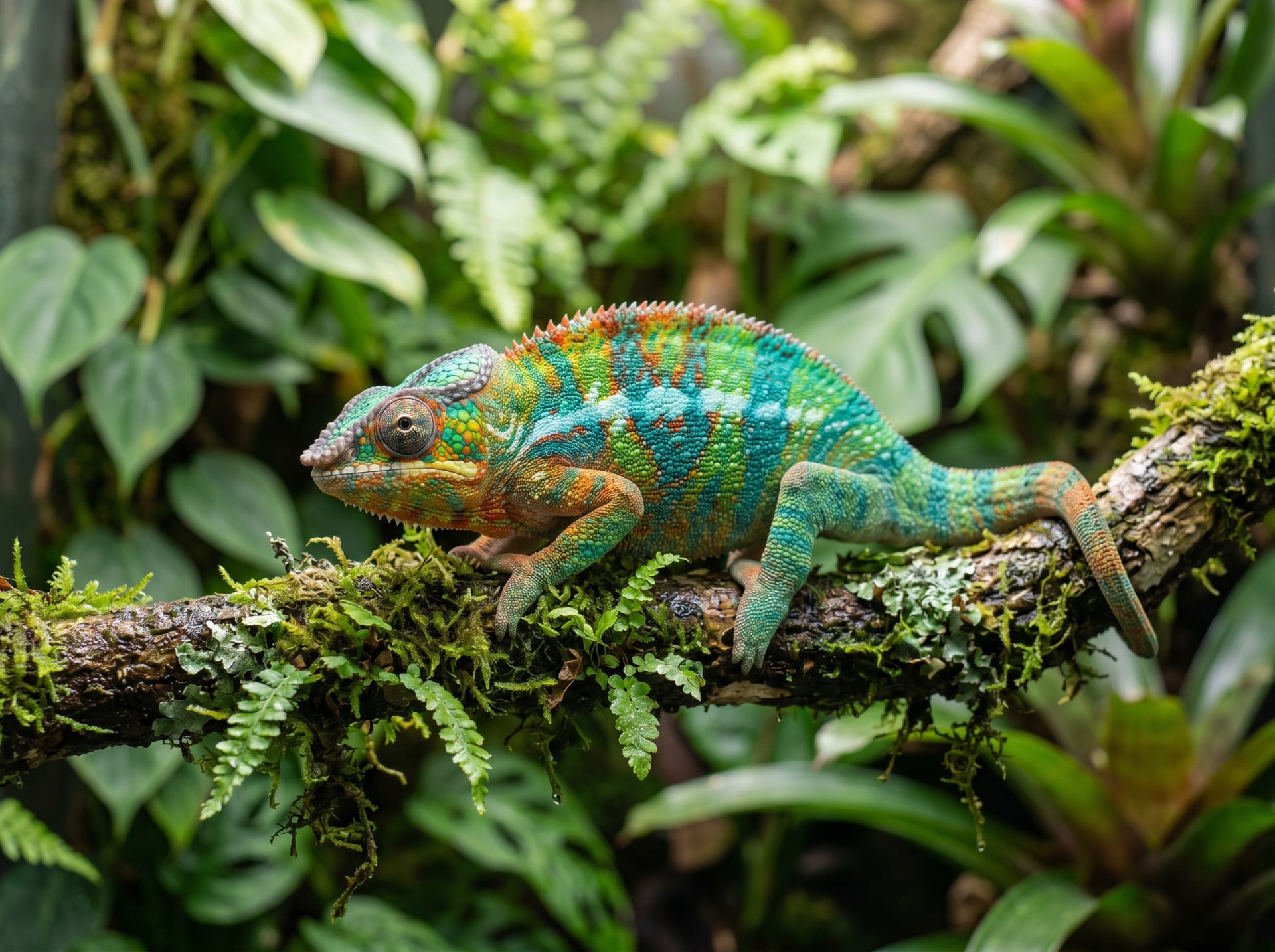
變色龍
變色龍以其改變體色的非凡能力、獨立轉動的雙眼和利用長舌捕食等特徵,是具有其他爬蟲類所不具備的獨特魅力的蜥蜴。牠們偏好獨處,更適合作為「觀賞型寵物」供人欣賞而非與人互動,因此深受愛好者歡迎。由於需要適當的溫度和濕度管理,該物種適合中級至高級愛好者飼養。
成交手續費 0%!2026年9月30日前註冊,前 2 筆成交免佣金!
繁殖者 招募中!
在 BreederDirect 上架,直接銷售給全國各地的客戶!
BreederDirect 承諾的 6 大透明度要點
爬蟲動物與兩棲動物出品中,繁殖者明確展示以下資訊。確保基因型、遺傳、食性和脾氣的透明度。
- 基因型明示
- 實物照片
- 食性明示
- 脾氣明示
- 遺傳明示
- 月齡明示
查看全部34個品種
食性
爬蟲動物與兩棲動物分類正在招募認證繁殖者
繁殖者正在陸續註冊,即將上架。設定上架通知,不錯過新商品。
「接收上架通知」需免費註冊會員即可設定。當有符合您儲存條件的新商品上架時,我們會以郵件和站內通知提醒您。
已註冊的繁殖者(搶先看)
關於變色龍
變色龍主要分布在非洲和馬達加斯加地區,已確認約220種,其中大部分高度適應樹棲生活。體色變化不僅是偽裝手段,近年研究表明還具有情感表達和交流的功能。其左右獨立活動的眼睛可提供近360度的視野,粘性舌頭長度可達體長的2倍,能在瞬間捕捉昆蟲。作為寵物流通的代表種是帶紋變色龍(也門變色龍)和豹紋變色龍,前者相對較強壯,被認為適合初學者飼養。飼養的最大魅力在於能近距離觀察其神秘的外觀和行為。雖然日常環境管理需要花費精力,但在精心佈置的飼養空間中,看到其生機勃勃的樣子,會給您帶來其他寵物無法比得的滿足感。
迎接變色龍前需要了解的6件事
1濕度管理最為重要
變色龍需要高濕度(50〜80%),但通風不良易導致呼吸道疾病。應使用網籠,通過噴霧或自動噴霧系統維持適當濕度。
2全身UVB光照必須
變色龍合成維生素D3需要UVB光,照射不足會導致佝僂病等代謝性骨病。應使用高質量的UVB螢光燈(5.0〜10.0),每天點亮10〜12小時,並定期更換燈管。
3盡量減少接觸
變色龍對壓力極其敏感,過度接觸可能引起免疫力下降和拒食。建議以觀察為主要目的,除籠舍維護工作外,應盡量減少直接接觸的機會。
4從霧水中飲水的習性
變色龍不會從水盆飲水,而是有舔食葉片和壁面上水滴的習性。建議每天噴霧兩次以上,或安裝滴水系統,確保始終有水滴可供飲用。
5只接受活體飼料
變色龍會對移動的東西產生捕食反應,因此幾乎不接受人工飼料。應以蟋蟀、杜比亞、麵包蟲等活體飼料為主食,並記得補充鈣和維生素粉。
6從體色變化中讀懂信號
變色龍的體色變化反映了氣溫、心情和健康狀況。鮮艷的色彩表明它活躍且壓力較低,而長期呈現暗沉的顏色可能是體況不良或壓力的信號。養成日常觀察體色的習慣吧。
變色龍的常見問題
- Q.初學者也能飼養變色龍嗎?
- A.由於需要同時管理溫度、濕度、通風和紫外線,所以一般認為適合中至高級飼養者。建議從比較健壯的品種(如束帶變色龍)開始,事先充分準備飼育環境是成功的關鍵。
- Q.為什麼體色會變化呢?
- A.皮膚內特殊的色素細胞(chromatophore)通過改變對光的反射而改變顏色。氣溫、光照、情緒、健康狀況、以及對其他個體的反應等多個因素會影響體色,不僅僅是為了隱藏。
- Q.壽命是多久?
- A.壽命因種類而異,但據說面紗變色龍在適當飼養條件下,雄性約能活6~8年,雌性約能活4~5年。由於雌性因產卵產生的壓力會影響壽命,無精卵的產卵管理也很重要。
- Q.能否多隻合養?
- A.基本上,單獨飼養是原則。將它們放在同一個籠子裡會造成強烈壓力,導致拒食、免疫力下降和打鬥受傷的風險增加。除繁殖目的的臨時同居外,建議遵循「1籠1隻」的飼養原則。
- Q.變色龍會與人親近嗎?
- A.它們不像狗或貓那樣與人親近,即使適應了人,也幾乎不會表現出對人的依賴或偏愛。不過,通過每天的飼養護理,它們會逐漸習慣人的存在,完全可以期待它們成為允許無壓力觀察的個體。