Source: Wikimedia Commons
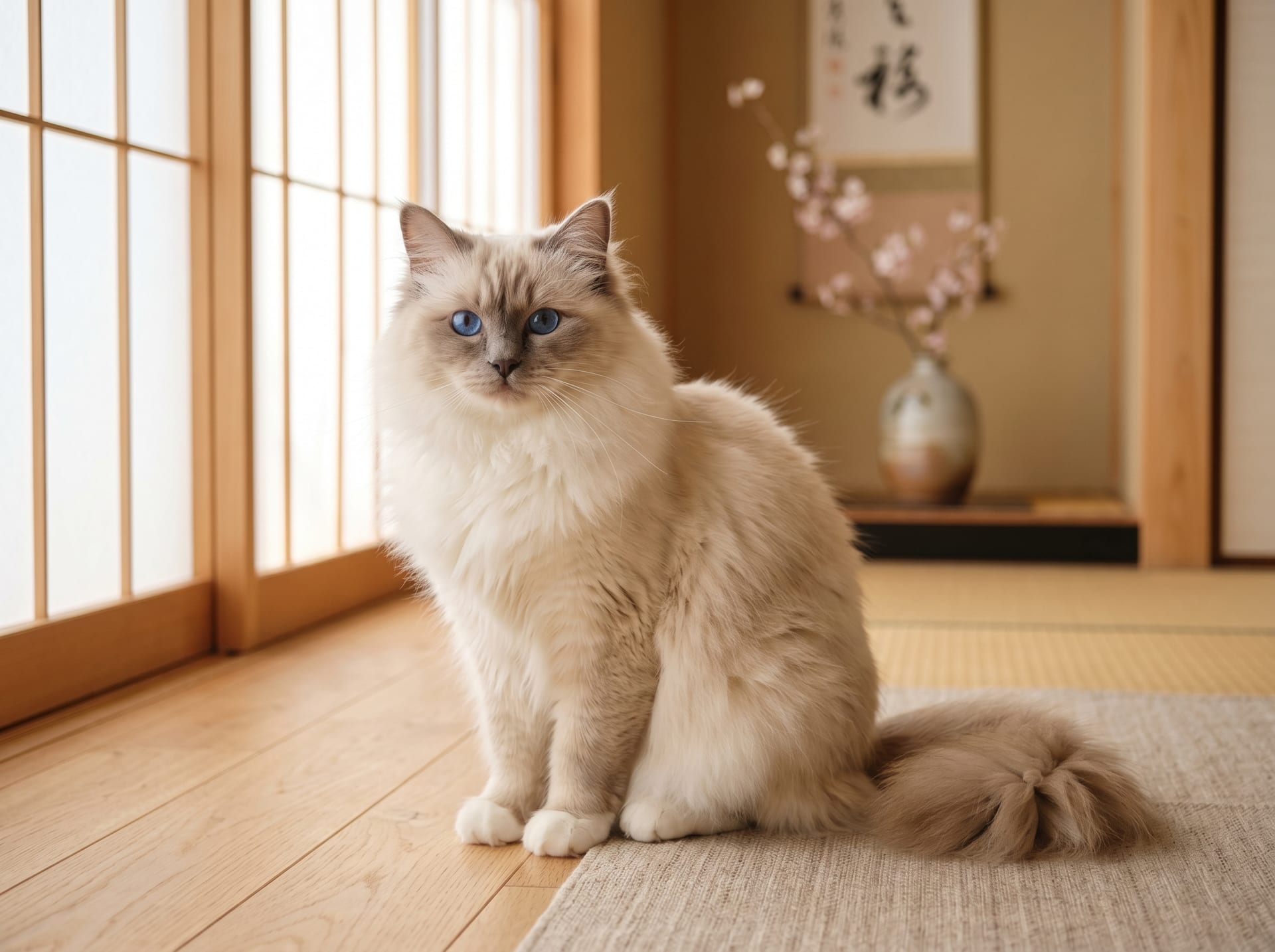
'Sacred cat' with pointed coat and white gloves on paws. Calm and gentle; quietly devoted to owner.
The Birman, also known as the Sacred Cat of Burma, is a semi-longhaired, colour-pointed breed developed in France in the early 20th century, reportedly from cats brought from Burma and crossed with Persians. The breed nearly became extinct during World War II but was restored by French breeders. Birmans are medium to large cats with a silky, semi-long coat in a colorpoint pattern and striking deep blue eyes. Their most distinctive feature is the pure white "gloves" on all four paws. In temperament, they are gentle, calm, and affectionate, making them excellent companions for quiet households.
Source: Wikipedia (CC BY-SA 4.0)
產地
France
壽命
12-16 years
體型
Weight 3-6.5kg
溫度
18〜28℃
Complete nutrition cat food. Two meals per day.
Calm and gentle. Quietly stays near owner. Friendly with visitors.
Prefers gentle play. Leisurely toy play suits better than vigorous exercise.
Semi-long silky coat. Brush 2-3 times weekly to prevent mats.
Myanmar (Burma)
Risk of HCM. Watch for kidney disease.
Beginner. 這是一個適合初學者的物種。不需要特殊設備或經驗,基本的飼養設置即可成功飼養。
Birman的理想溫度為18〜28℃。避免溫度驟變,保持穩定的環境。
Birman的平均壽命為12-16 years。透過適當的護理和營養,牠們可以長壽健康地生活。
Birman成年後通常可達Weight 3-6.5kg。大小可能因飼養條件和個體遺傳而異。
Birman的食物為:Complete nutrition cat food. Two meals per day.。目標是適當的餵食頻率和均衡的飲食。
Birman的價格因品系、大小和血統而有很大差異。請查看我們的市場價格頁面獲取最新價格資訊。
尋找此物種的商品
瀏覽Cat商品Complete Beginner's Guide to Keeping a Cat
Everything beginners need to start keeping a cat: preparation, litter, feeding, indoor environment, and popular breed tips.
Top 10 Popular Cat Breeds Compared — Temperament, Size & Ease of Care
Detailed comparison of 10 popular cat breeds: temperament, size, shedding, affection level, and overall ease of keeping.
Complete Kitten Training Guide — Litter, Scratching & Socialization
Essential kitten training during the 2-4 month socialization window: litter box success, designated scratching spots, curbing biting, and early socialization.
Cat Health Checklist — Daily Observation Points & Warning Signs
How to perform daily health checks on your cat: eyes, ears, mouth, coat, urine output, and recognizing symptoms that require a vet visit.